Galerie Franck Baptiste
7 quai Voltaire
75007 Paris
FRANCE
Tél. +33 (0)6 45 88 53 58
Monday to Saturday
10h - 13h & 14h - 18h30
- FR
- EN

Horlogerie
18th century
1
Horlogerie du 18th century
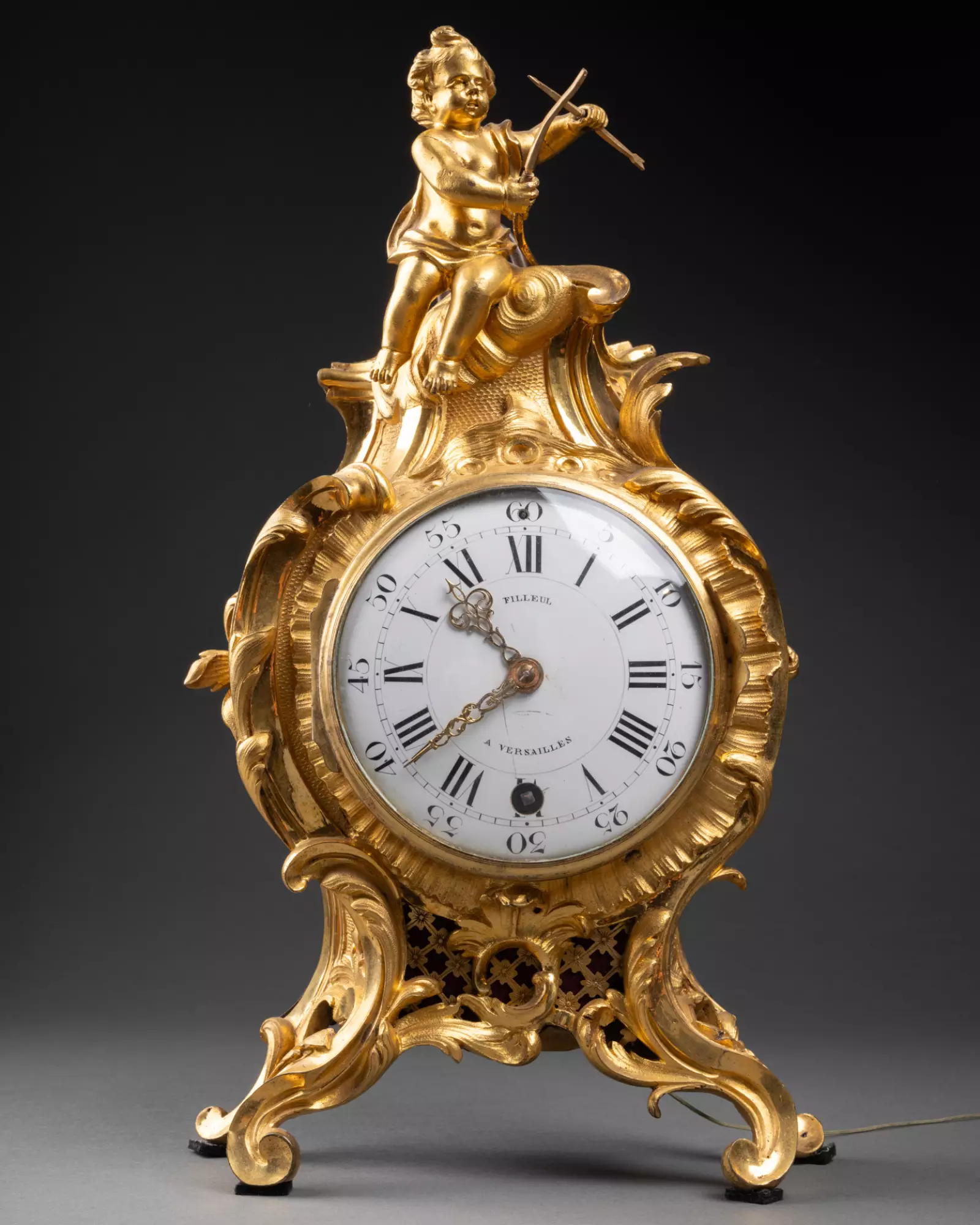
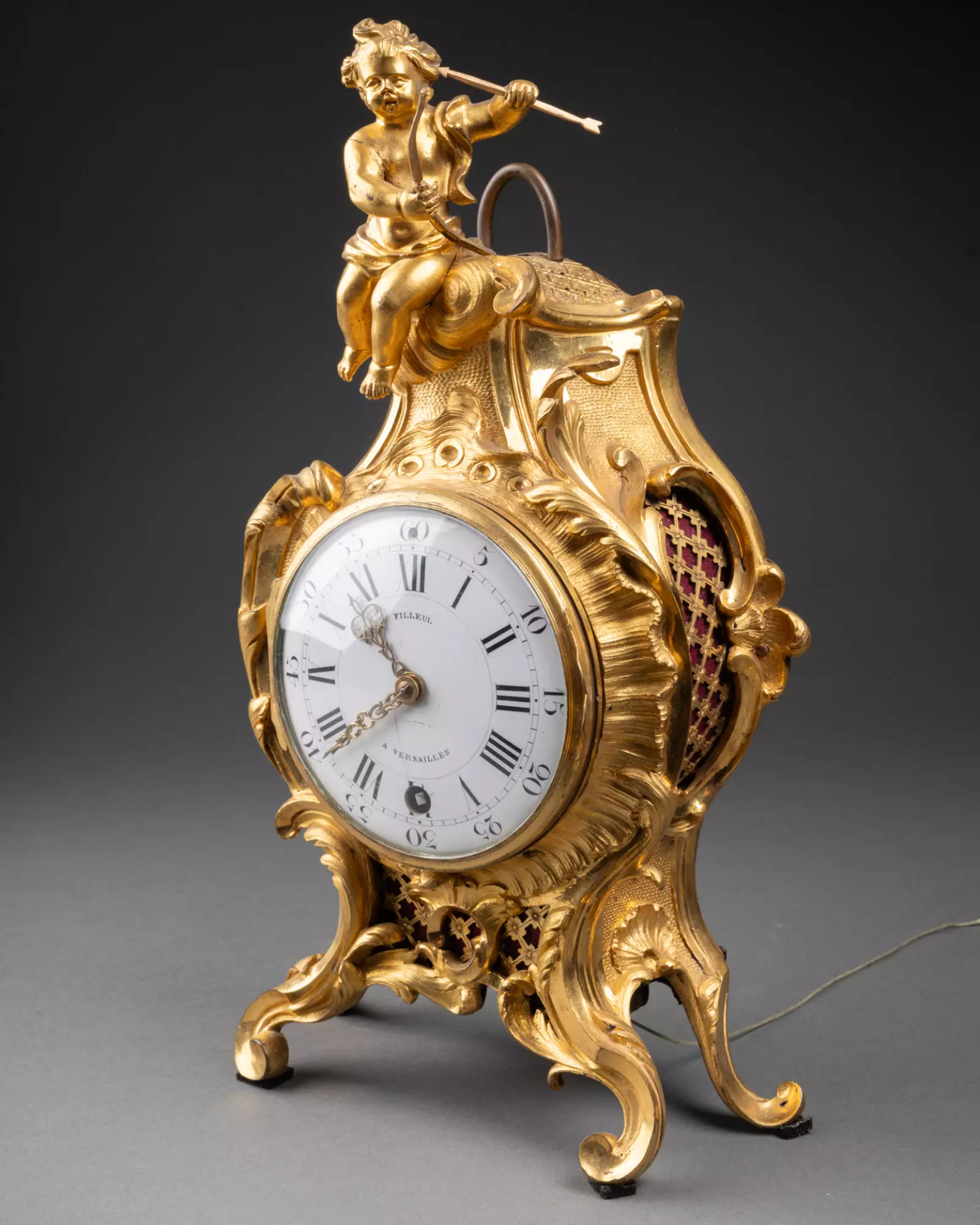
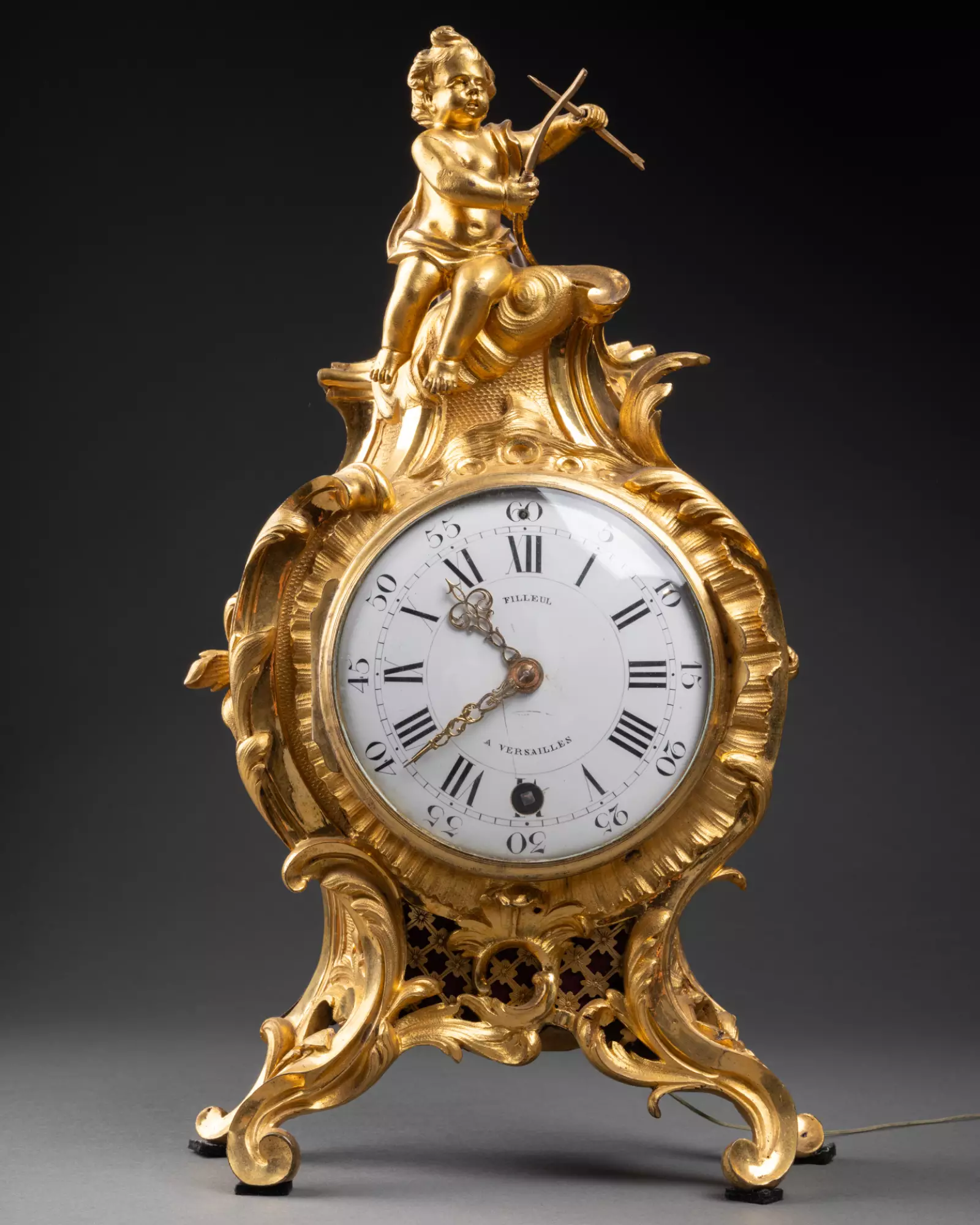
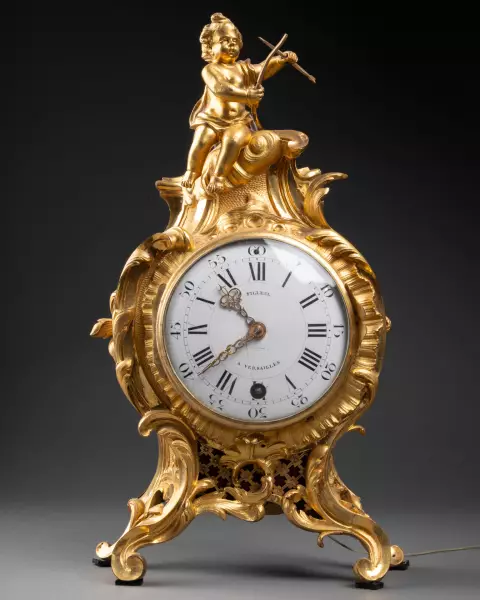
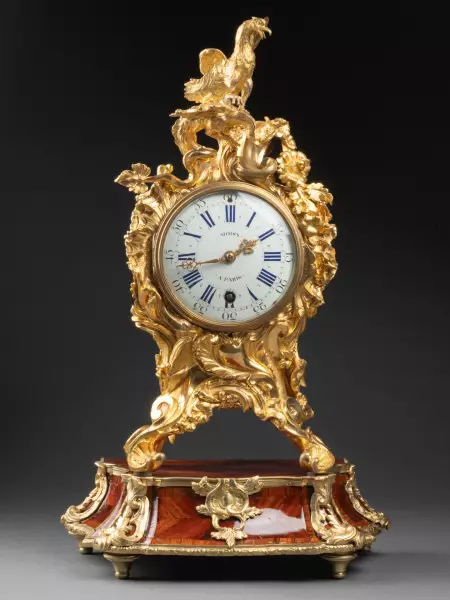
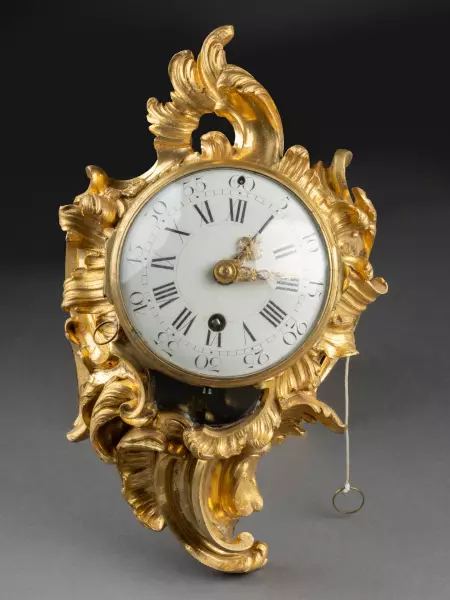
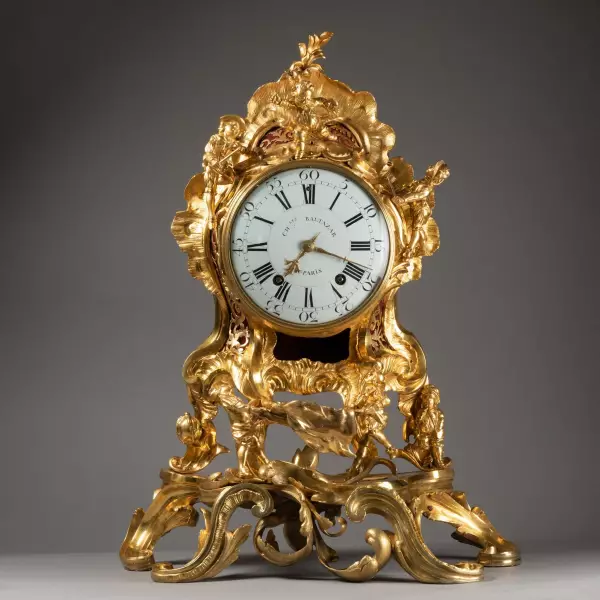
Gilt-bronze mantel clock, Paris, Louis XV period.
SOLD
DIMENSIONS : l. 6.3 .inH. 13.39 .inP. 3.54 .in
MATERIAUX : Ormolu
PROVENANCE : Paris
PRICE : Contact us
REQUEST INFORMATION
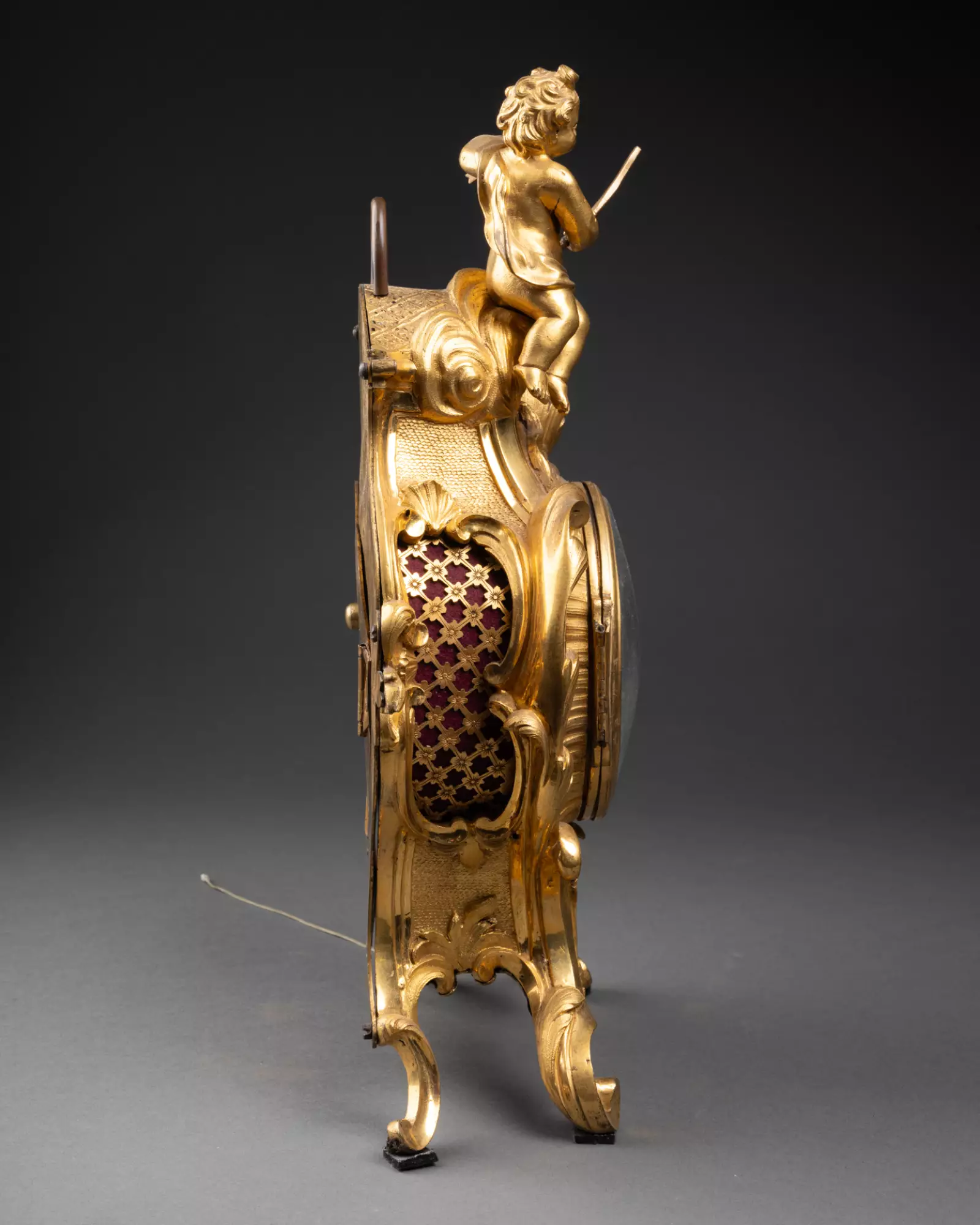
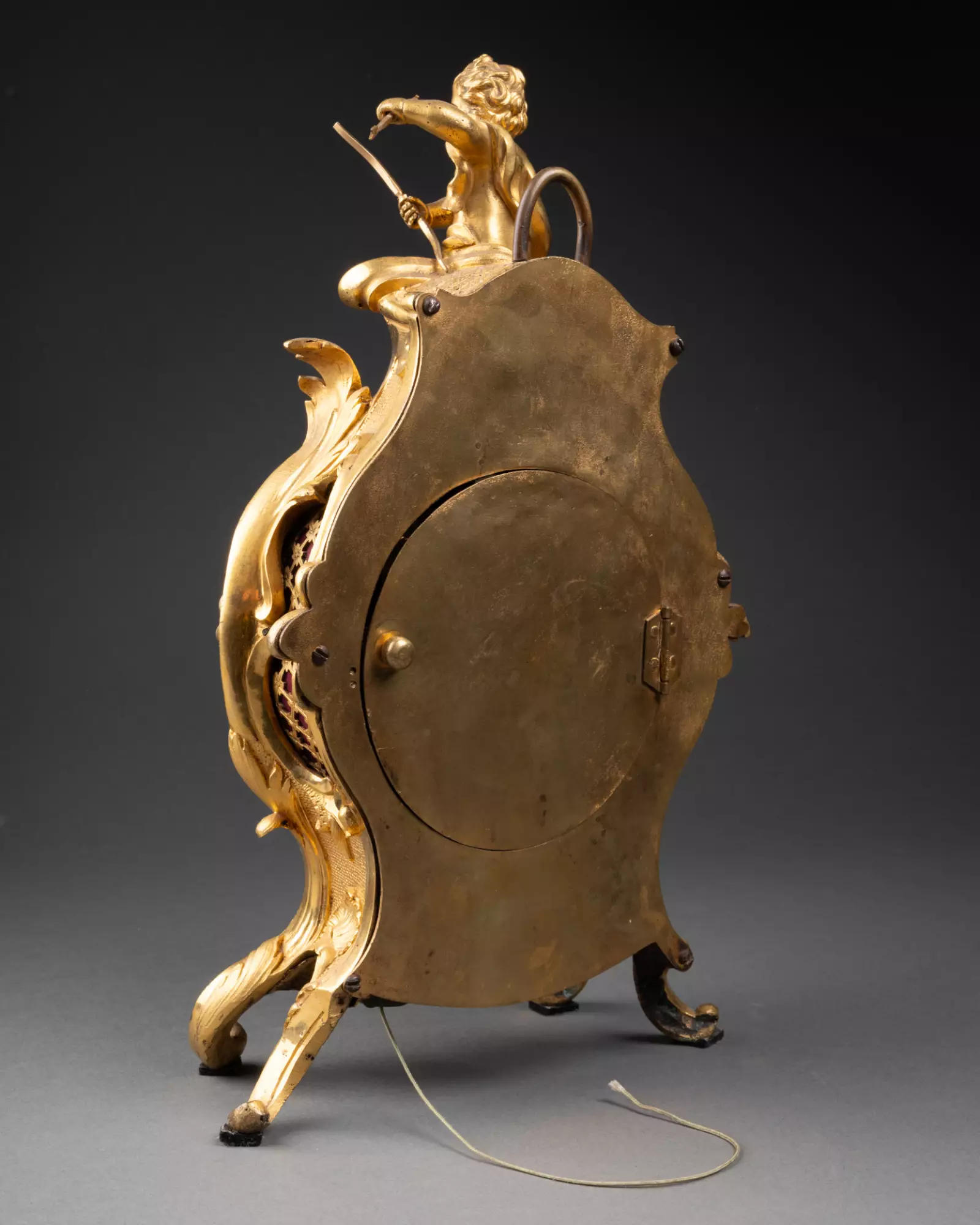
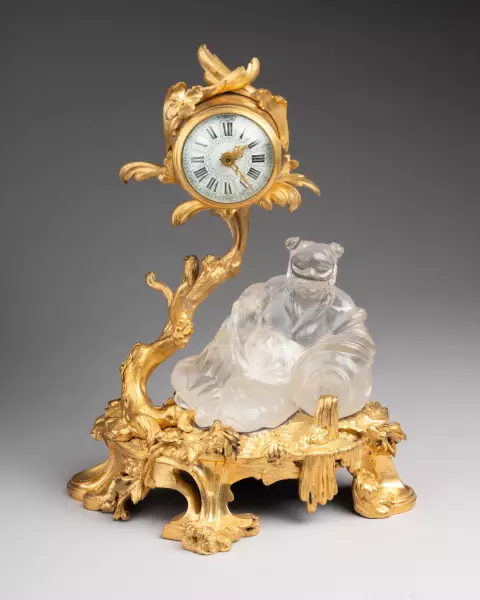
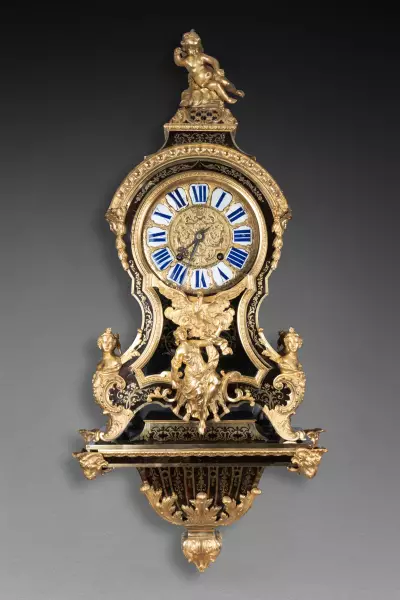
?Rococo-style design featuring clasps and acanthus leaves; it rests on four feet with inward-curving scrolls.
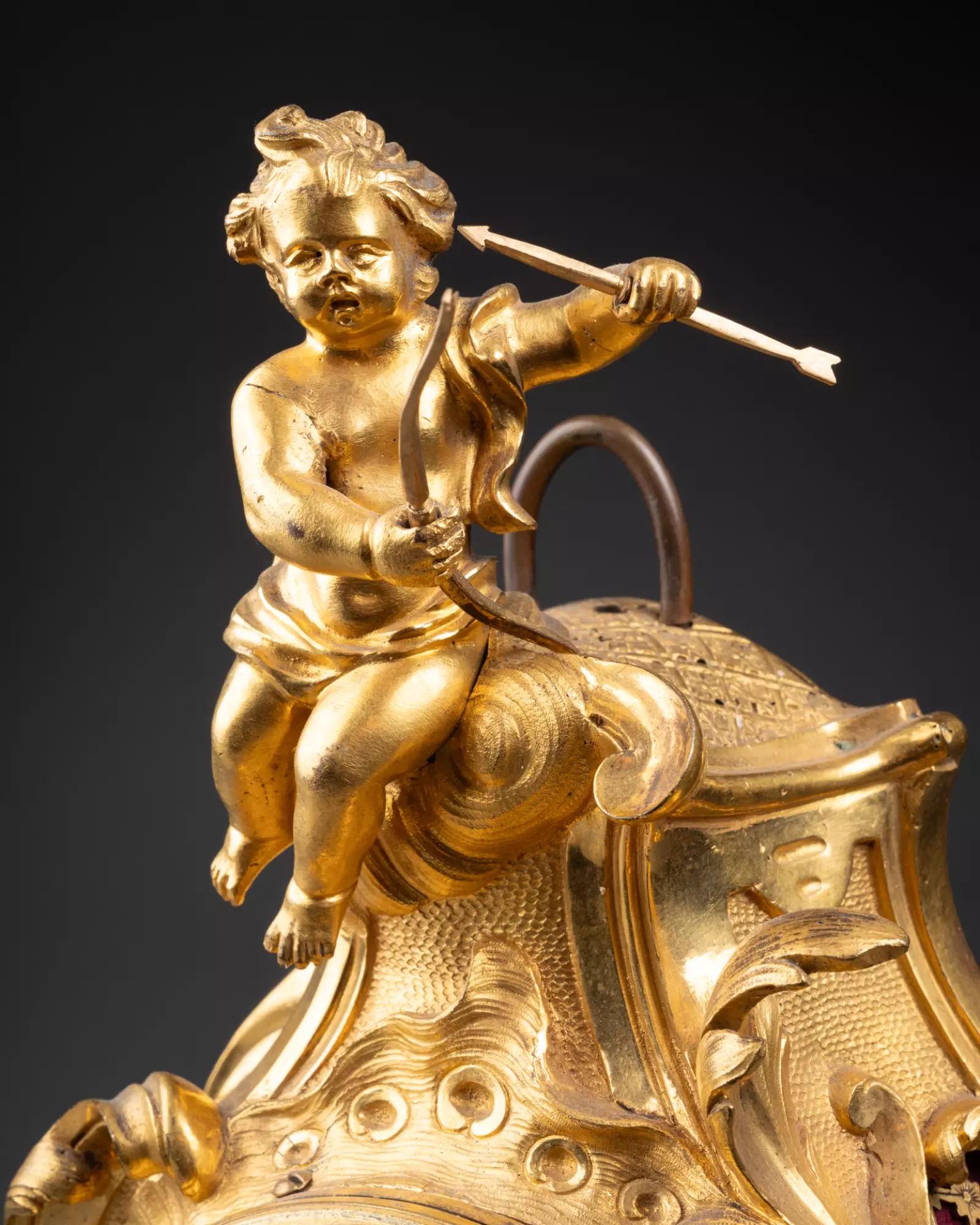
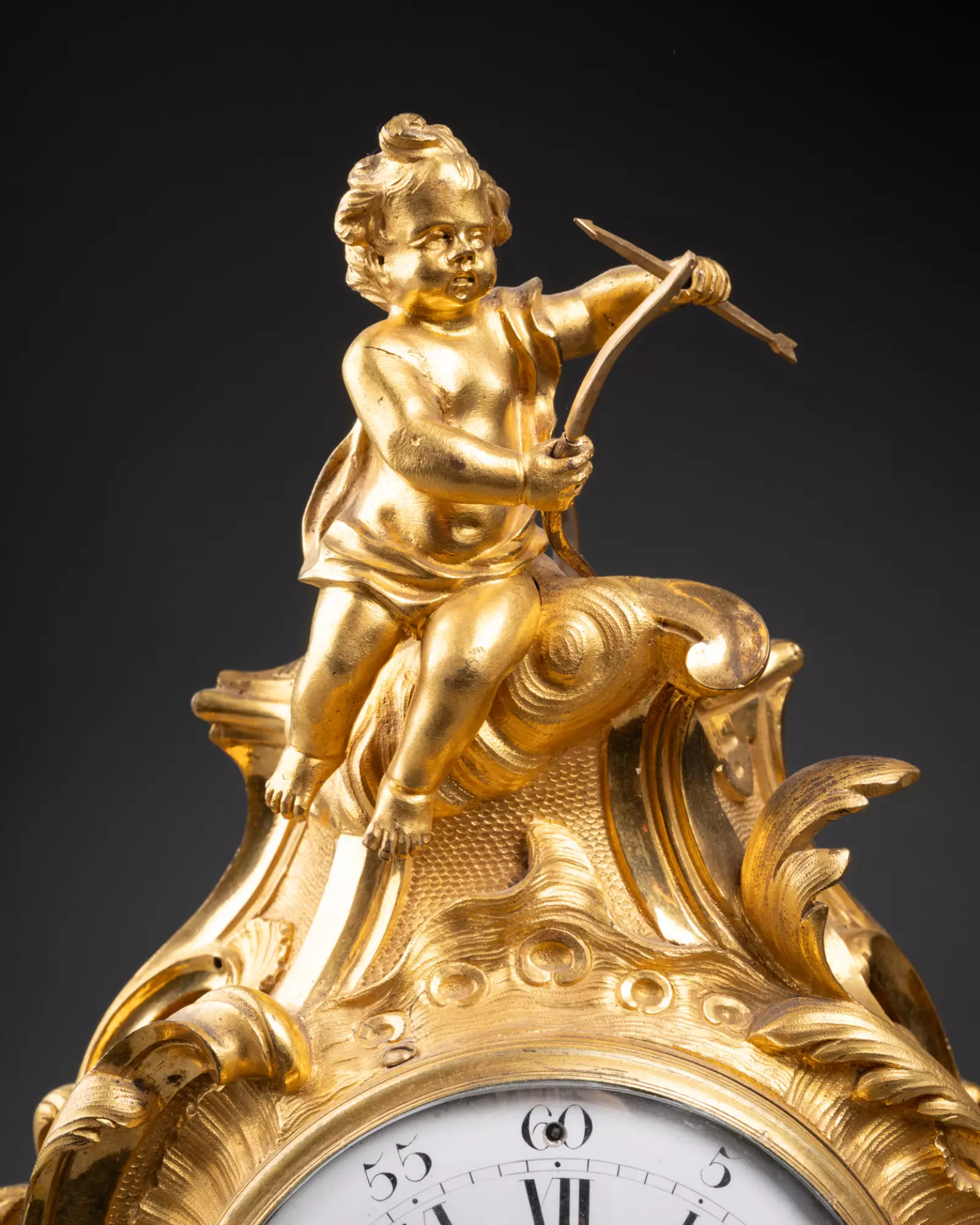
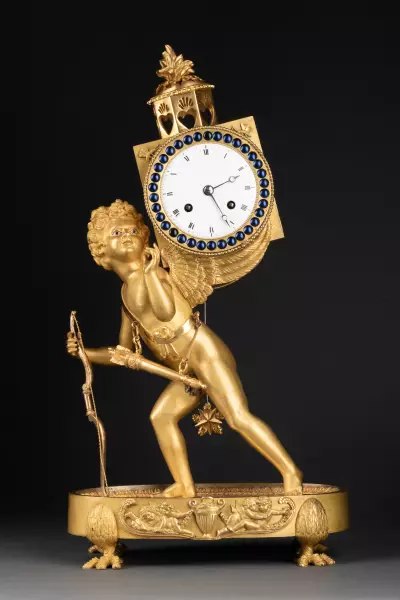
The top is surmounted by a putto representing Cupid, complete with his attributes (bow and arrows).
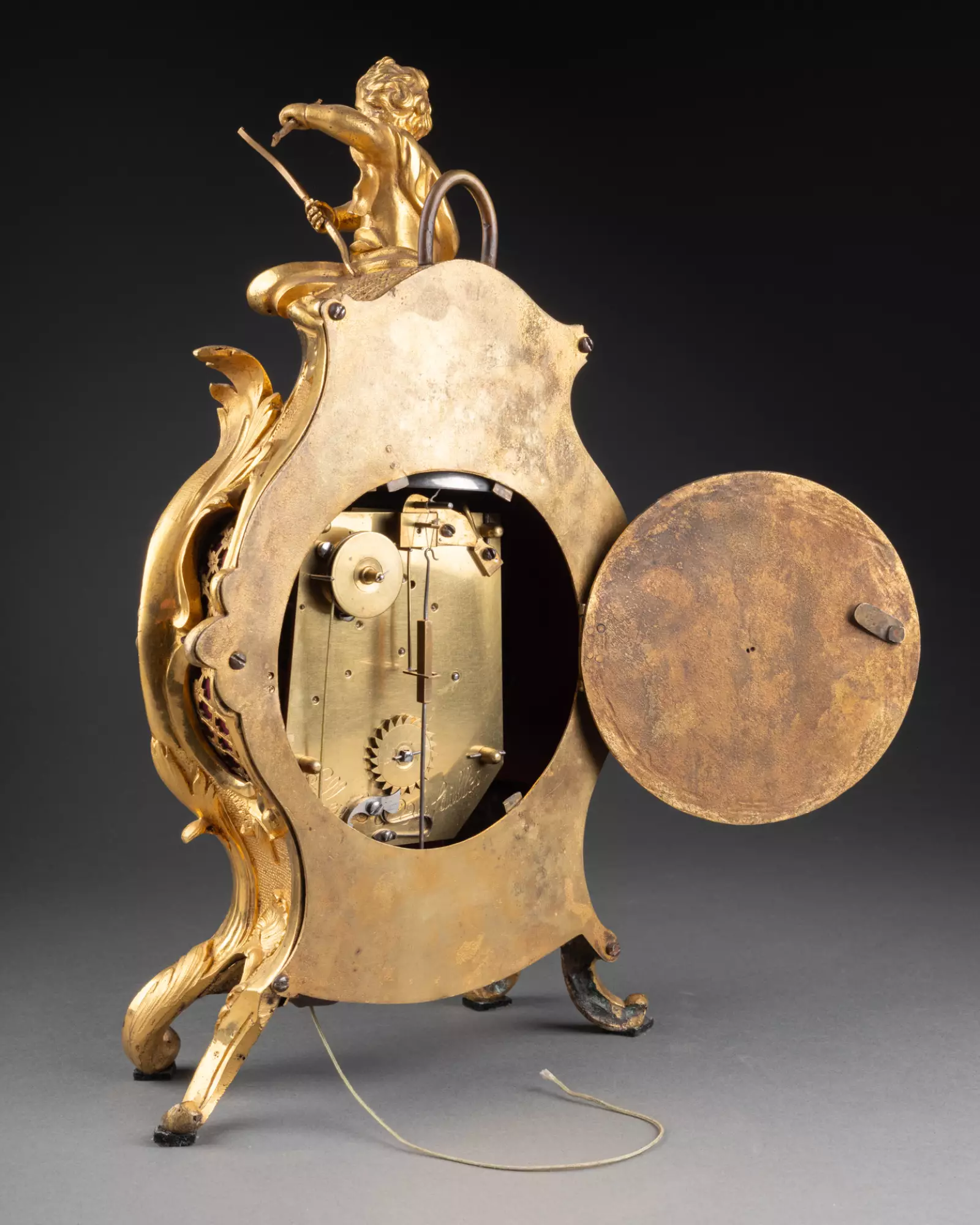
The dial is signed "Filleul à Versailles," as is the backplate of the movement.
Original silk-thread suspension and pull-activated striking mechanism.
In perfect working order.
Fine original mercury gilding and high-quality chasing.
Parisian work, Louis XV period, circa 1750.
Dimensions:
Height: 34 cm; Width: 16 cm; Depth: 9 cm.
Joseph-François Filleul
Joseph-François Filleul—sometimes referred to simply as François—was a French clockmaker active in Versailles during the mid-18th century. Unlike the great masters based in Paris's clockmaking districts, he worked directly in the service of the court.
In 1744, upon the establishment of the household of Maria Theresa Raphaela of Spain—the first wife of the Dauphin, Louis of France—he was granted the title of "Valet de chambre and Clockmaker in Ordinary to Madame la Dauphine." He took his oath of office in February 1745, at the time of the princess's marriage. Archives record him holding this position as late as 1748. He subsequently worked for the Dauphines who followed, notably Maria Josepha of Saxony.
Filleul was responsible for supplying, maintaining, and modifying the clocks in the princely apartments. Notably, he replaced the dial and movement of a *cartel* clock delivered in 1745 by the *marchand-mercier* Thomas-Joachim Hébert for the Dauphine of Spain—a piece now held at the Palace of Versailles under inventory number V 5722. In 1771, he received a further 225 livres for work carried out for the Comtesse de Provence. Three clocks by Filleul remained in the royal collections as late as 1787.
His works, which are relatively rare, generally bear the signature "Filleul à Versailles," reflecting his base within the royal residence itself. Known examples include an exceptional *cartel* clock dated 1751, featuring enamelwork by Antoine-Nicolas Martinière, an enameler and a pensioner of the King.
This signature signifies more than just a place of business; it attests to Filleul’s role in the personal service of the Dauphine’s household, establishing a direct link between his clock movements and the court of Versailles.
Our assessment:
The small *cartel* clock presented here is a particularly evocative piece. The signature "Filleul à Versailles" is far more than a mere geographical indicator; it points to a workshop established within the Palace of Versailles, in the immediate orbit of the royal family. Filleul does not appear to have engaged in independent commercial production; the works identified to date seem to stem exclusively from commissions linked to the Dauphine, for whom he served as *horloger ordinaire* (clockmaker-in-ordinary). This signature thus lends our clock a rare, almost intimate quality—that of an object likely created for the princely apartments. The shape of the bronze case can be compared to that of the small *cartel* clock mounted on the *encoignure-bureau* of Marie-Josèphe of Saxony held at the Getty Museum (inv. no. 79.DA.66), which also features a pull mechanism to trigger the striking on demand. The asymmetrical *rocaille* form of both clocks relates to the work of the bronzeworker Jacques Caffieri during the 1740s.