Galerie Franck Baptiste
7 quai Voltaire
75007 Paris
FRANCE
Tél. +33 (0)6 45 88 53 58
Monday to Saturday
10h - 13h & 14h - 18h30
- FR
- EN

Furniture
18th century
1
Furniture du 18th century
Commode in rosewood veneer, stamped P. Roussel
DIMENSIONS : l. 44.88 .inH. 36.22 .inP. 17.32 .in
MATERIAUX : Rosewood
PROVENANCE : Paris, France
PRICE : Contact us
REQUEST INFORMATION
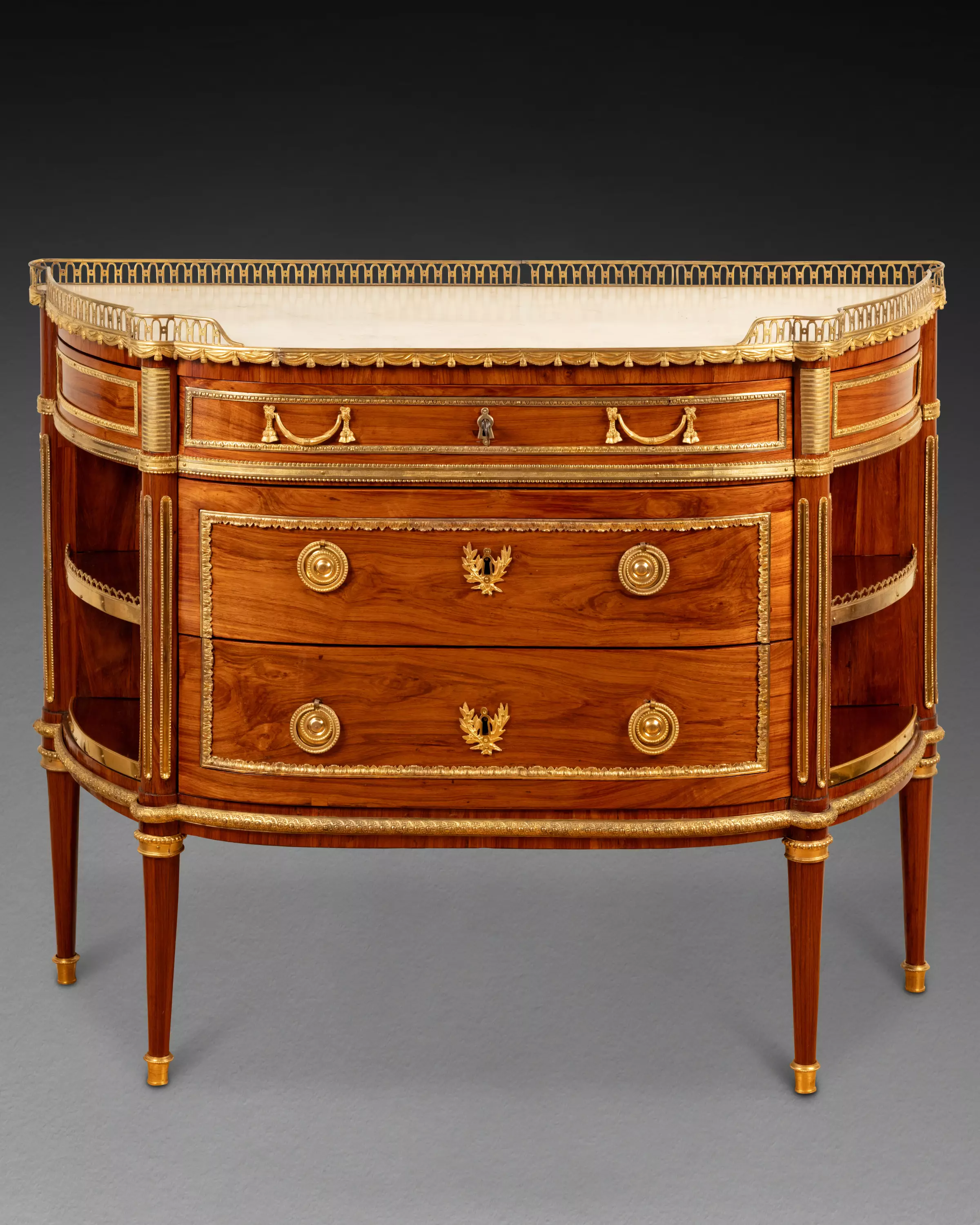
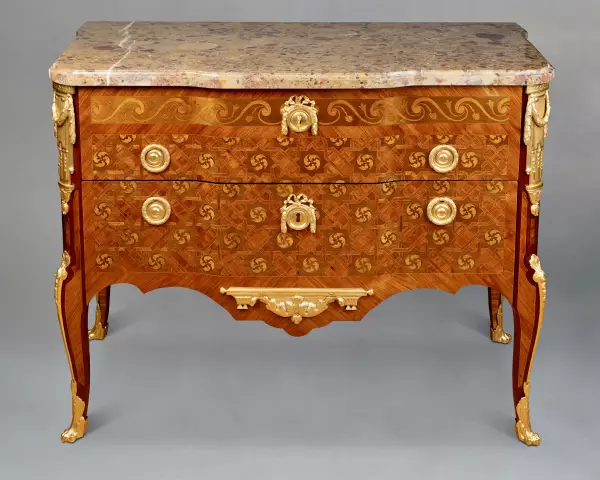
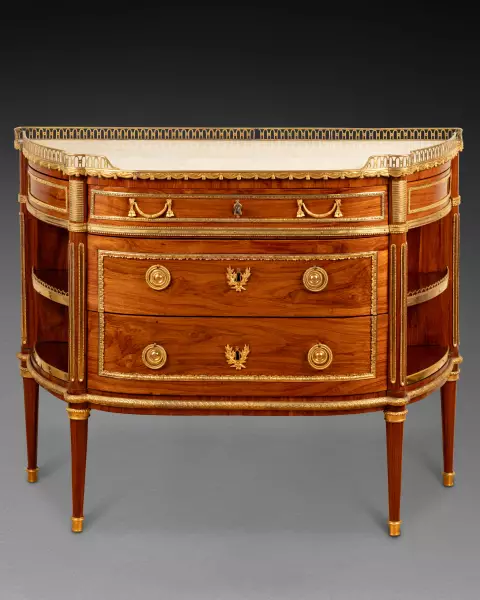
?A Louis XVI period rosewood veneer commode in a half-moon shape, stamped Pierre Roussel
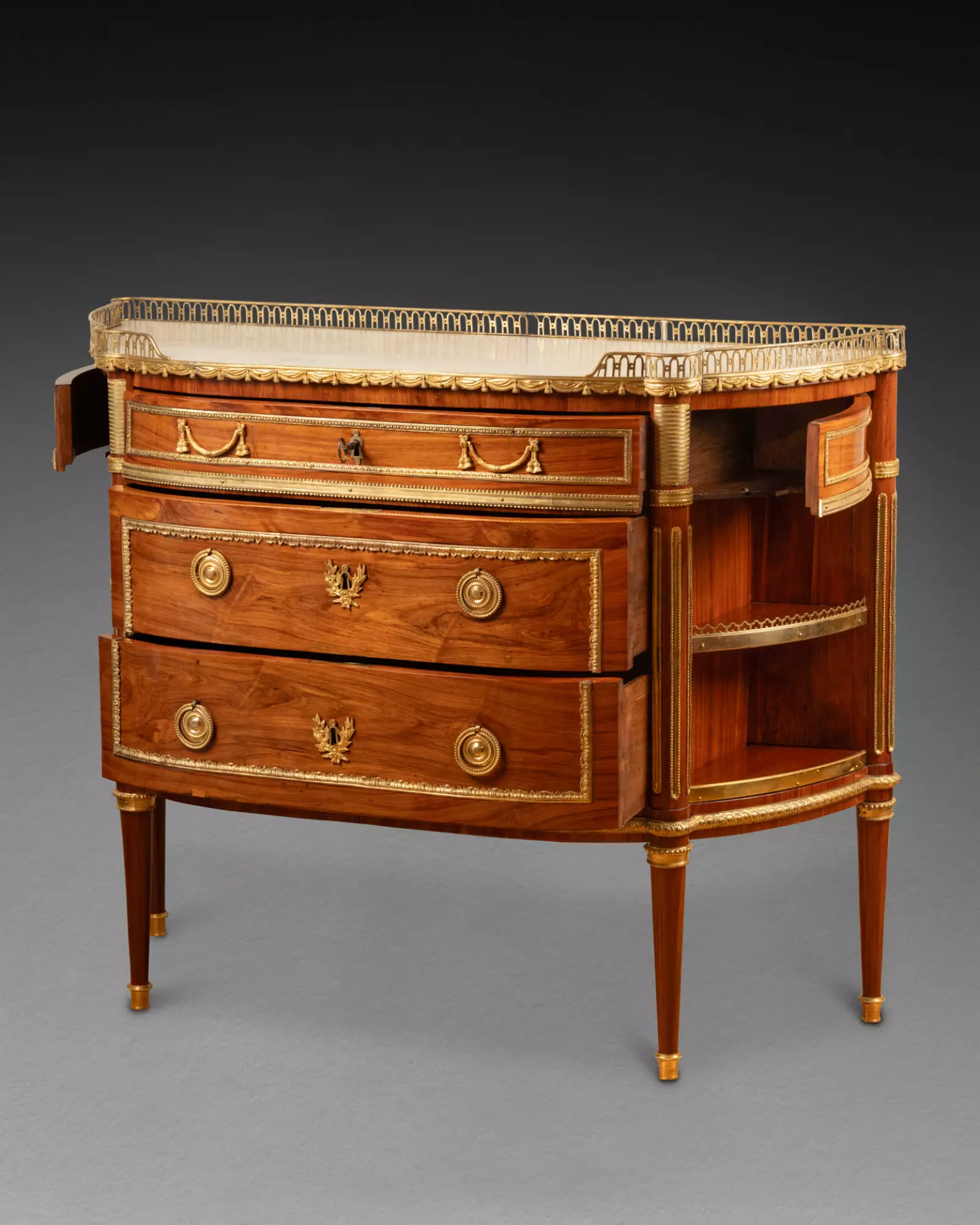
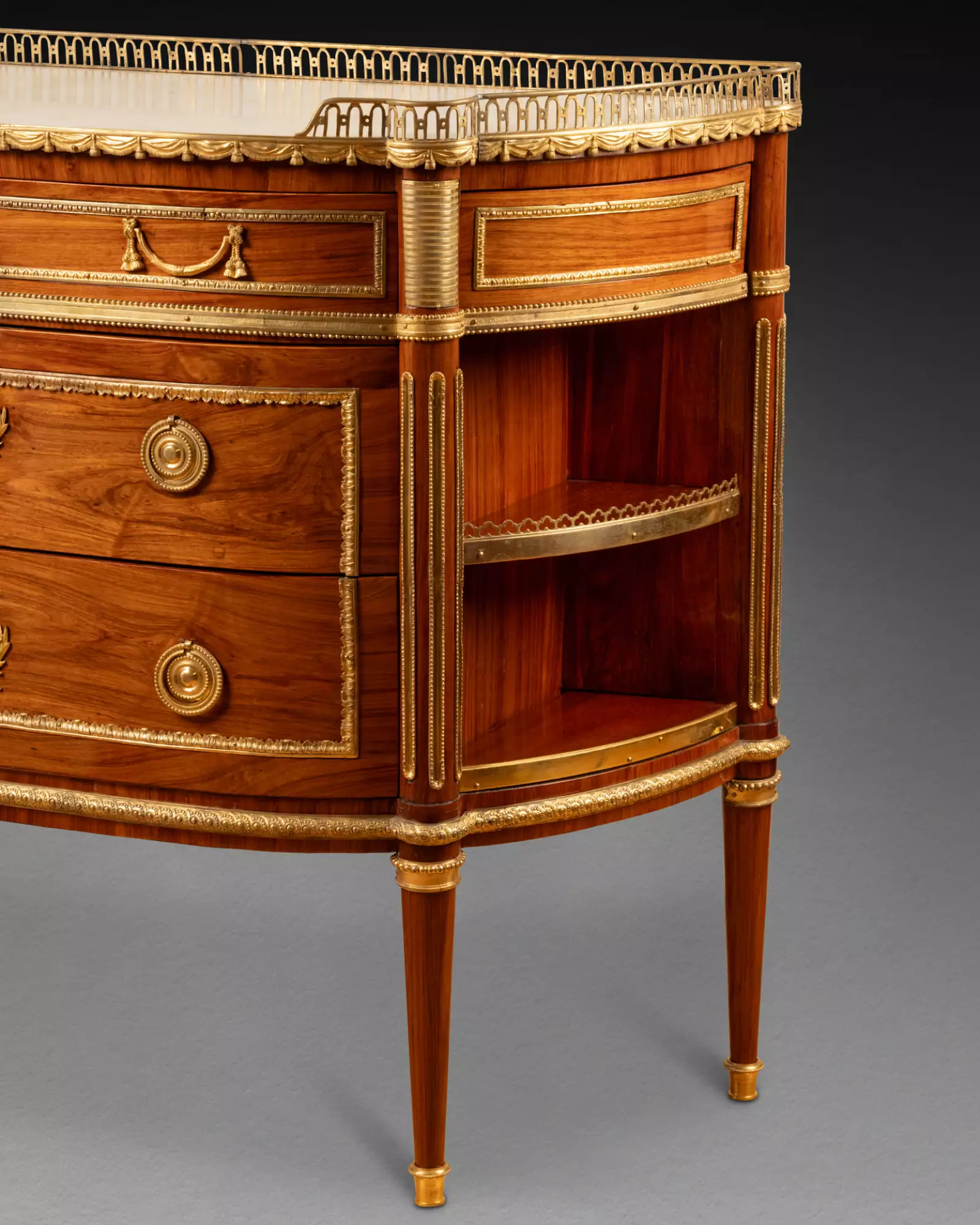
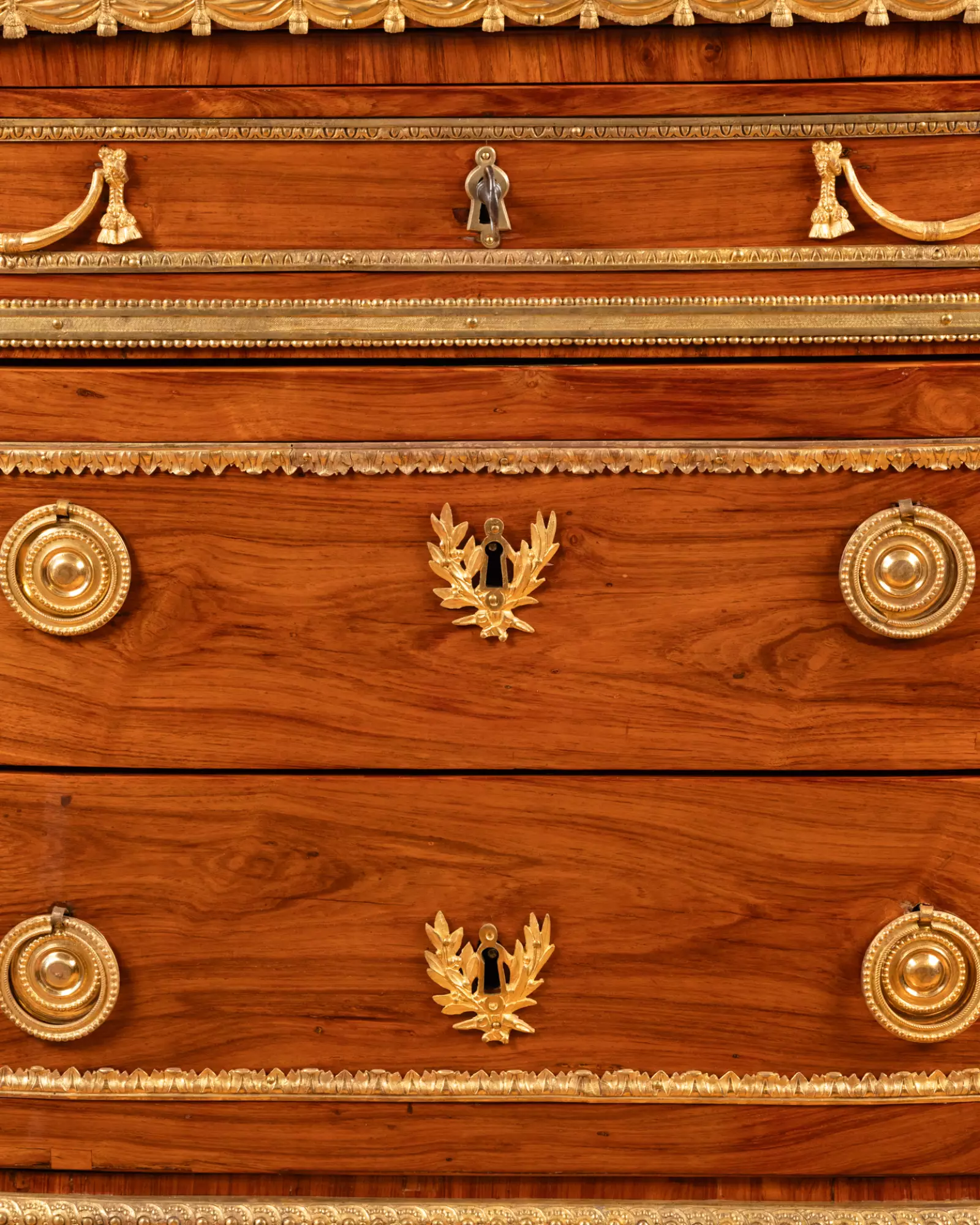
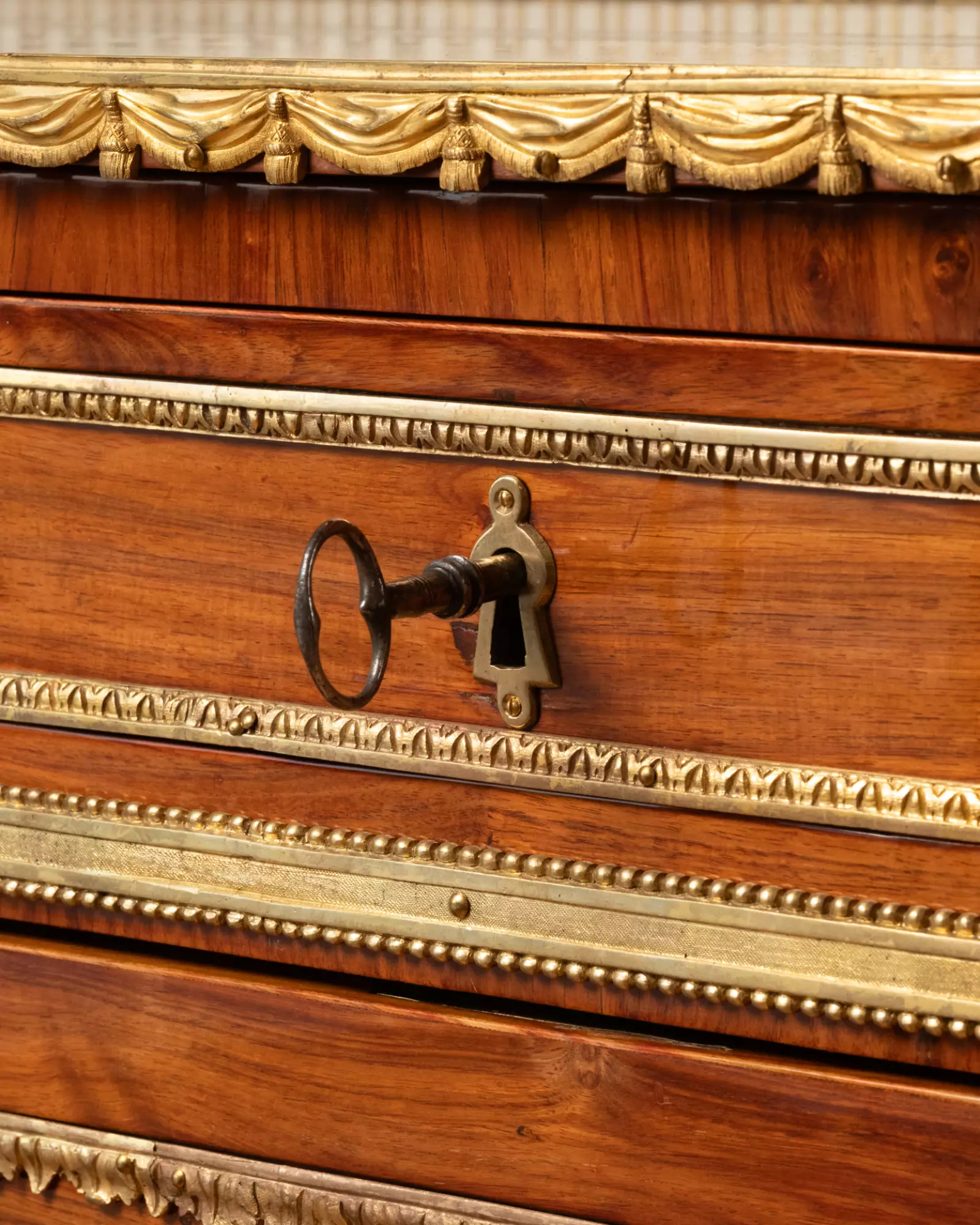
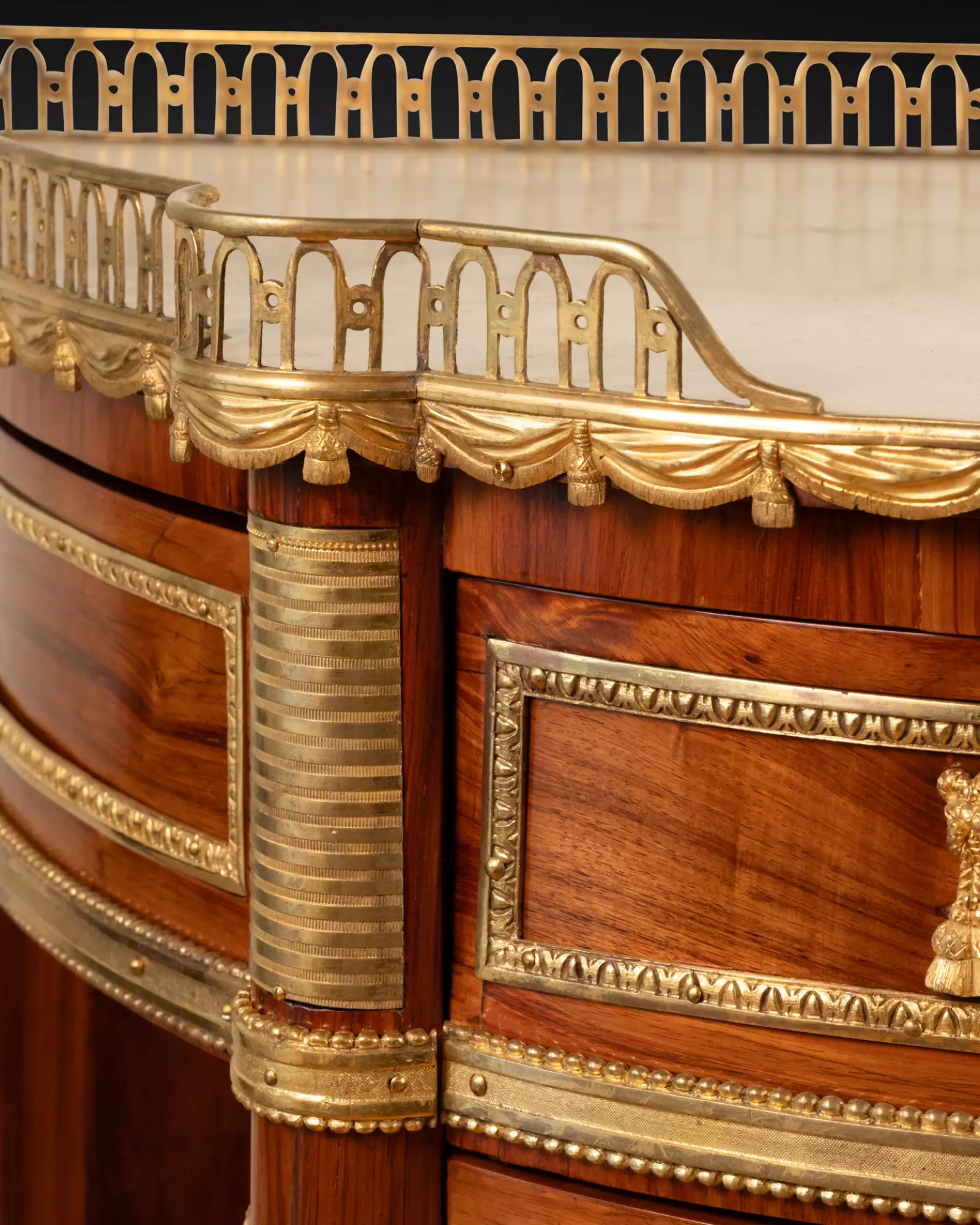
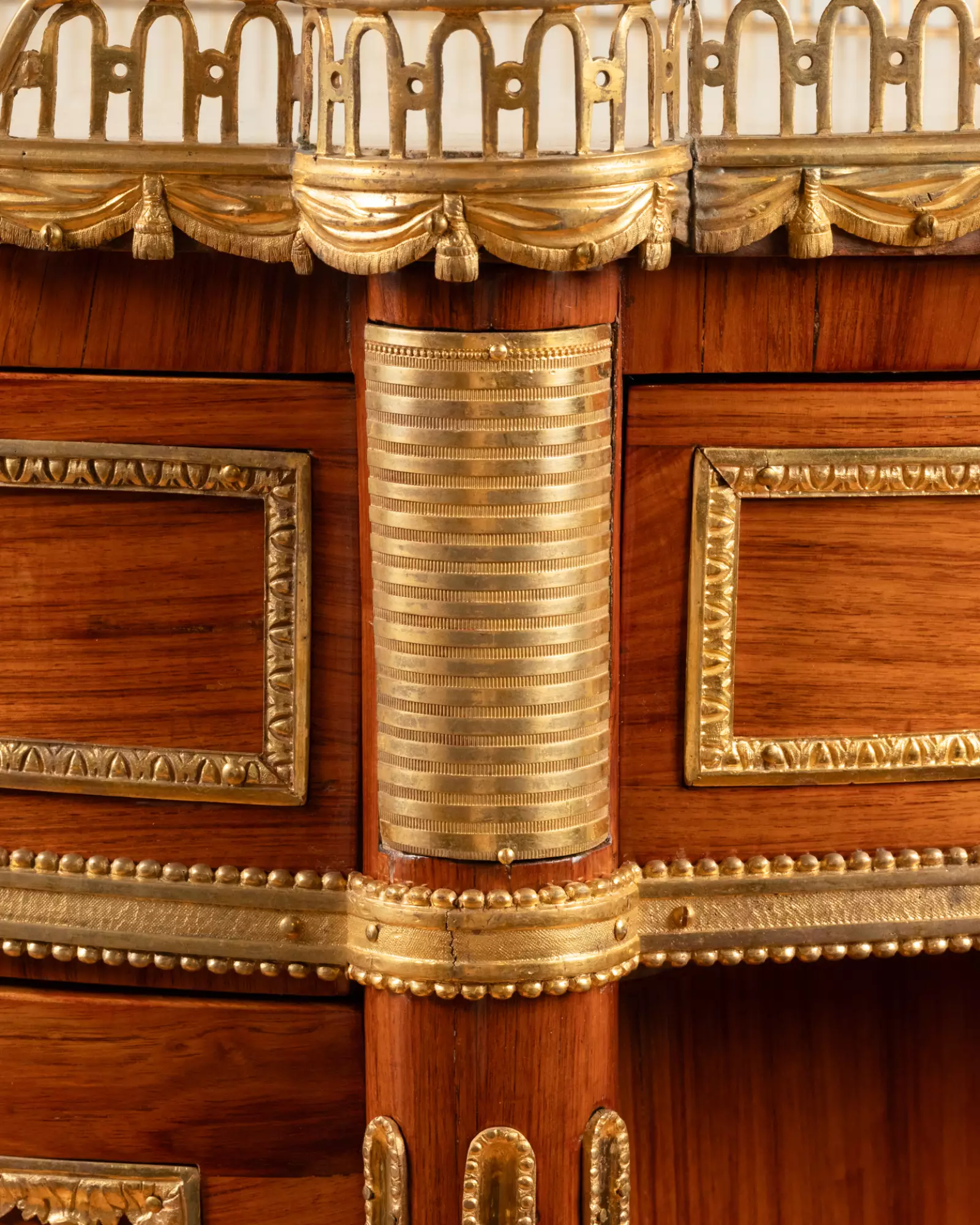
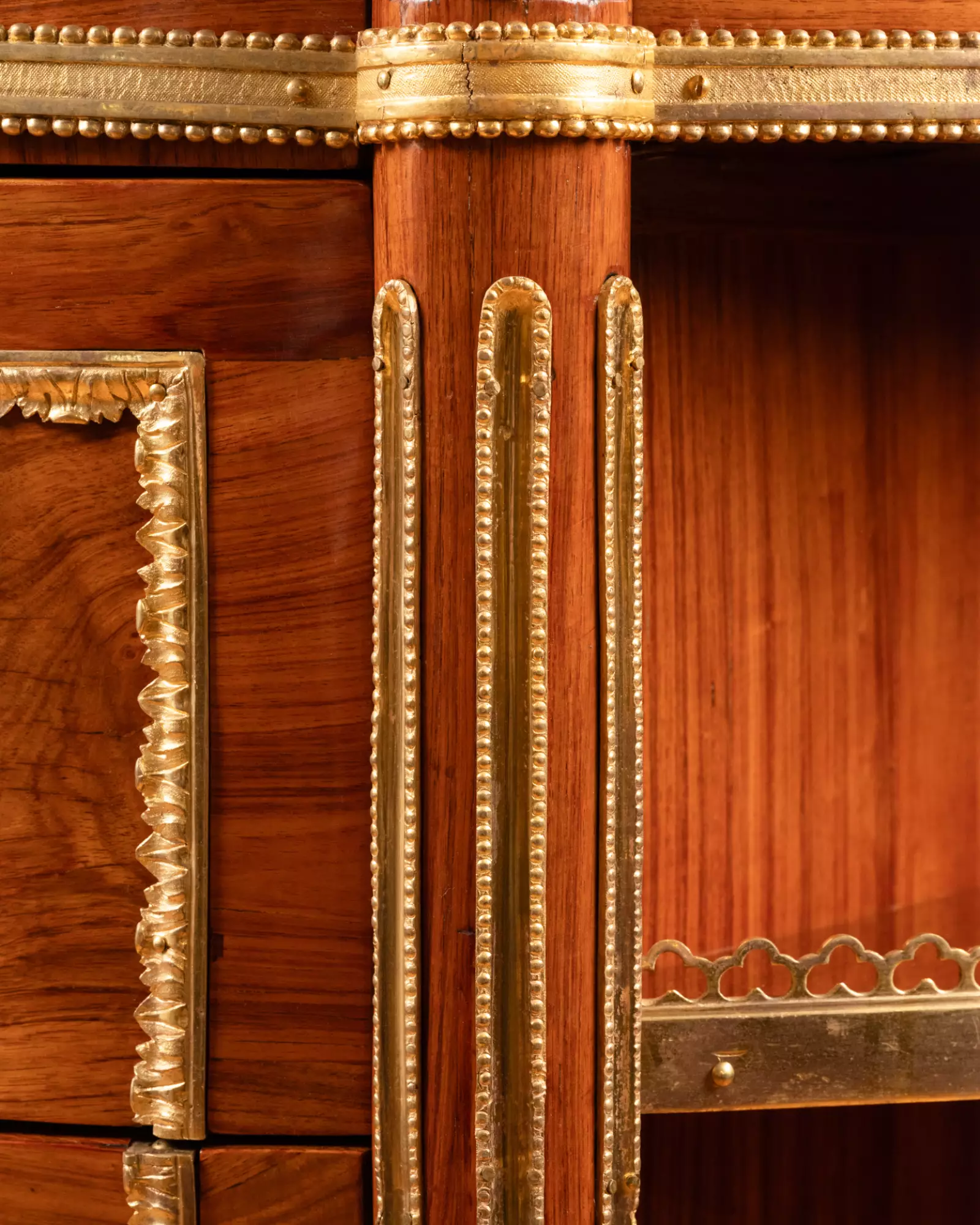
A rare commode in a half-moon shape, opening with three drawers in the front, two of which are without a central rail. The sides, finished with open corners, feature two curved shelves adorned with gilt-bronze galleries; these shelves conceal, in the upper section, two secret drawers opened by an ingenious push-button system hidden beneath the central rail.
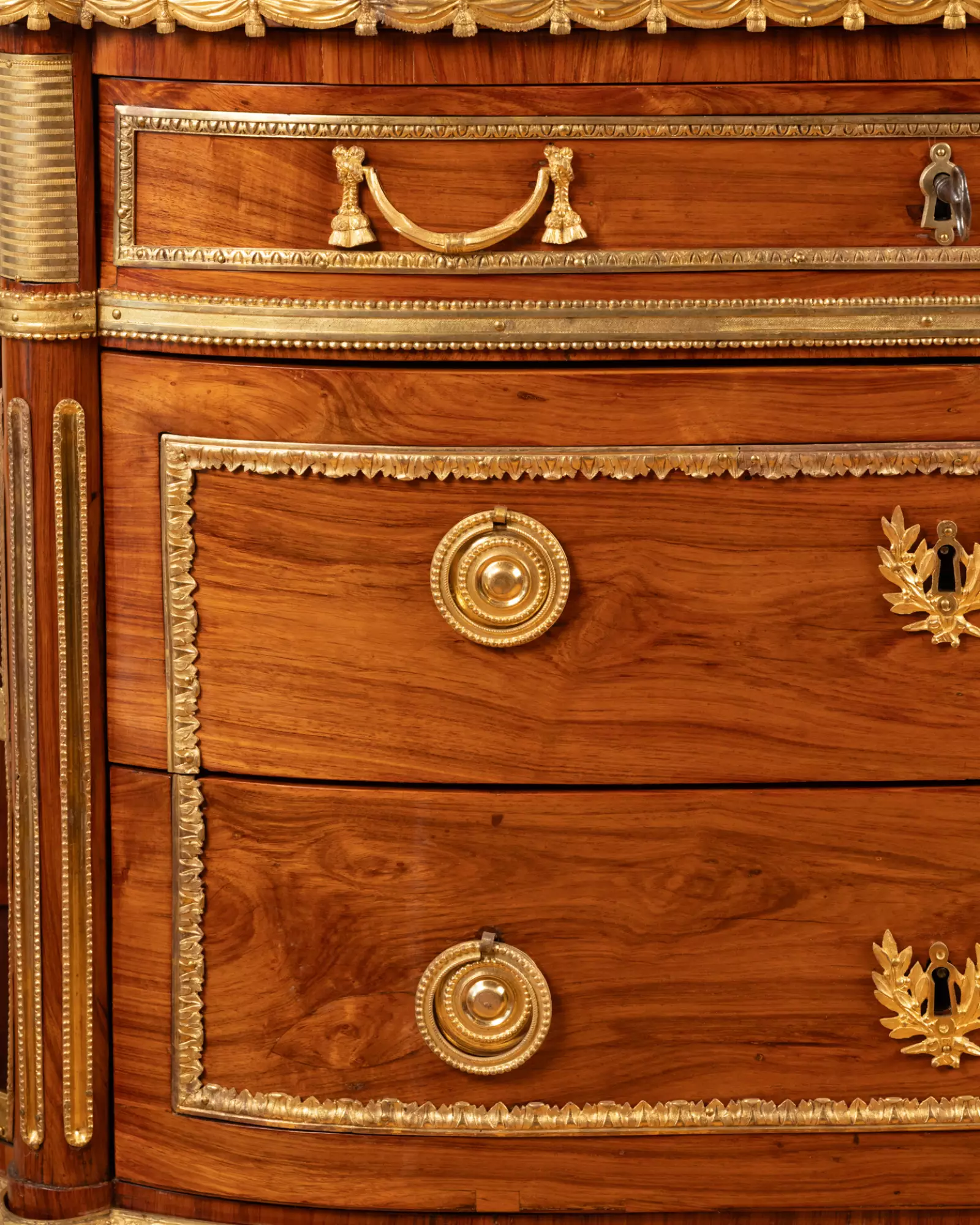
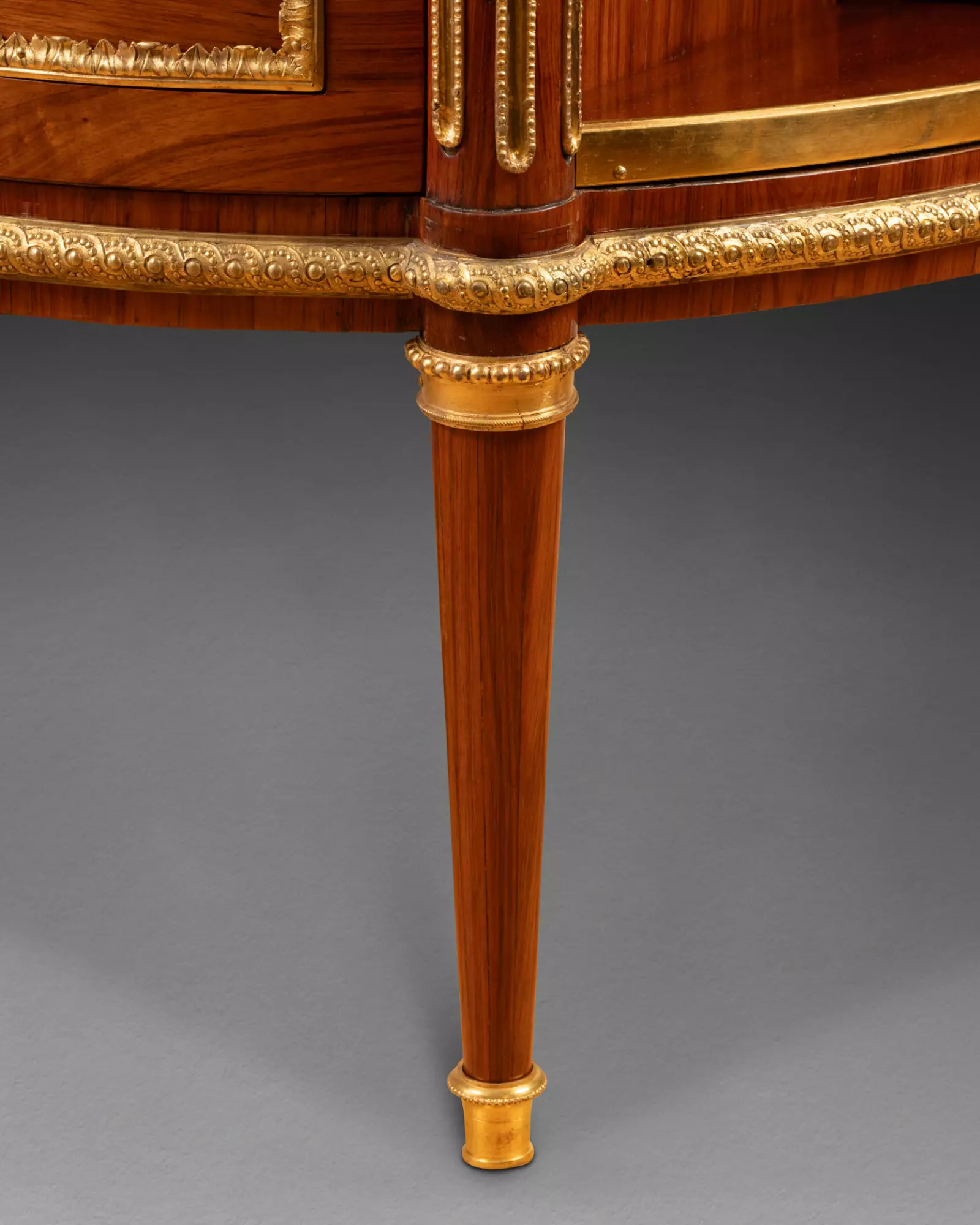
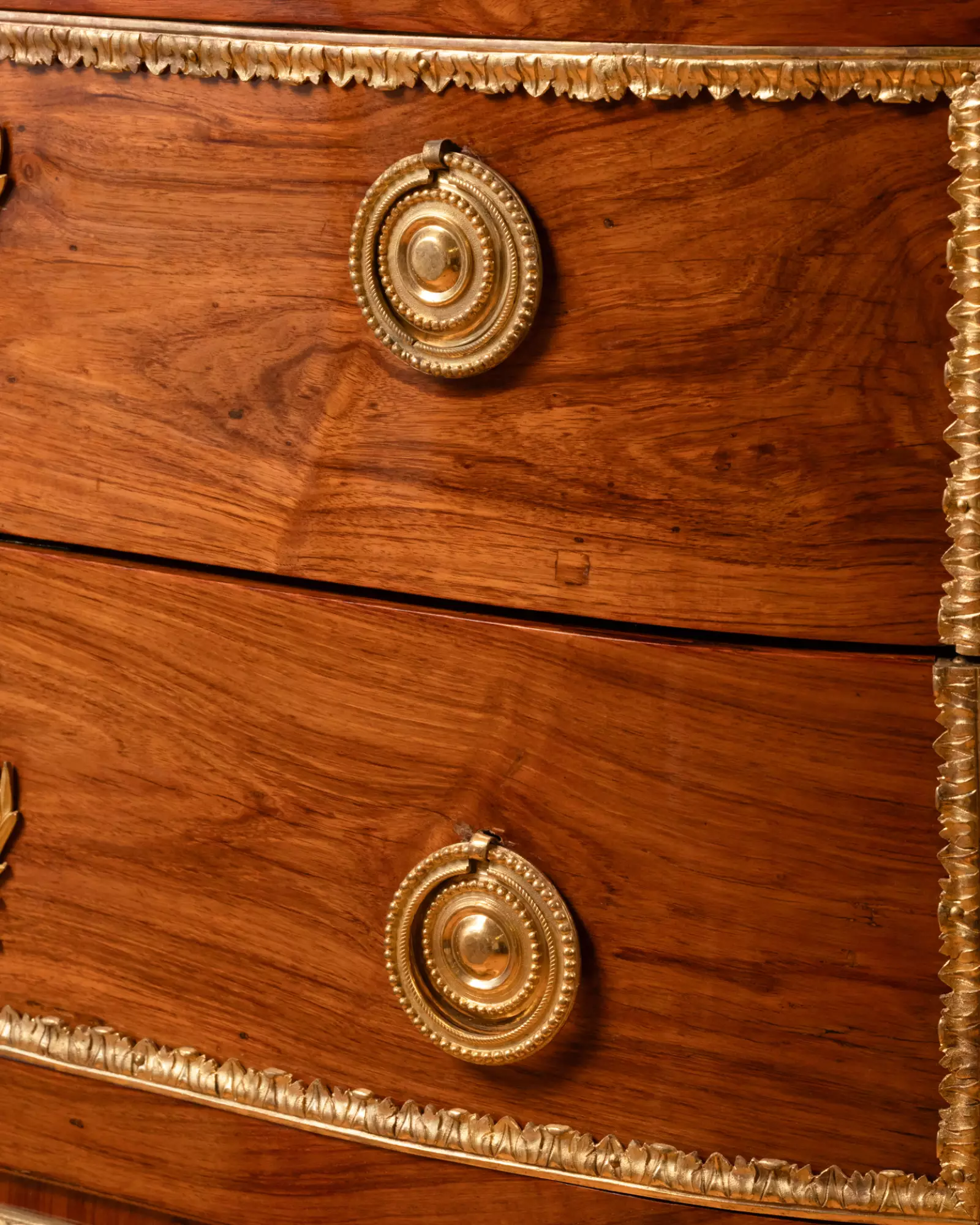
The rosewood veneer is left natural, without contrasting marquetry, allowing the richness of the grain to be displayed across large surfaces, its ample and continuous movement particularly well highlighted here. The whole rests on four tapered legs, adorned with gilt-bronze sabots and rosettes.
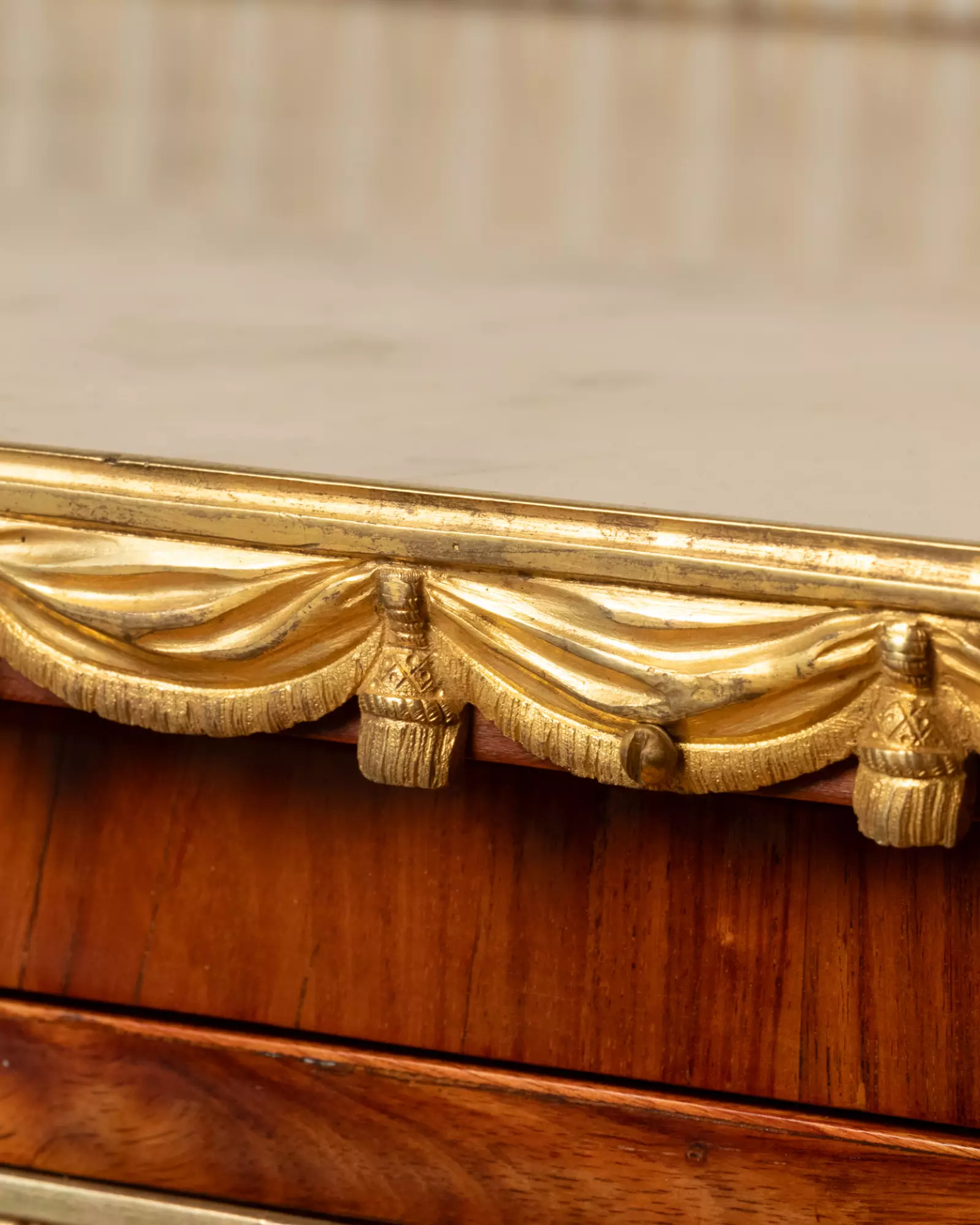
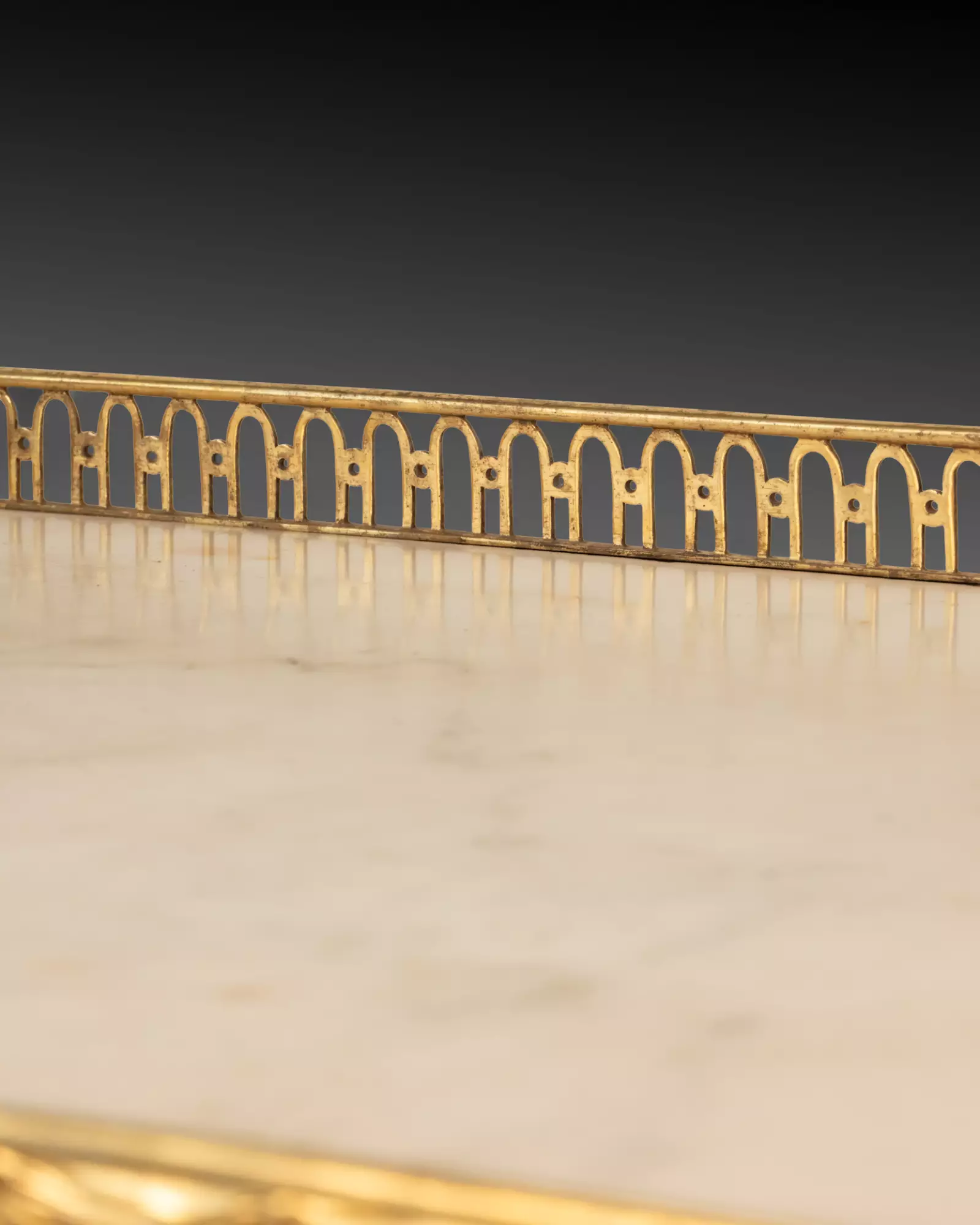
The top is fitted with an inset white marble slab, surrounded by an openwork gallery and highlighted on the front by a finely chased lambrequin. Rich and precious ornamentation of finely chased and mercury-gilded bronze: frames, rosettes, corner scrapers, galleries, moldings…
Solidarium oak frame. Stamped by P. Roussel and JME guild mark on the right rear upright.
Very fine condition. Parisian work from the Louis XVI period, circa 1780, by the cabinetmaker Pierre Roussel.
Our opinion:
The commode we are presenting is a particularly accomplished piece, combining great decorative refinement with technical virtuosity, featuring drawers without crossbars and secret compartments with a mechanism. The plain veneer finish, allowing the rich grain of the rosewood to fully express itself over large areas, gives this piece a rare elegance.
The use of rosewood on a half-moon commode of this shape remains extremely rare and is a distinctive feature of the last years of production by the cabinetmaker Pierre Roussel. His post-mortem inventory, drawn up on November 18, 1782, mentions two "circular commodes veneered in rosewood with gilt baluster mounts and white marble tops," valued at 272 and 360 livres respectively, nearly five times the value of Regency or tomb-shaped commodes then prized between 50 and 60 livres. Such a difference clearly underscores the innovative nature and status of these models, emblematic of the latest taste in vogue in Paris at that time.
This piece thus appears as one of the most accomplished expressions of the master's Louis XVI production: a work of maturity, in which Pierre Roussel displays complete mastery of his art, from the rigor of its construction to the subtlety of its mechanisms, including the harmony of its proportions and the perfect integration of exquisitely fine bronze ornamentation.
Pierre Roussel (1723-1782) was a cabinetmaker who became a master in Paris on August 21, 1745. He established himself on the rue de Charonne, in the Faubourg Saint-Antoine, under the sign "L'Image de Saint Pierre" (The Image of Saint Peter). Thanks to his exceptional skills as a cabinetmaker and, above all, as a marquetry artist, he very quickly acquired a great reputation. In 1762, he became a sworn member of his guild. By 1767, he was considered one of the finest cabinetmakers of his time, a fact confirmed by the 1769 "Almanach d'indication générale ou du vrai mérite" (Almanac of General Indication or True Merit), which lists him as one of the leading cabinetmakers in Paris. Highly regarded by his peers, he became a representative of the cabinetmakers' guild in 1777 and then its head two years later. His abundant and varied output adapted to all the styles of the 18th century with elegance and refinement. Many Louis XV commodes, veneered in rosewood or violet wood, are decorated with marquetry of flowers or ribbon bows. Lacquer and landscapes inspired by the Far East are also frequently used in his decoration. Transitional and Louis XVI furniture often features marquetry of architectural landscapes of cities, rivers, or ports, not to mention the geometric designs that were frequently employed. The inventory of his goods, carried out after his death, proves the prosperity of his establishment, which his wife, in association with his sons, took over as manager.