Galerie Franck Baptiste
7 quai Voltaire
75007 Paris
FRANCE
Tél. +33 (0)6 45 88 53 58
Monday to Saturday
10h - 13h & 14h - 18h30
- FR
- EN

Furniture
18th century
1
Furniture du 18th century
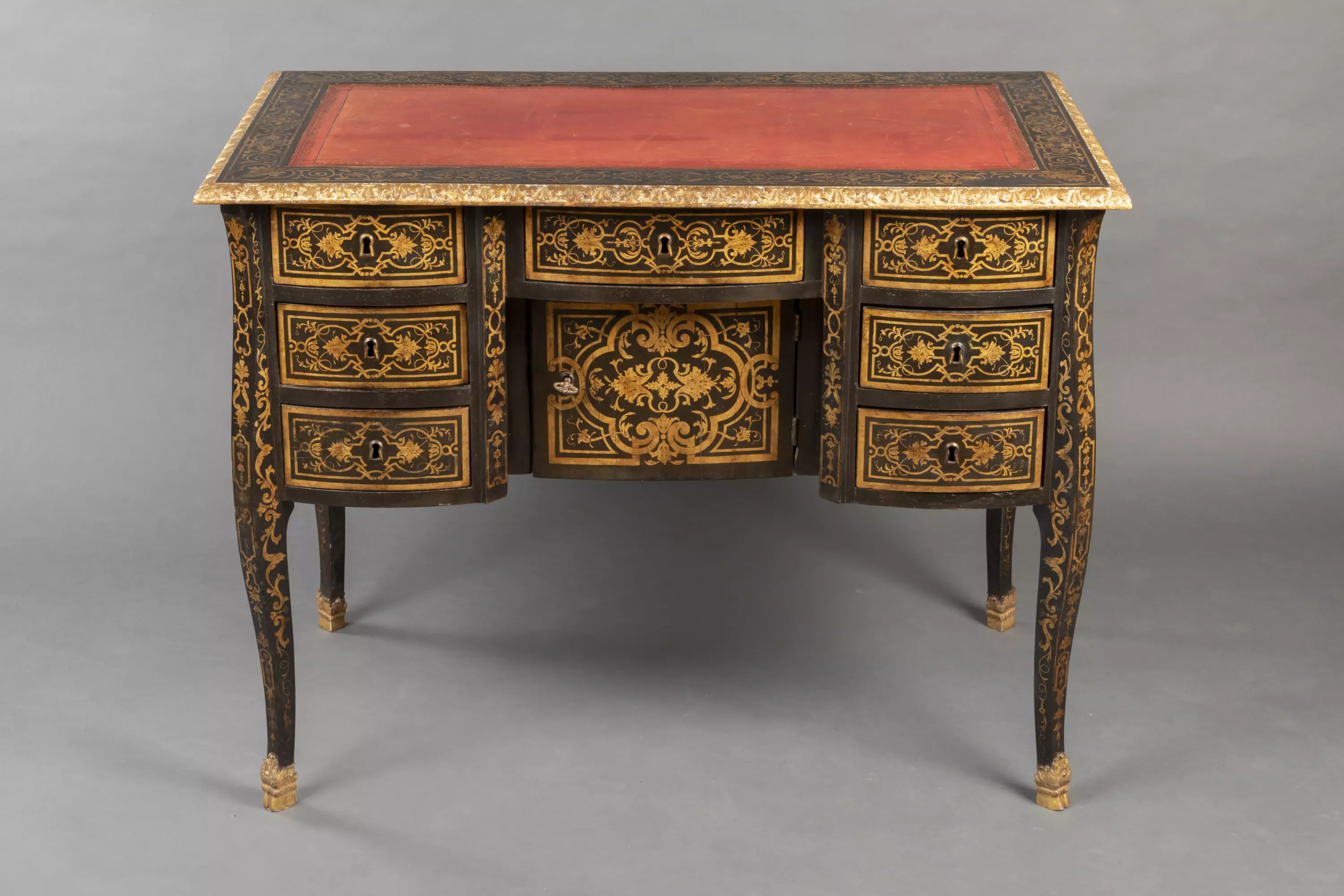
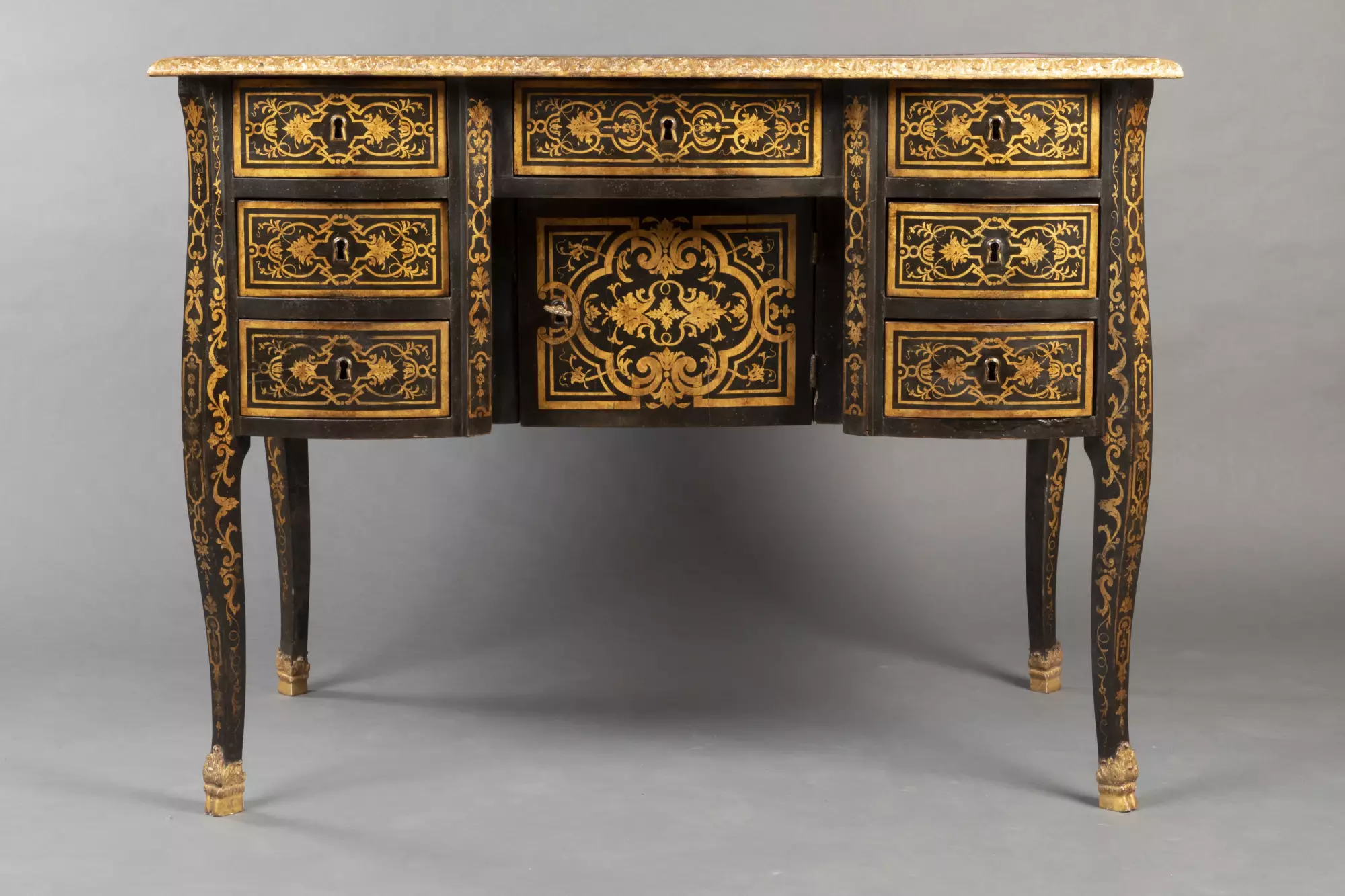
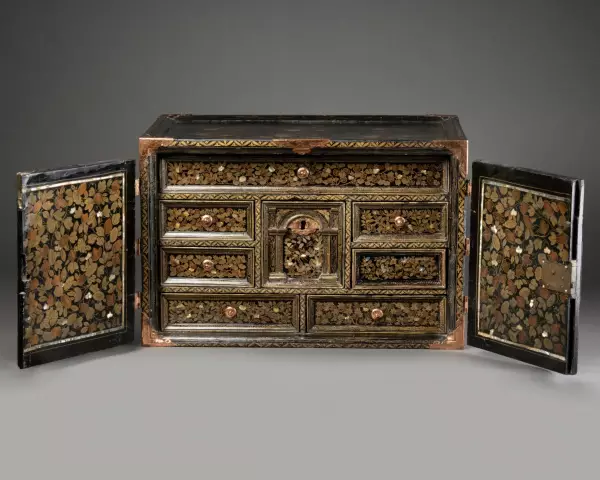
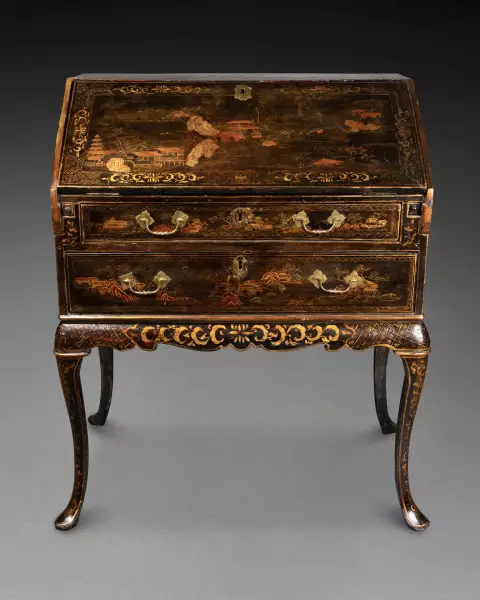
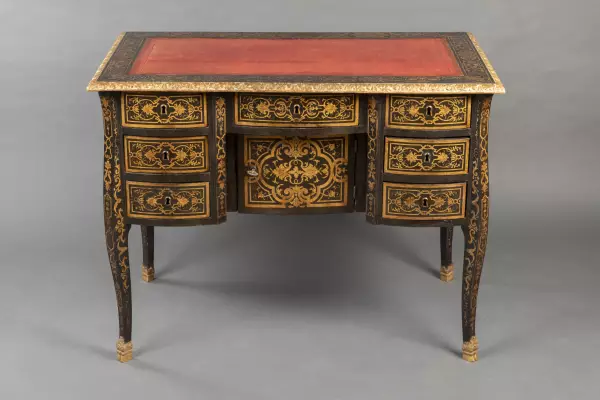
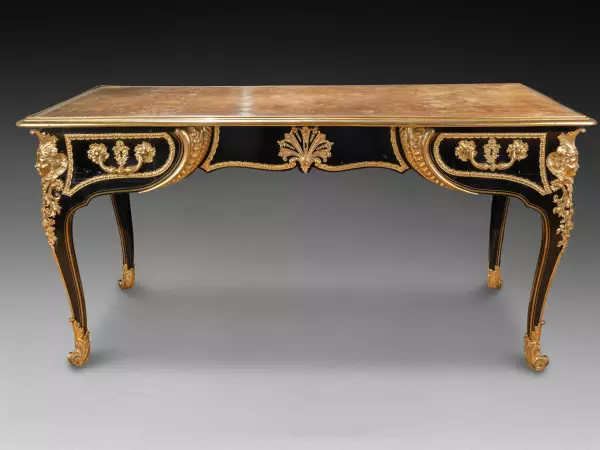
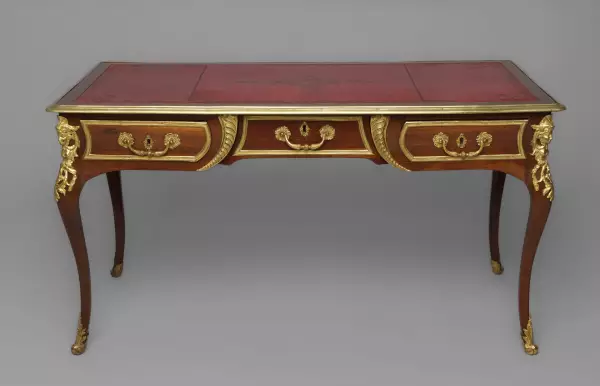
Mazarin desk in lacquer imitating Boulle marquetry, Louis XIV period
DIMENSIONS : l. 39.37 .inH. 30.51 .inP. 22.64 .in
MATERIAUX : French lacquer
PROVENANCE : France - Paris
PRICE : Contact us
REQUEST INFORMATION
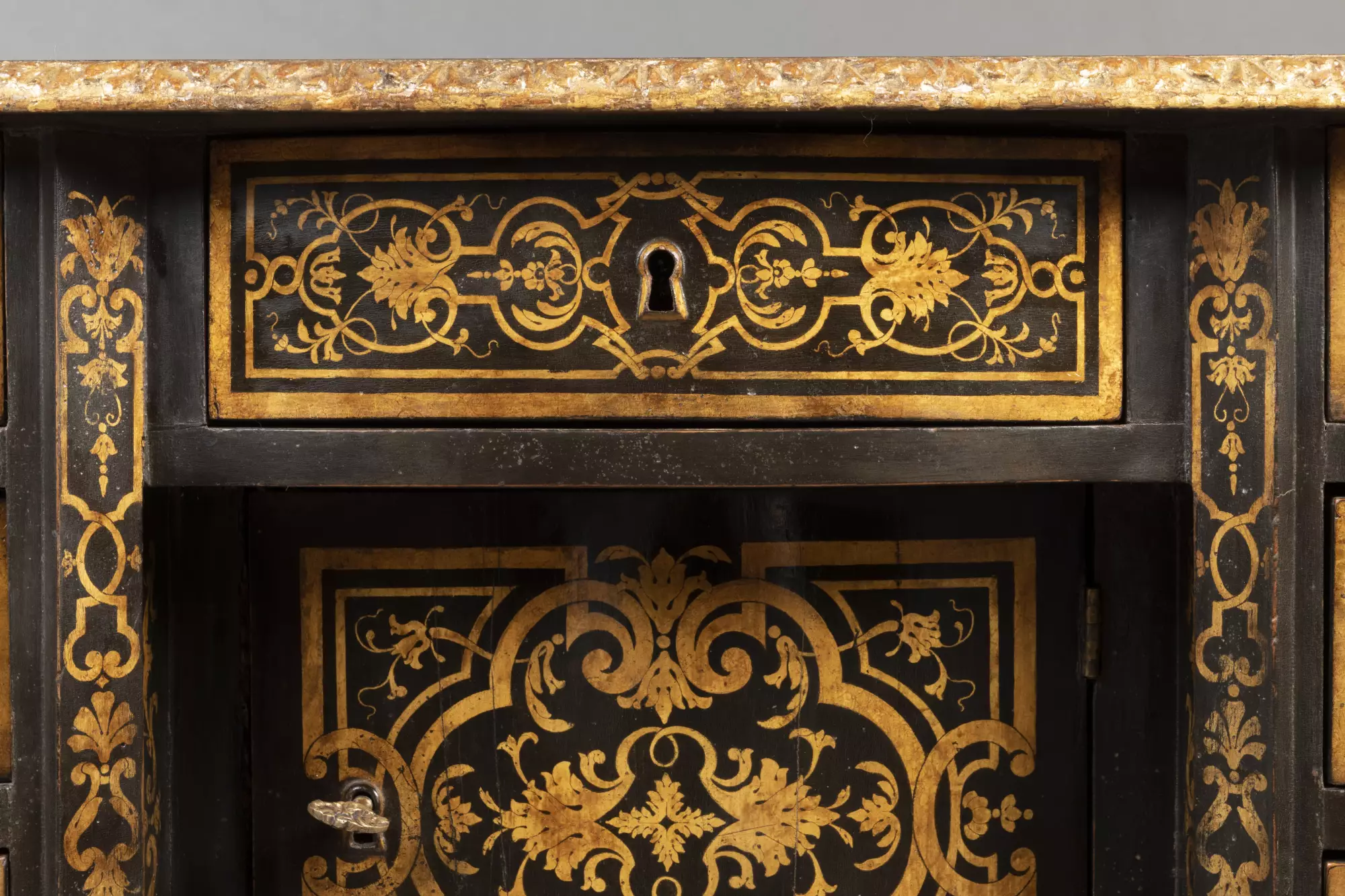
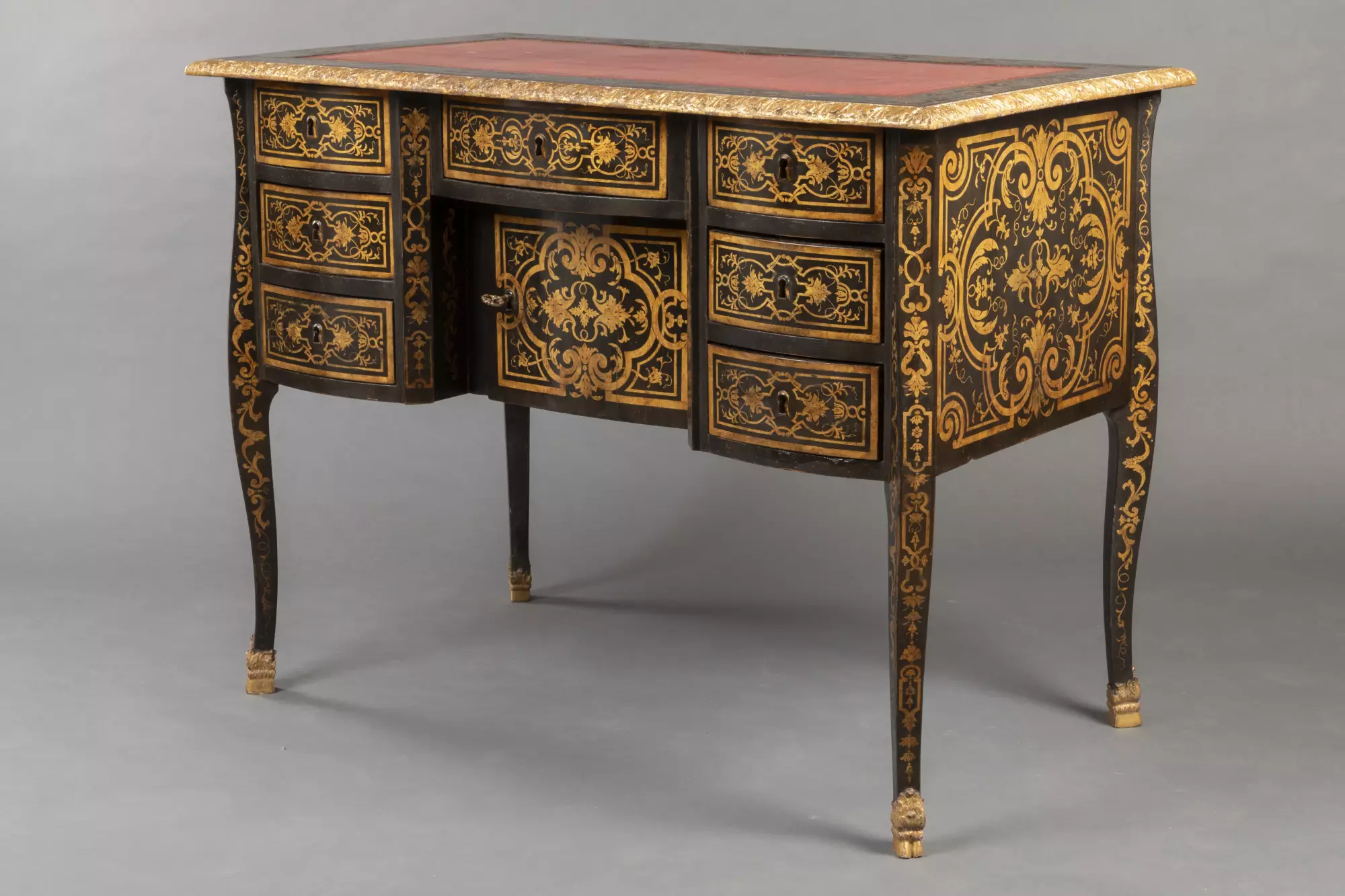
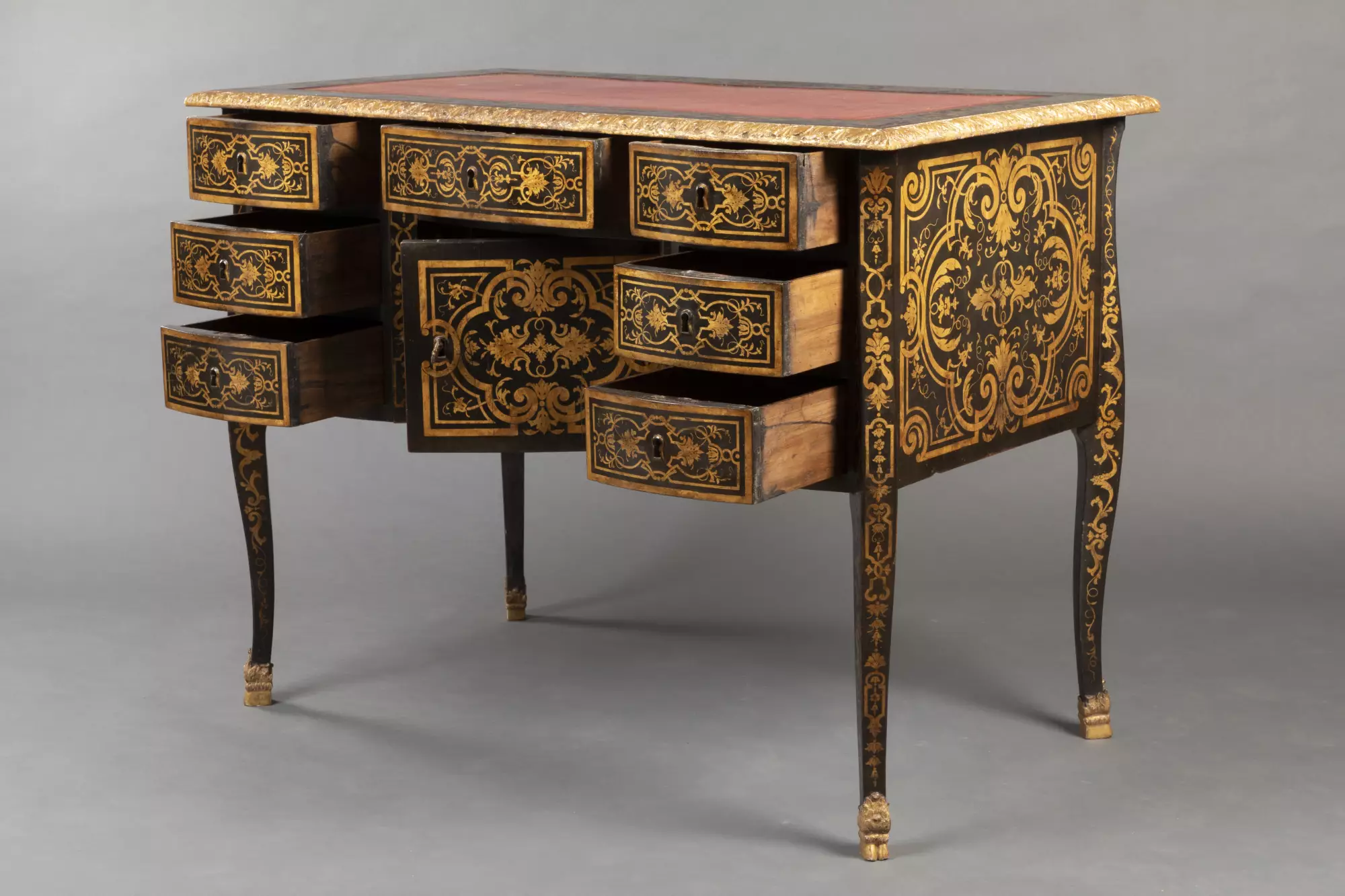
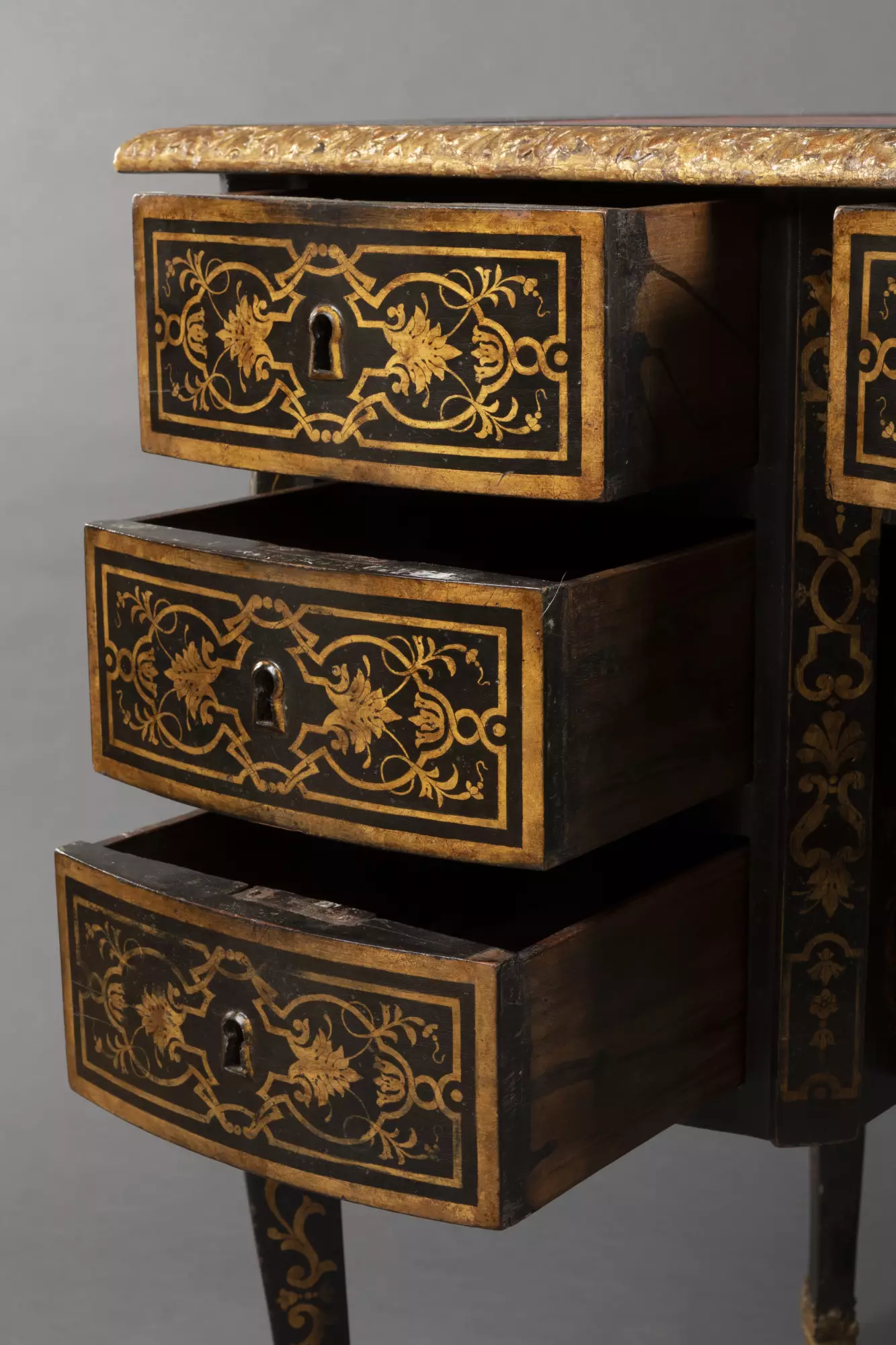
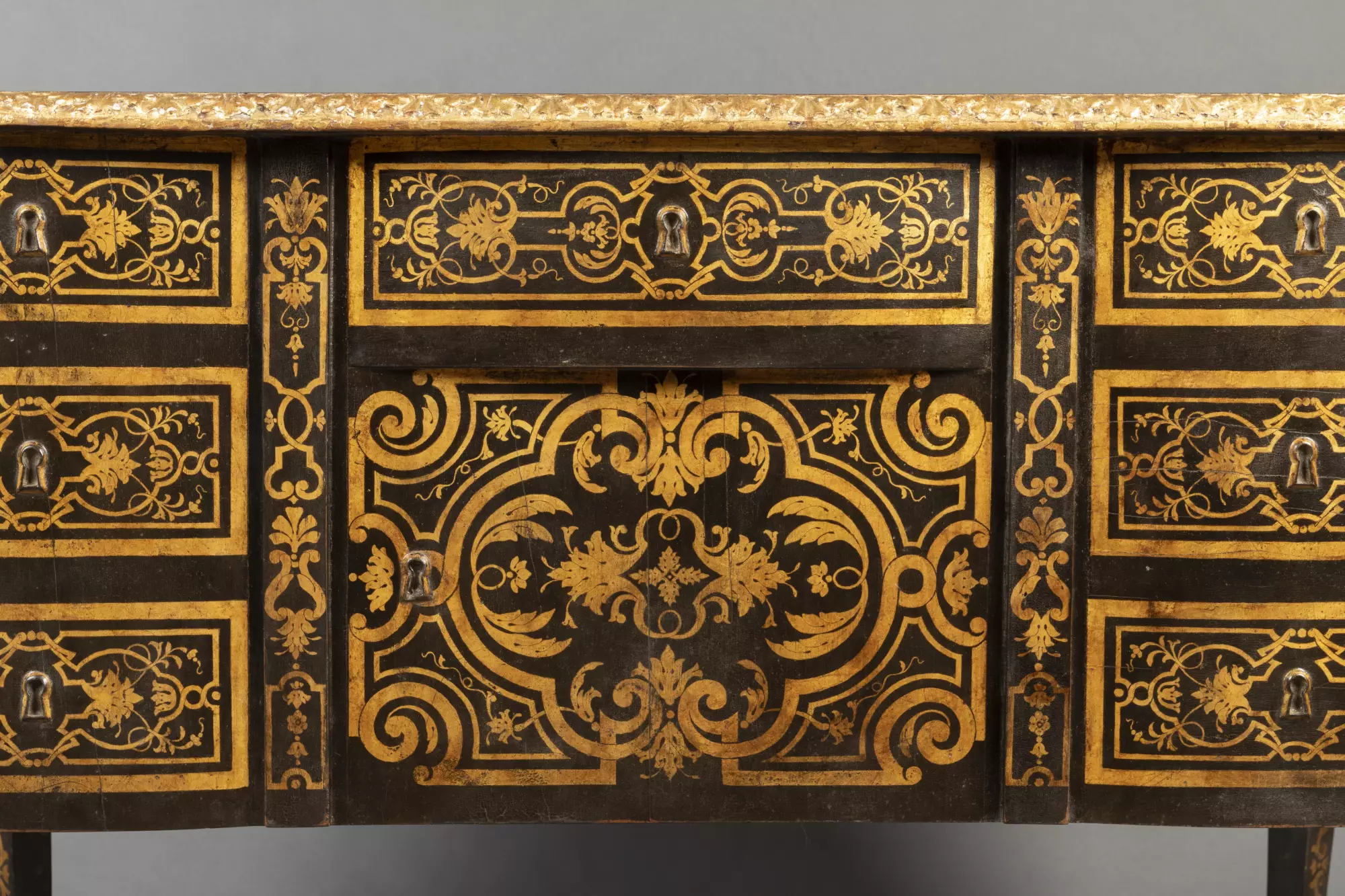
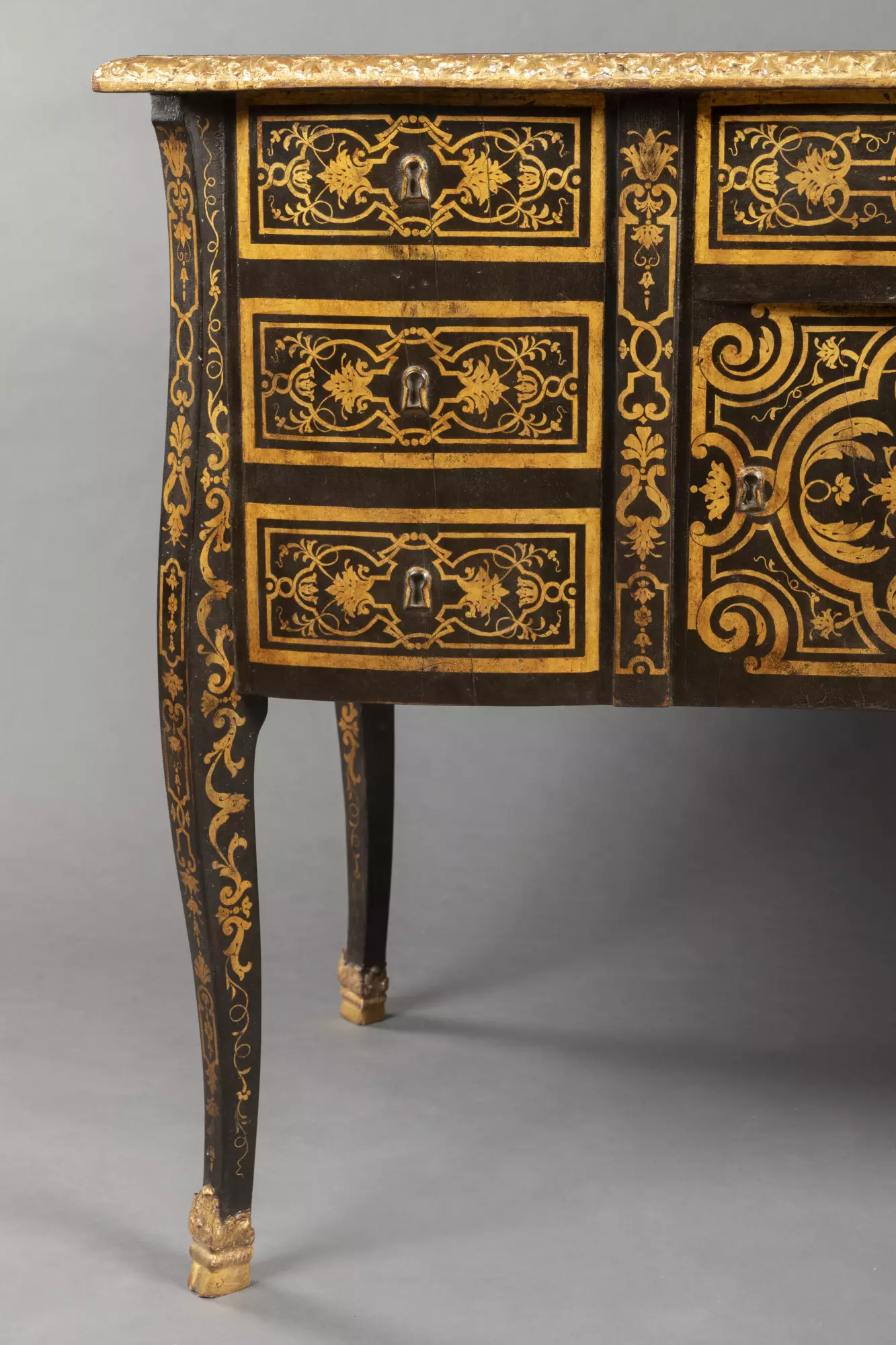
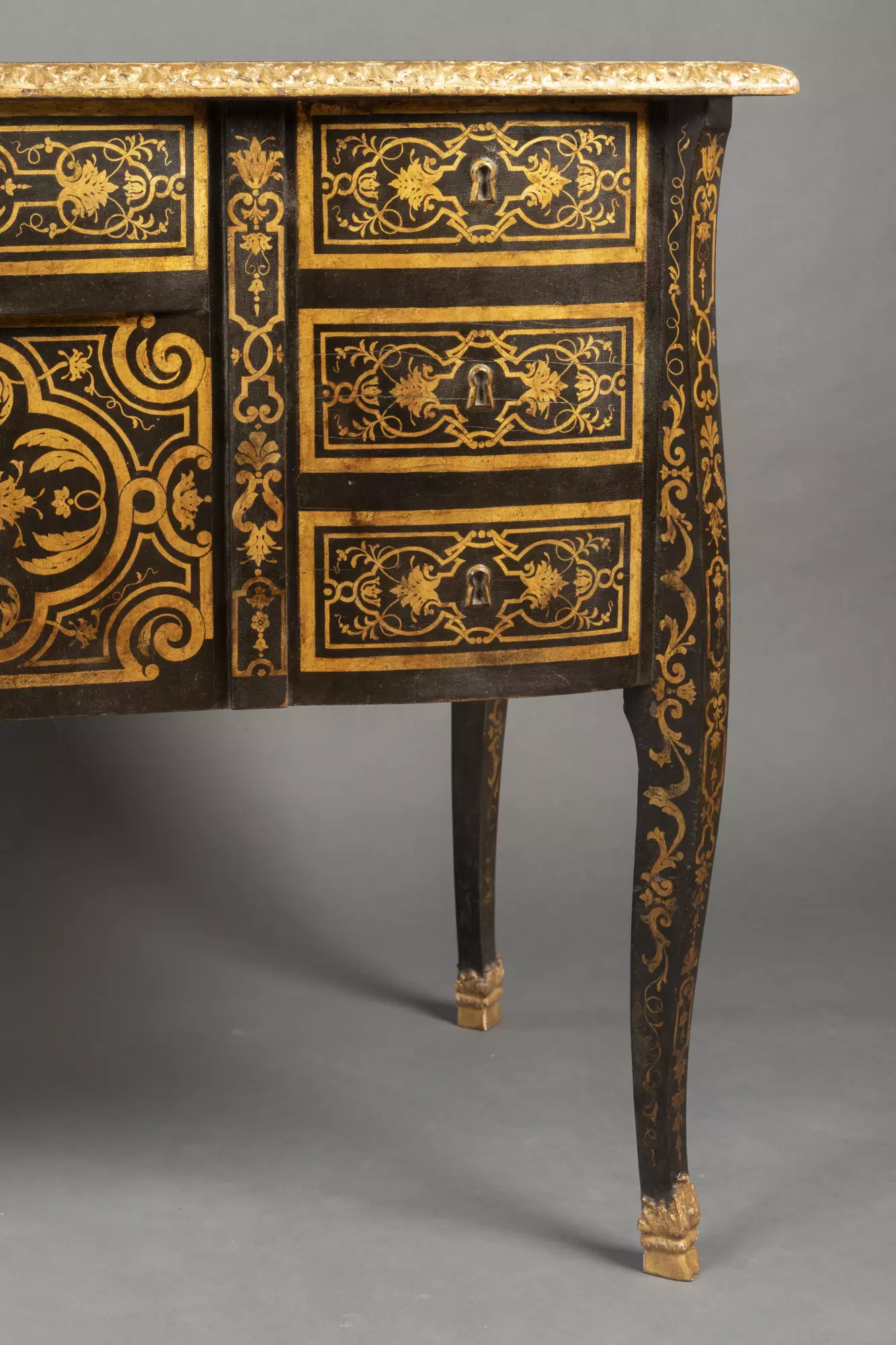
?Extremely rare desk opening with seven drawers and a drop-front.
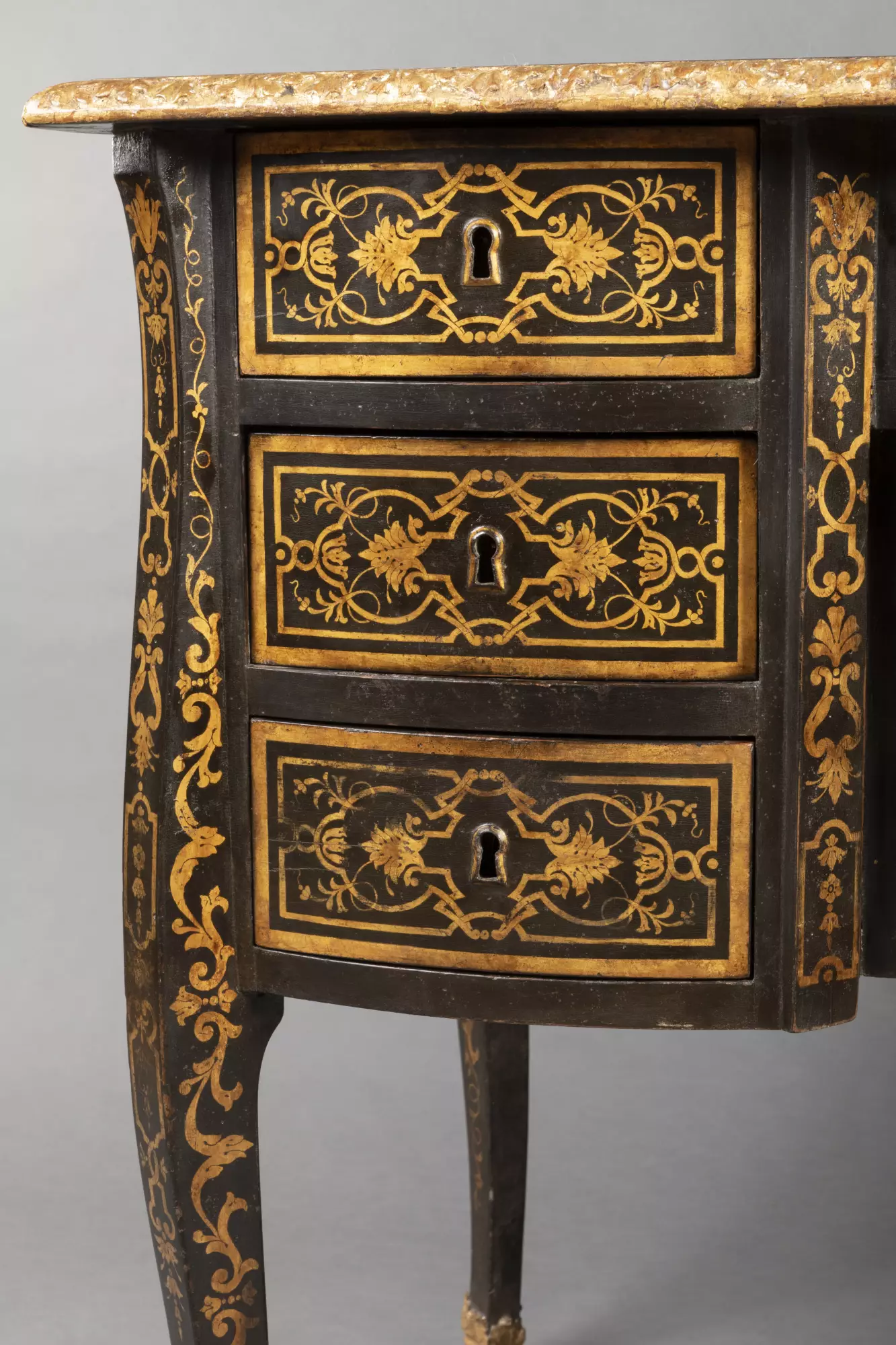
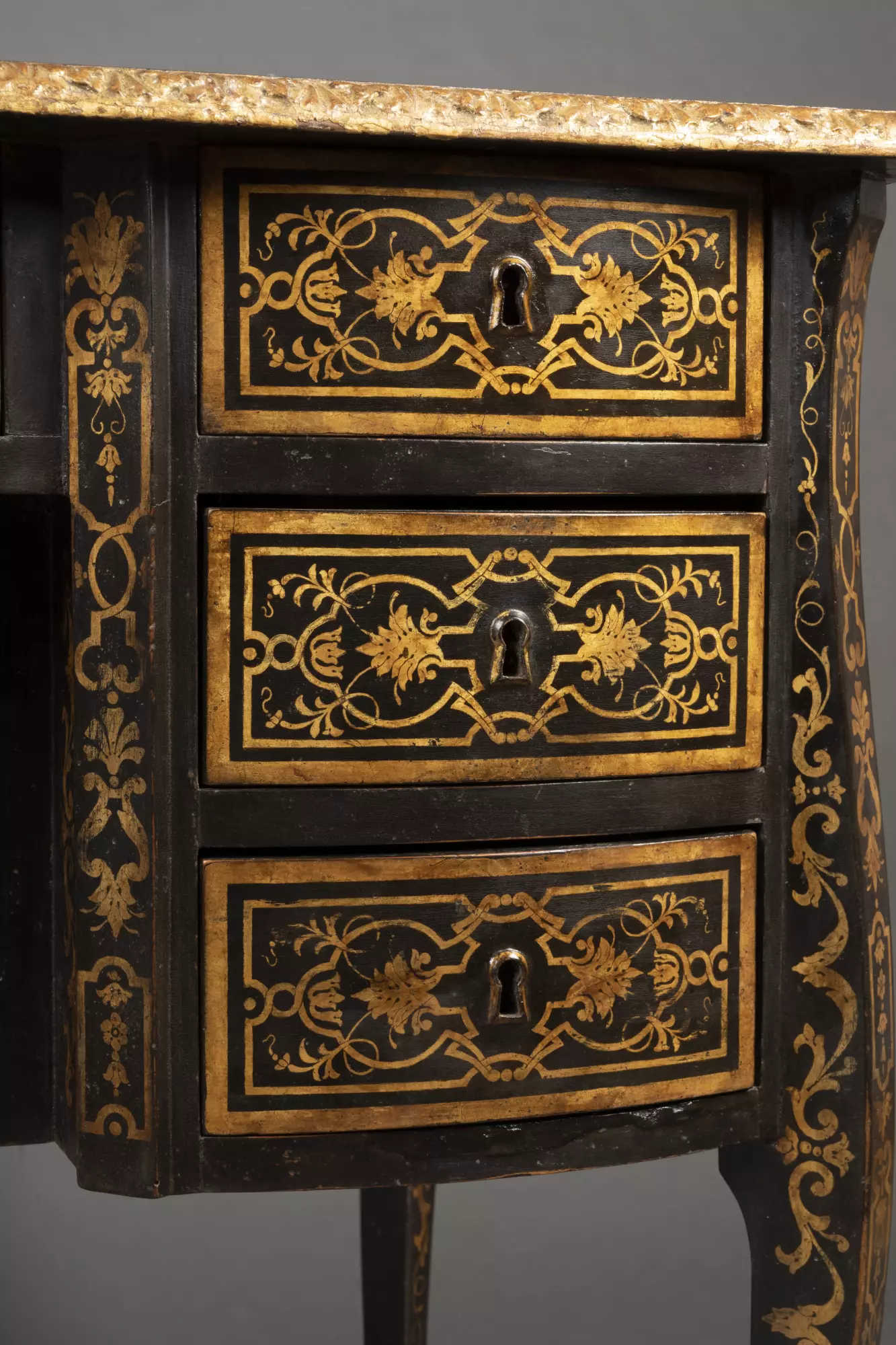
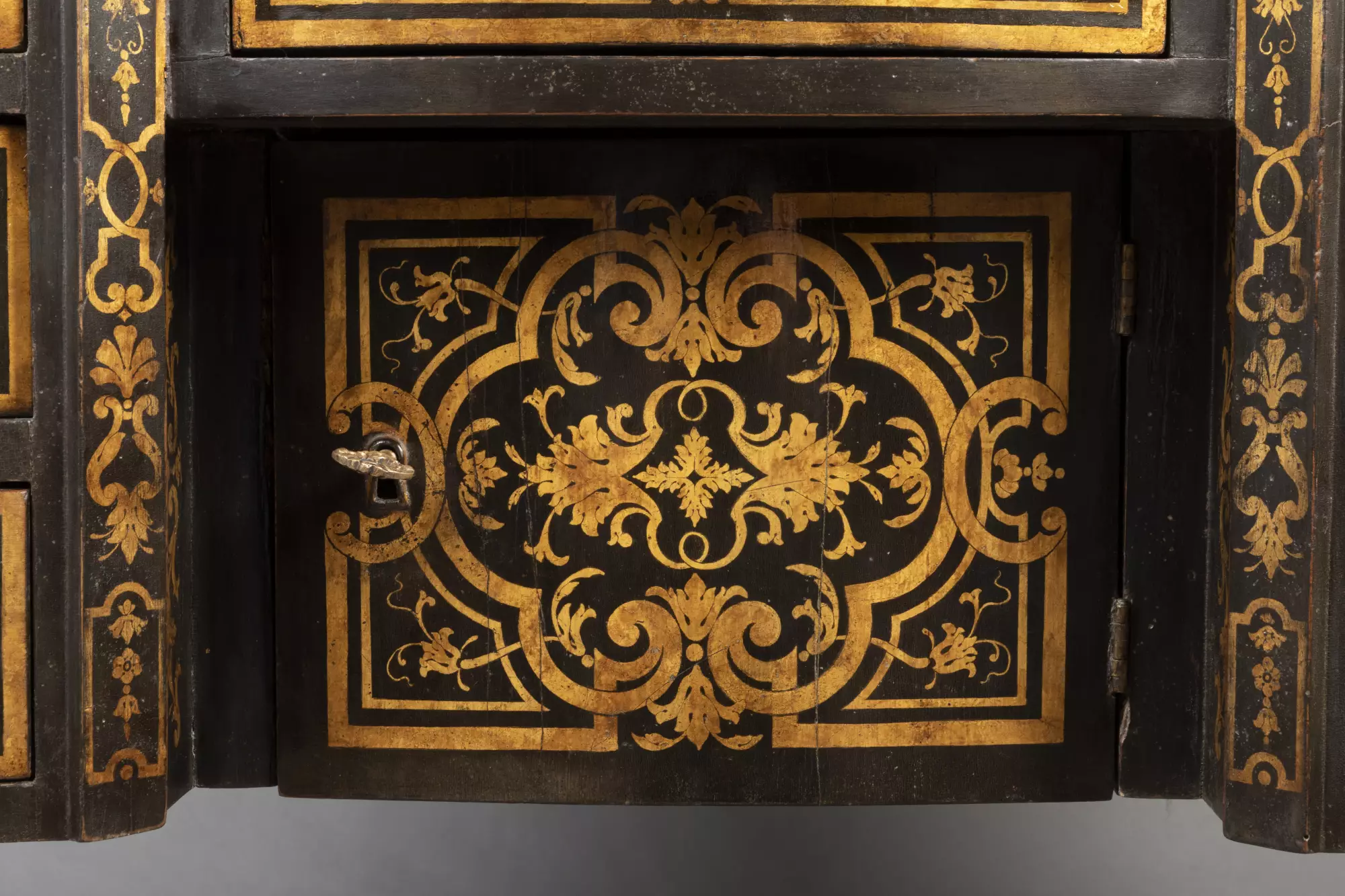
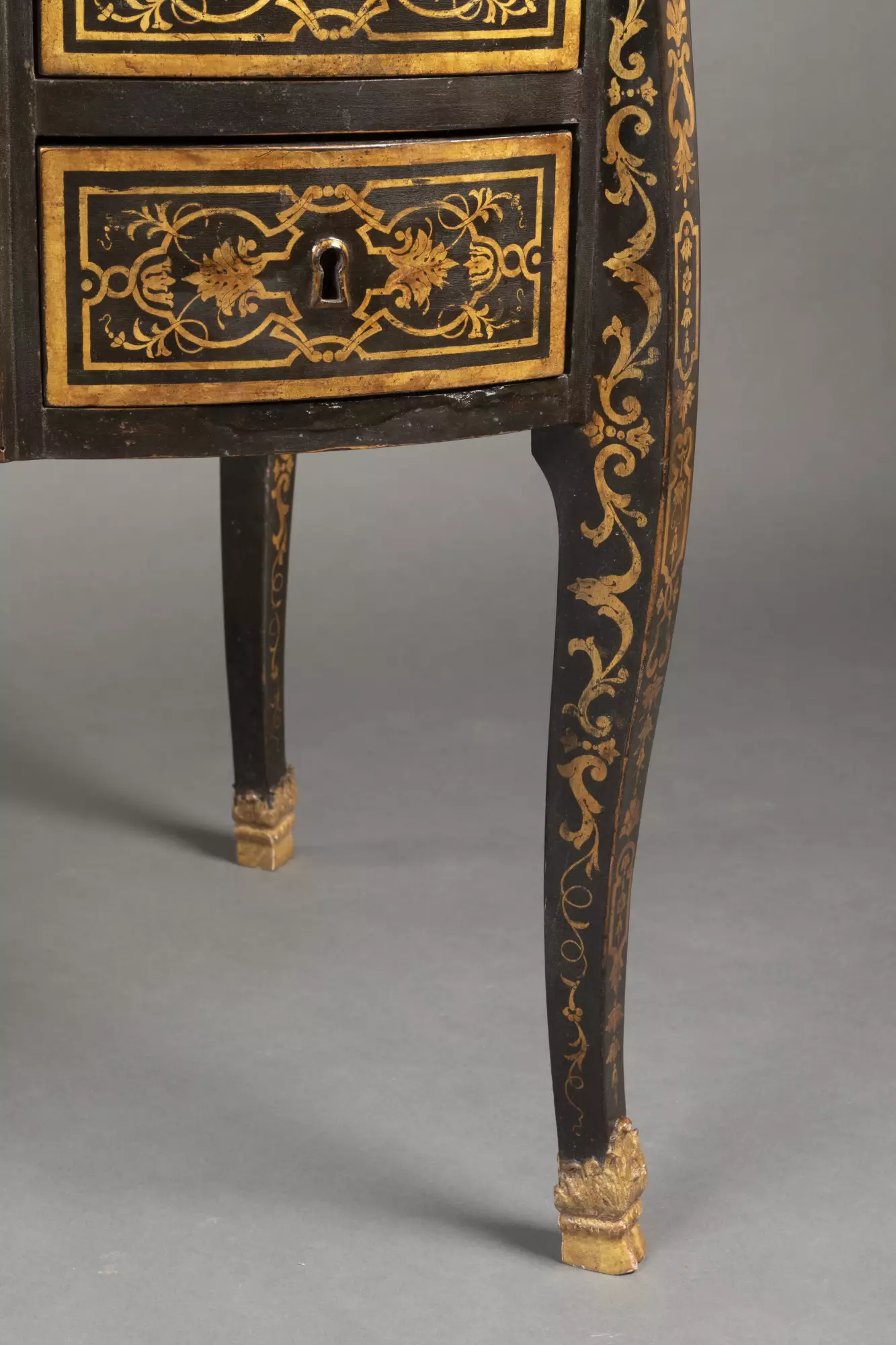
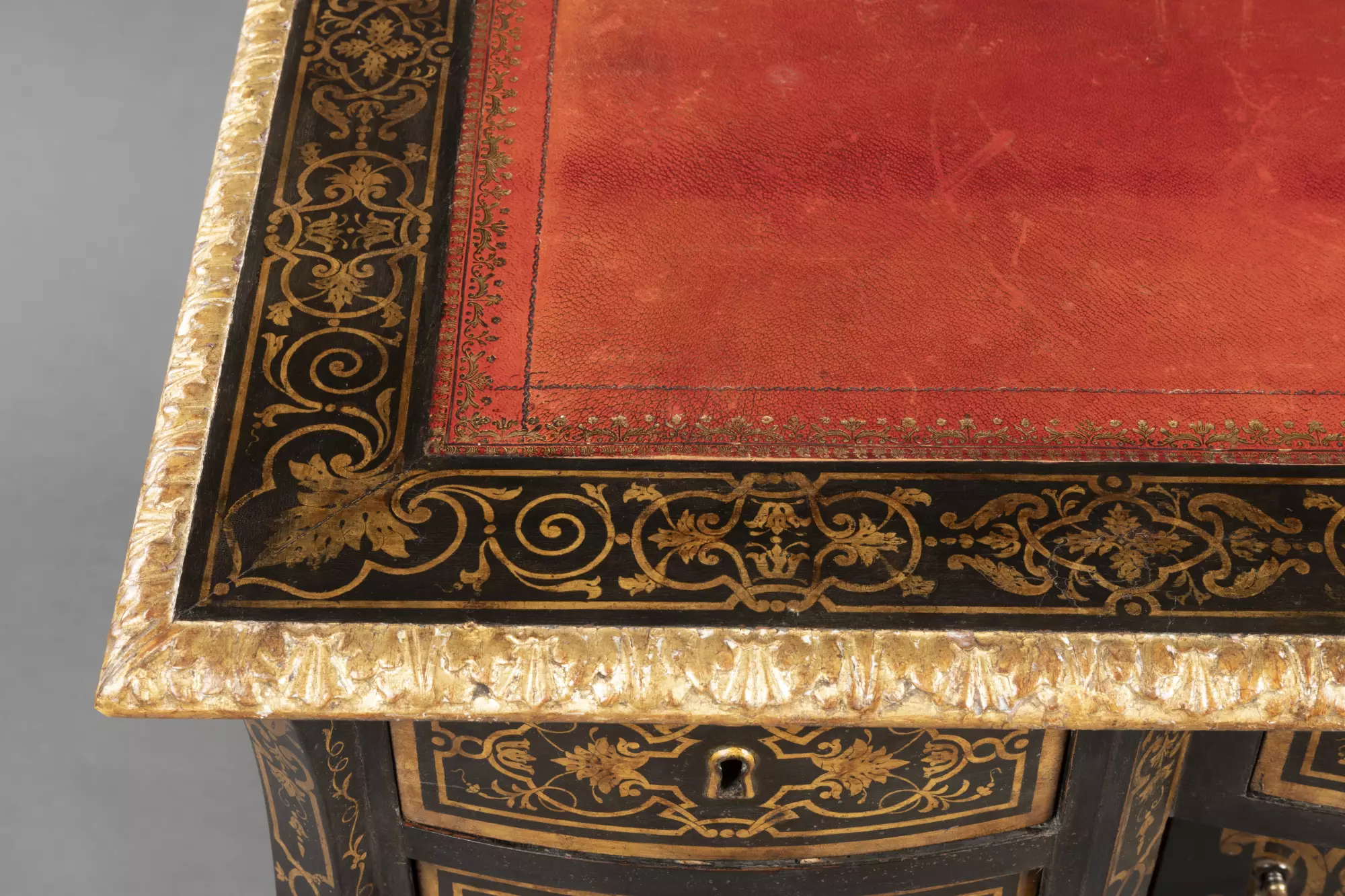
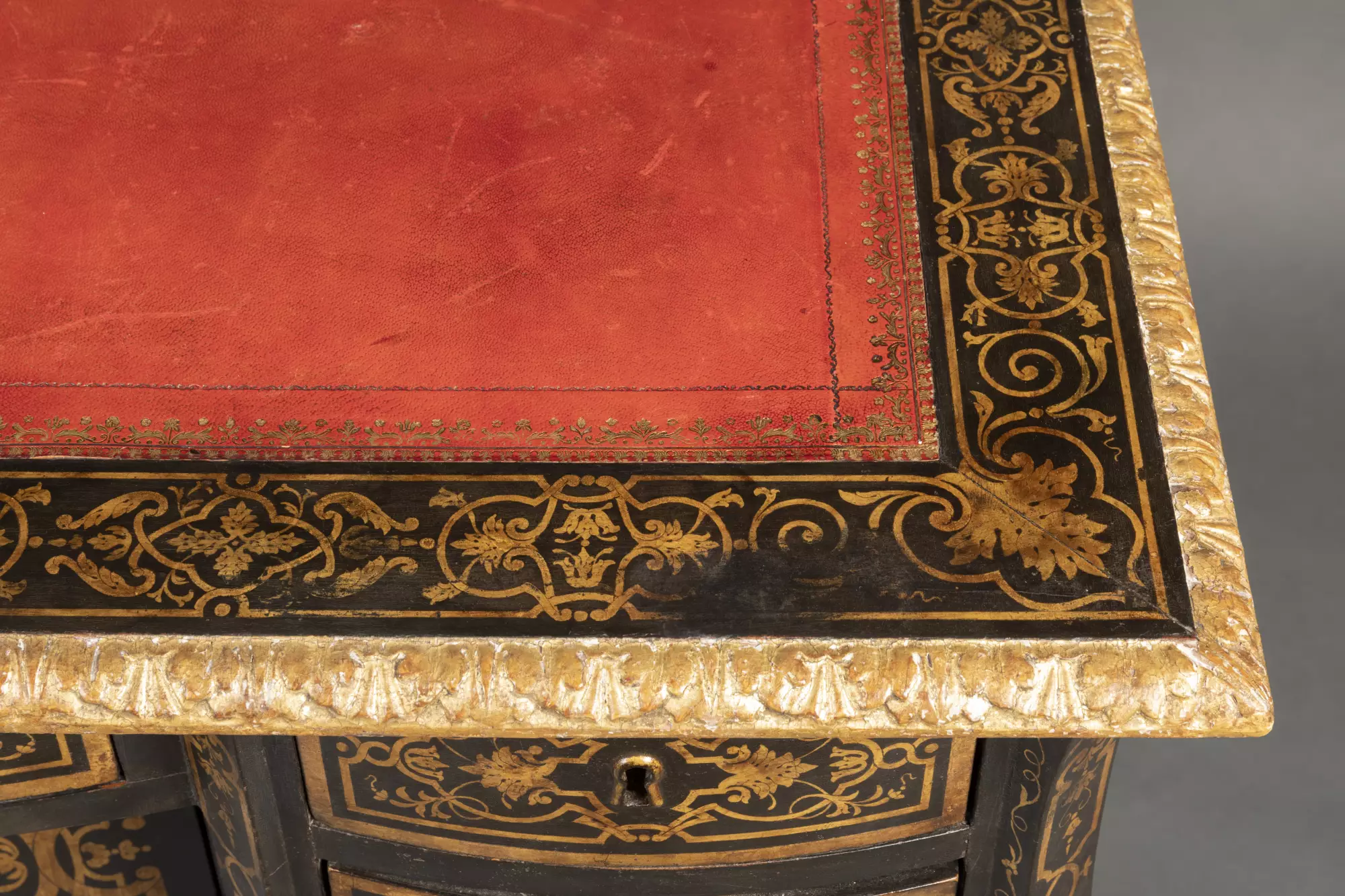
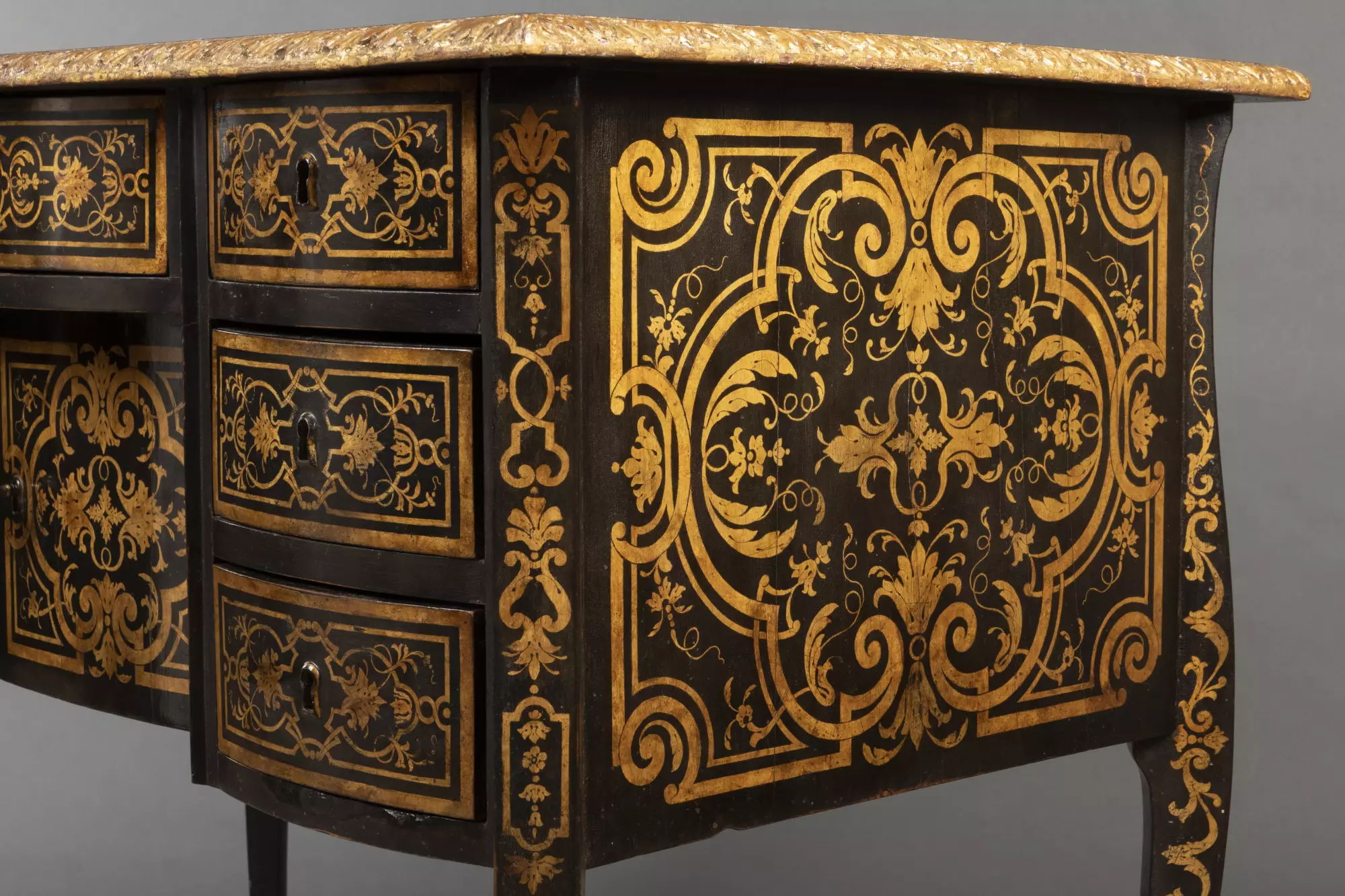
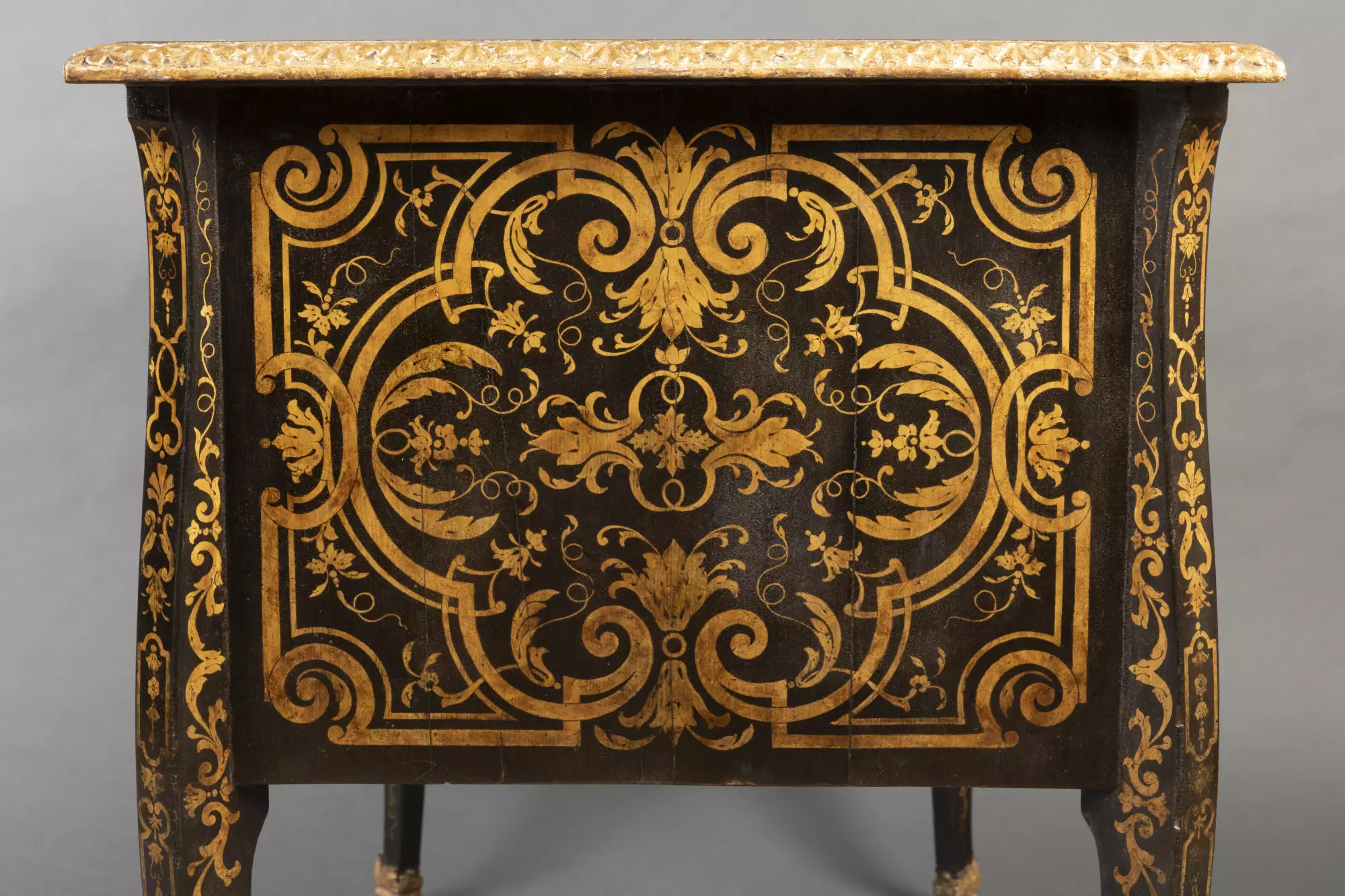
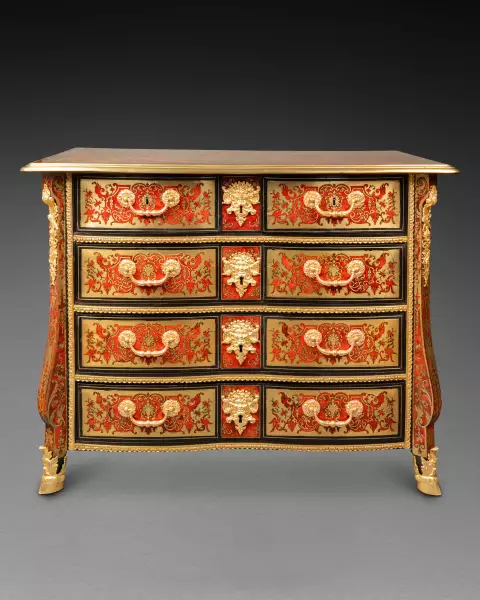
It rests on cabriole legs ending in deer hooves. A mid-range model with double-sided lacquer decoration imitating Boulle marquetry, the first section features cut brass inlays on an ebony ground. The top, adorned with red leather tooled in gold, is framed by decorated bands, all encircled by a giltwood molding finely carved with acanthus leaves. The back panel simulates the same drawer and niche arrangement as the front.
Fir wood for the drawer bottoms, linden wood for the gilt and decorated sections.
Perfect condition, original key and locks.
French work from the late Louis XIV period, circa 1710, attributable to the workshop of Jacques Langlois or Guillaume Martin in Paris.
Our opinion:
Our desk belongs to a small group of furniture pieces made in the first decade of the 18th century by Parisian varnishing workshops to imitate Boulle marquetry. Indeed, while the varnishers' initial aim was to imitate oriental lacquers from China and Japan, they quickly realized the limitless possibilities offered by mastering this technique. Then came decorations imitating Boulle marquetry, as well as decorations featuring characters from the Commedia dell'arte, and later, decorations in the style of François Boucher, Oudry, or Pillement, which would make the famous Martin varnish so renowned.
But let's return to our group of extremely rare furniture.
Indeed, to our knowledge, only two commodes employing this technique are known: the first was sold in Paris and is illustrated on page 94 of Thibaut Wolvesperges' book, "French Lacquered Furniture in the 18th Century"; the second belongs to the Musée des Arts Décoratifs in Paris, inventory number 51394, and is illustrated on page 41 of the book "The Secrets of French Lacquer: Martin Varnish." These two commodes, with their very simple lines, date from the late Louis XIV period, around 1710. Their decoration is entirely similar to pieces from the same era. The engravings used come from the collections of Jean Berain (1640-1711).
The loss of the stretcher on the Mazarin desks around 1710 is another clue that allows us to date our piece with certainty. Like the commode in the Musée des Arts Décoratifs, whose top simulates black and gold Portoro marble, our desk has no gilt bronze mounts. The ingot-shaped molding, feet, and keyhole escutcheons are made of giltwood to create a perfect illusion.
This desk is the best-preserved piece in this collection and boasts the most beautiful decoration, on all four sides; moreover, it is the only known desk to feature this type of decoration.
From a private collection in the South of France, it has probably traveled very little. Since no other model is known to date, we can only mention the Mazarin desk illustrated on page 37 of the book " French Lacquer ". This desk, part of the Bernard Steinitz collection, features a chinoiserie decoration which, combined with the stretcher, dates it to the early 18th century, around 1700. It was auctioned at Sotheby's "BBS: A Tribute" sale on June 30, 2016, under lot number 31. (Sold for €68,750 including fees)
Attribution to Jacques Langlois or Guillaume Martin:
These were the two largest Parisian workshops producing imitations of Oriental lacquer; the archives shed light on the workings of their workshops.
We know that in 1713, Guillaume Martin hired the engraver Antoine Bercy to "engrave subjects of metamorphoses on Verny glass, provided to him by the said Martin," a subject that shows that the workshop very early on moved away from Oriental themes. Jacques Langlois, a varnisher in the Faubourg Saint-Antoine, took over his father Mathieu's workshop. His post-mortem inventory includes dozens of varnished pieces in the Chine style. But his close relationship with Jean Berain, with whom he co-signed the marriage contract of his niece Geneviève Titon, suggests that he too produced pieces in Berain's style.