Galerie Franck Baptiste
7 quai Voltaire
75007 Paris
FRANCE
Tél. +33 (0)6 45 88 53 58
Monday to Saturday
10h - 13h & 14h - 18h30
- FR
- EN

Works of Art
17th century
1
Works of Art du 17th century
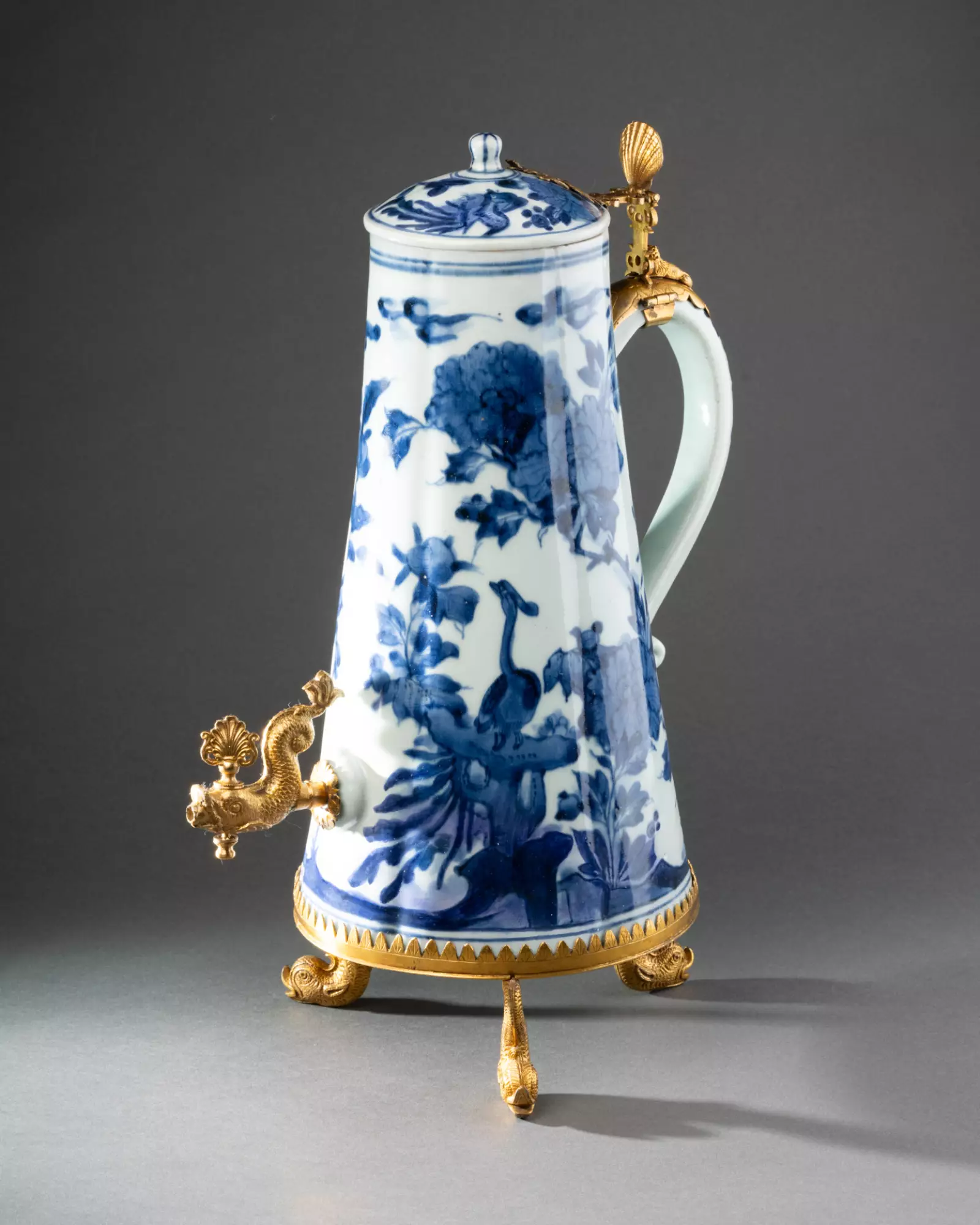
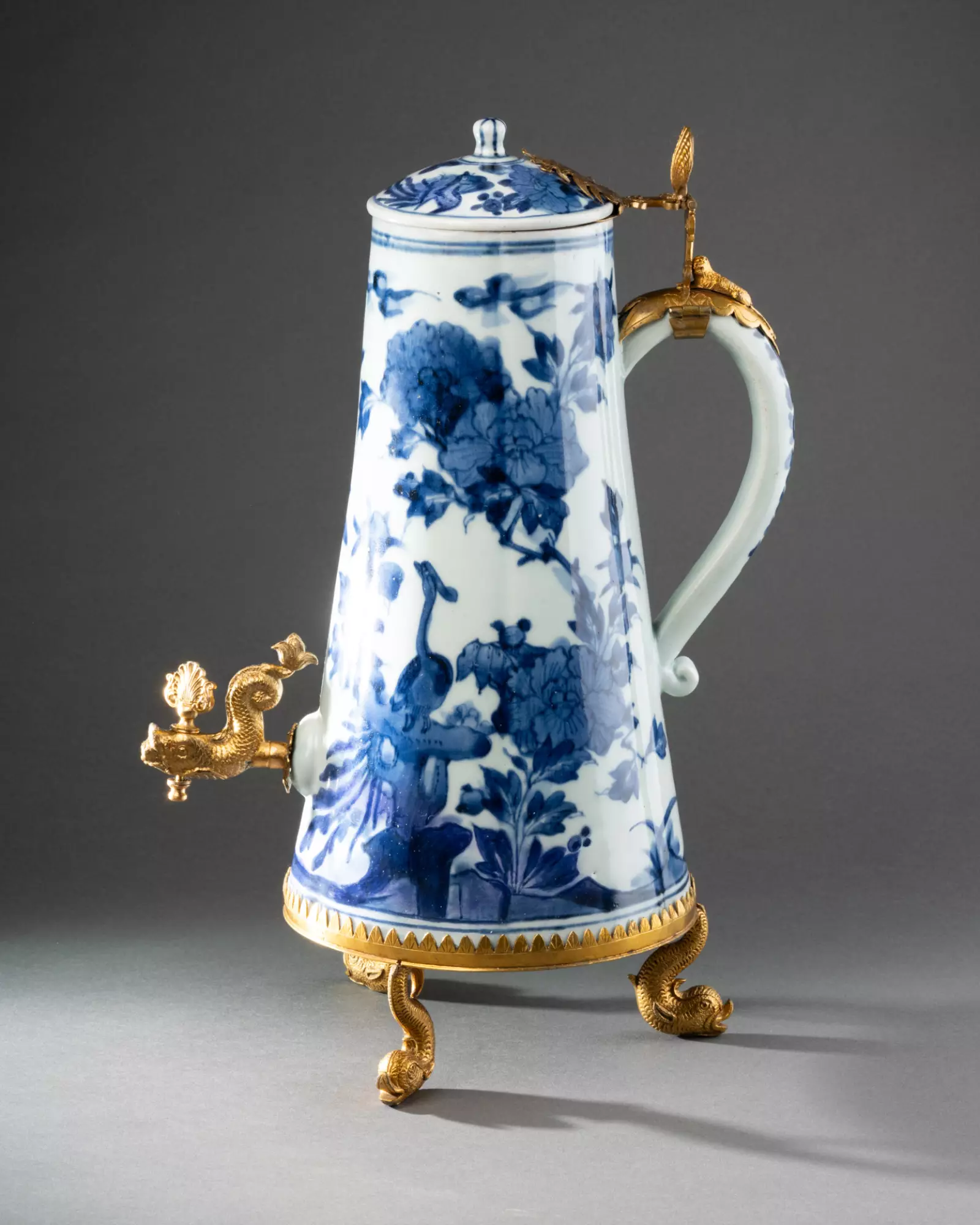
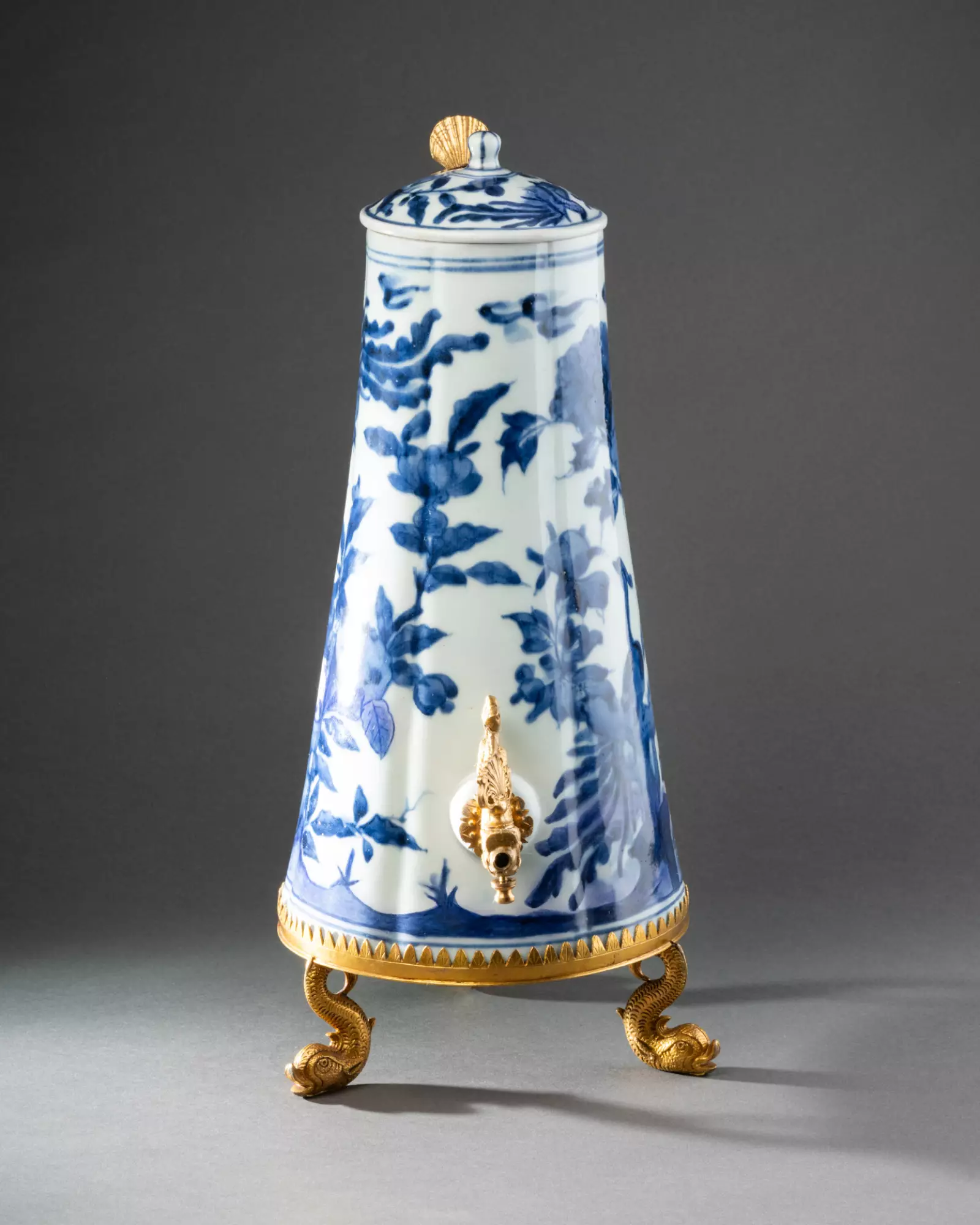
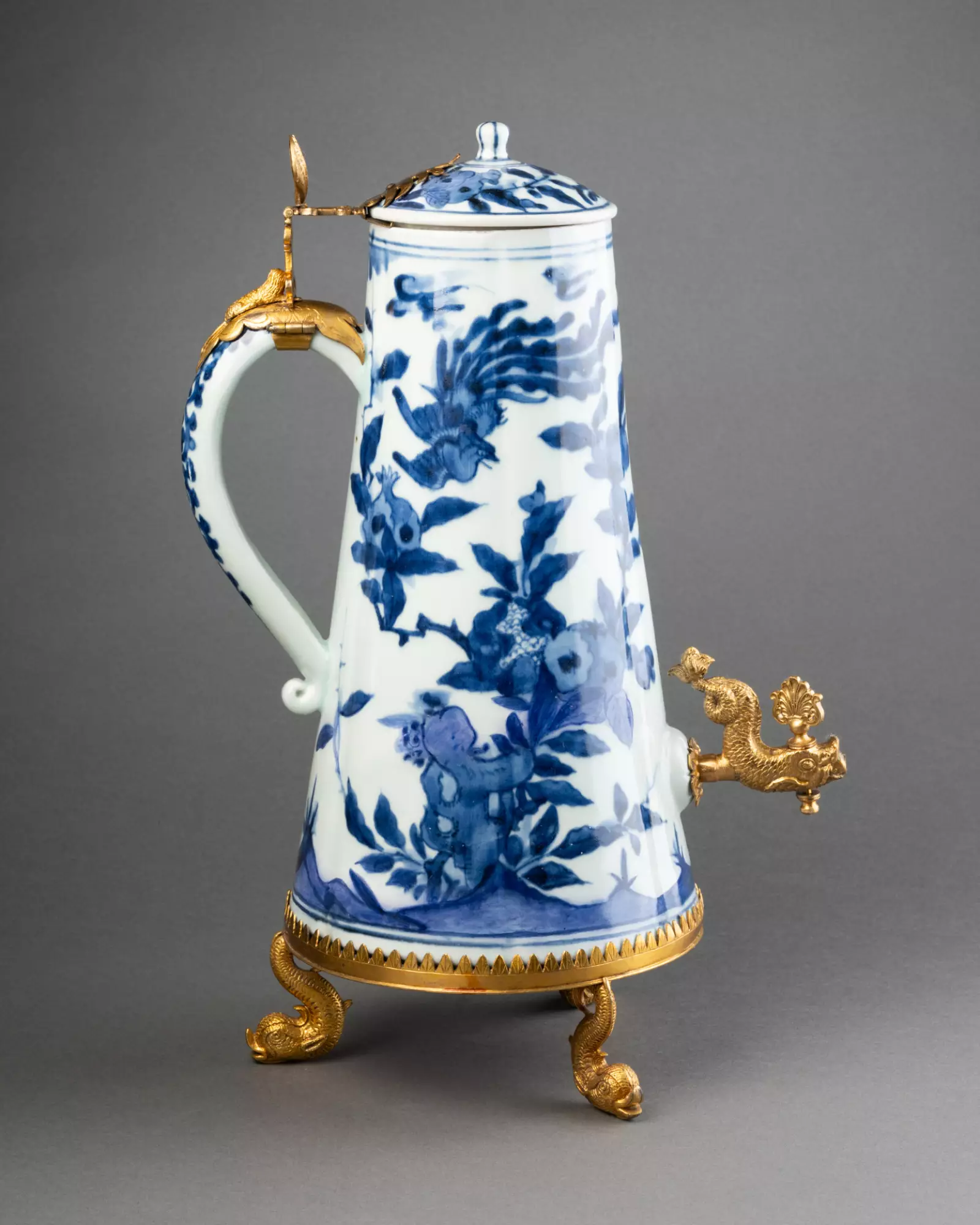
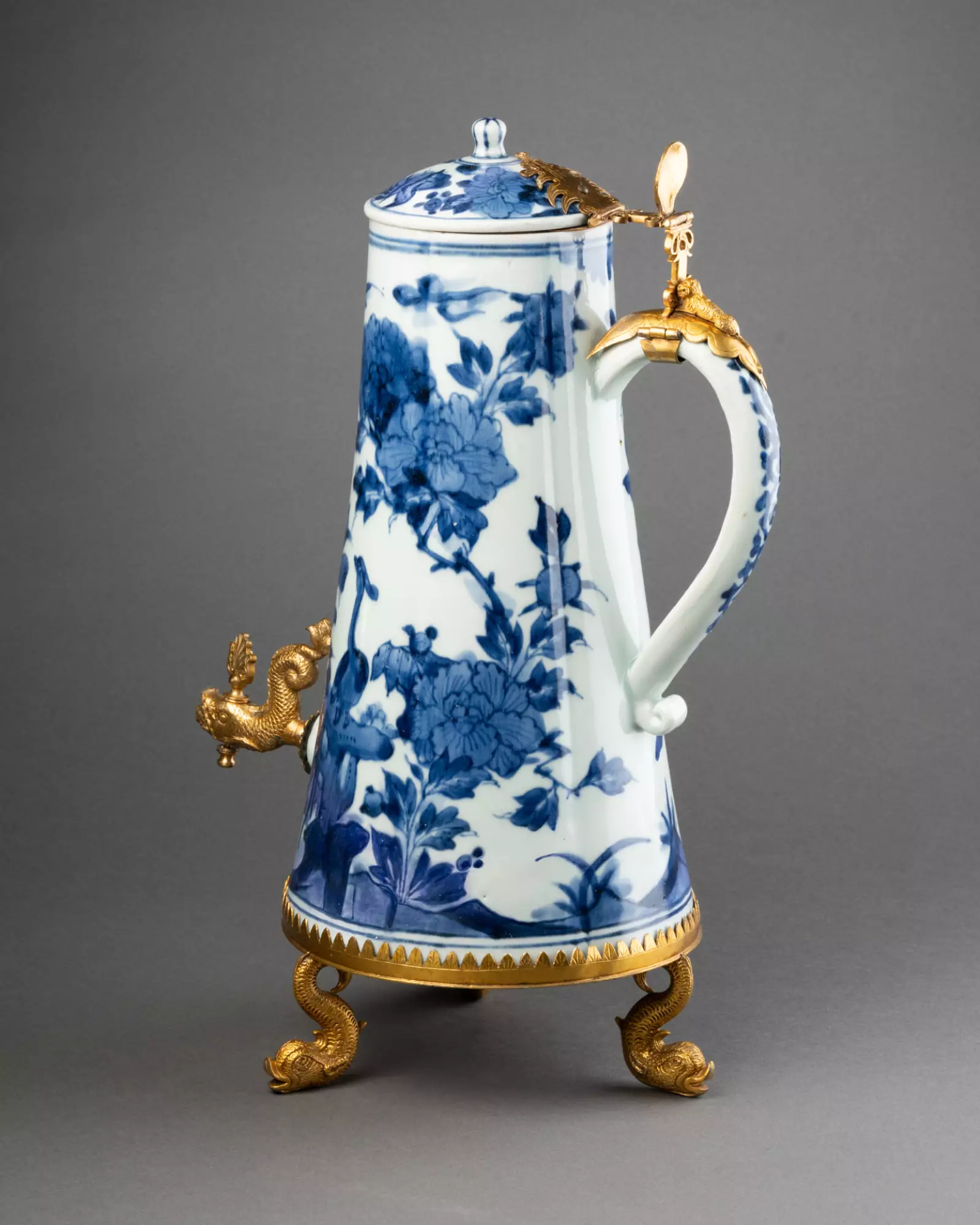
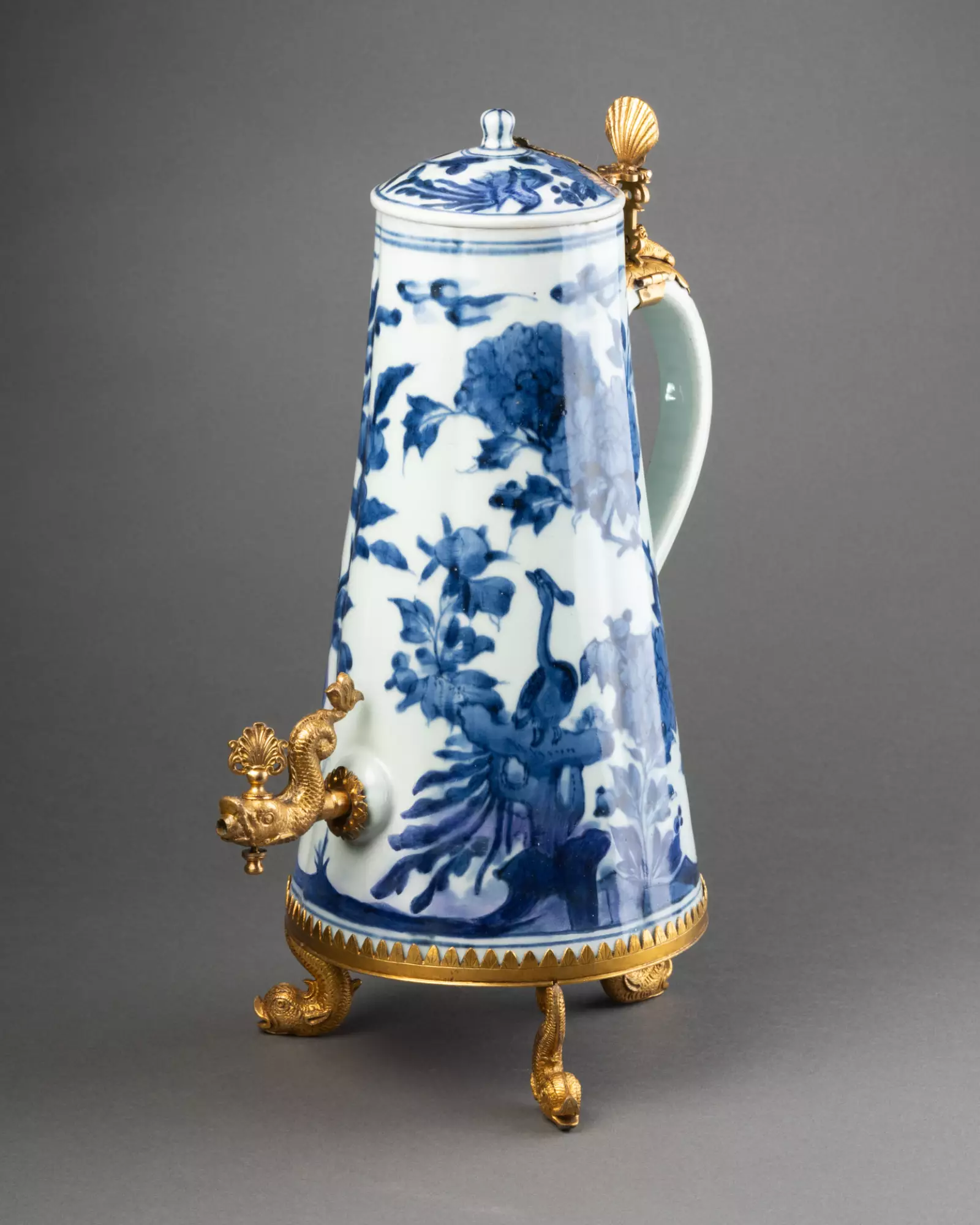
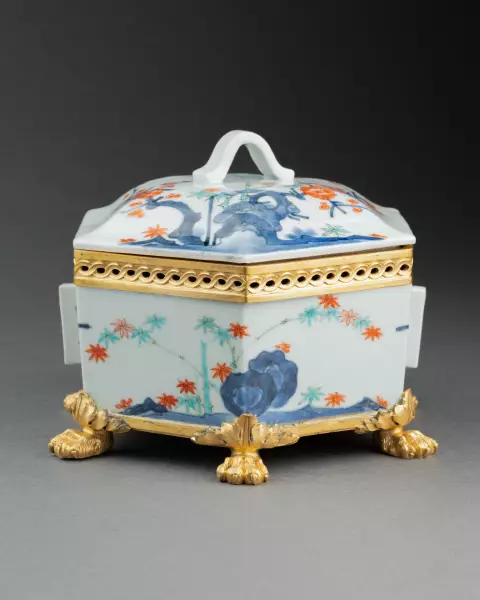
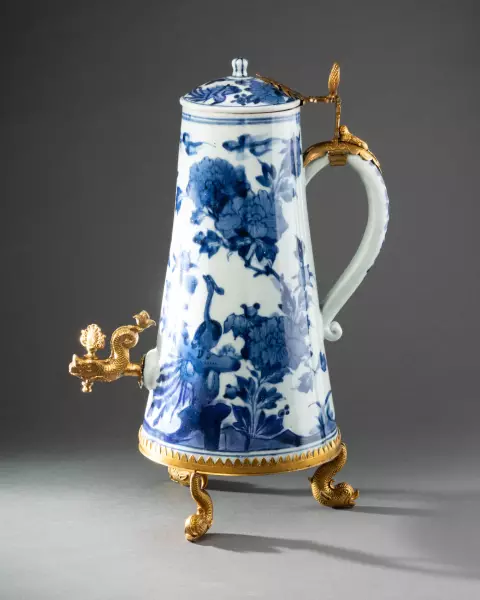
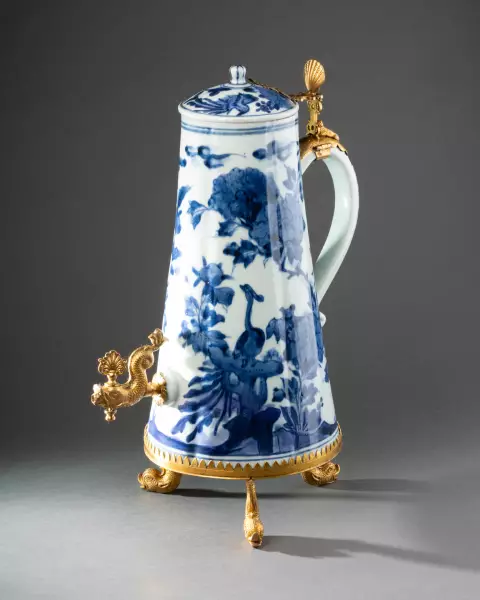
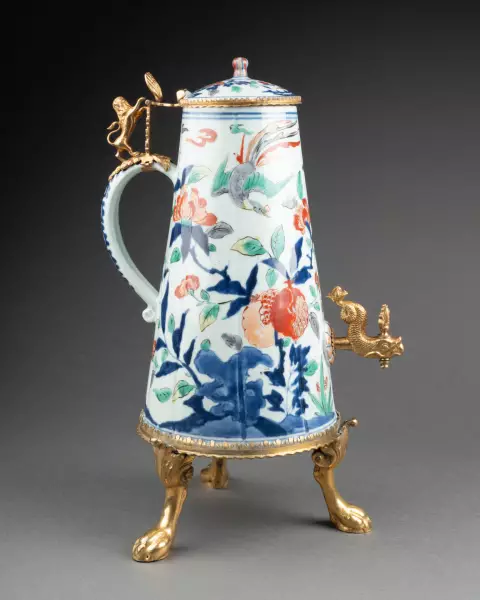
Japanese porcelain coffee fountain around 1680-1690
DIMENSIONS : l. 7.87 .inH. 14.96 .in
MATERIAUX : Porcelain and gilded bronze mount
PROVENANCE : Japon
PRICE : Contact us
REQUEST INFORMATION
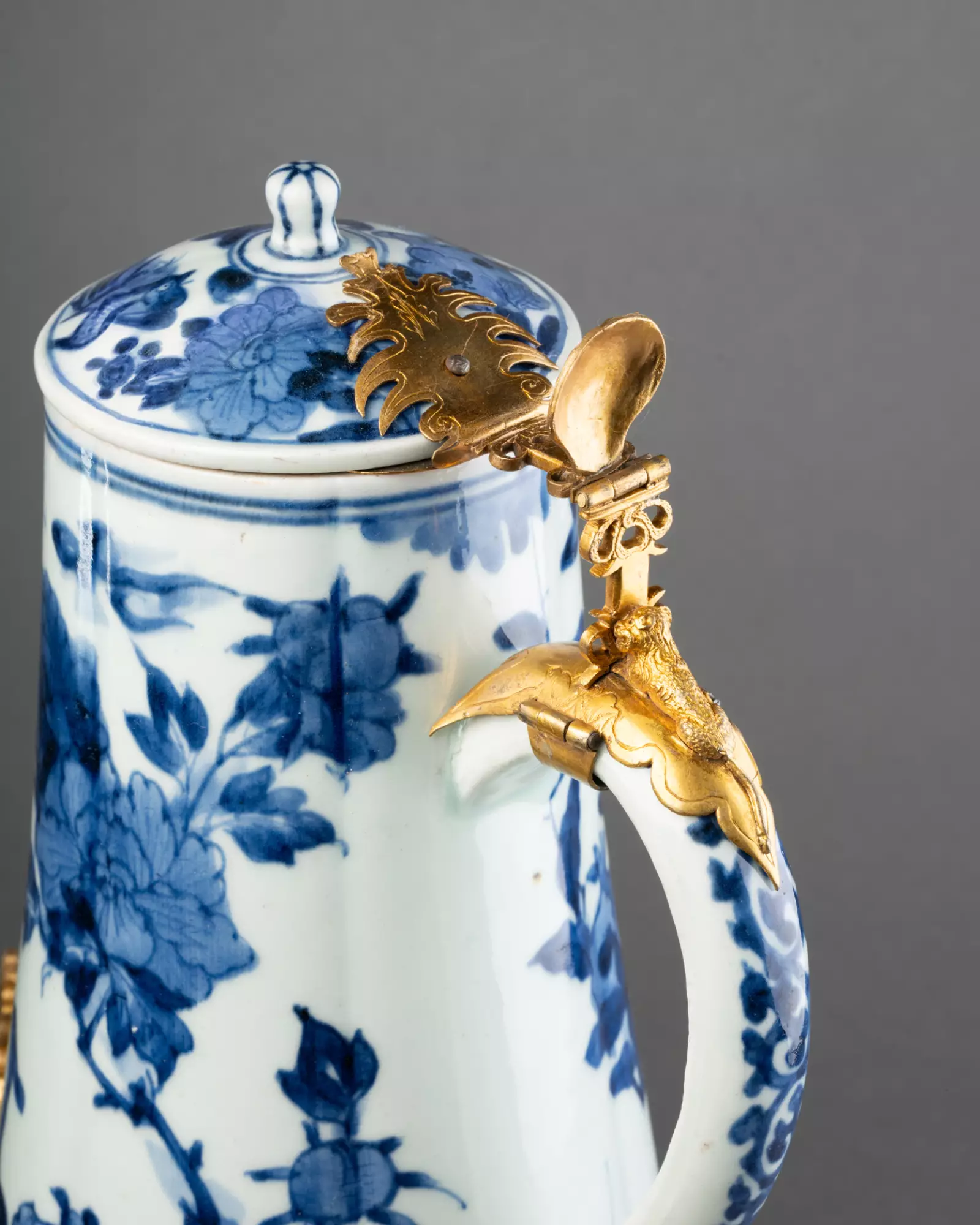
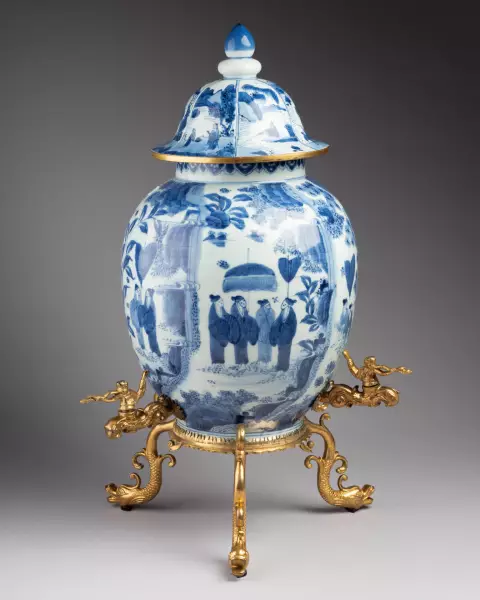
?Rare Japanese Imari porcelain coffee fountain and mercury-gilt bronze mount.
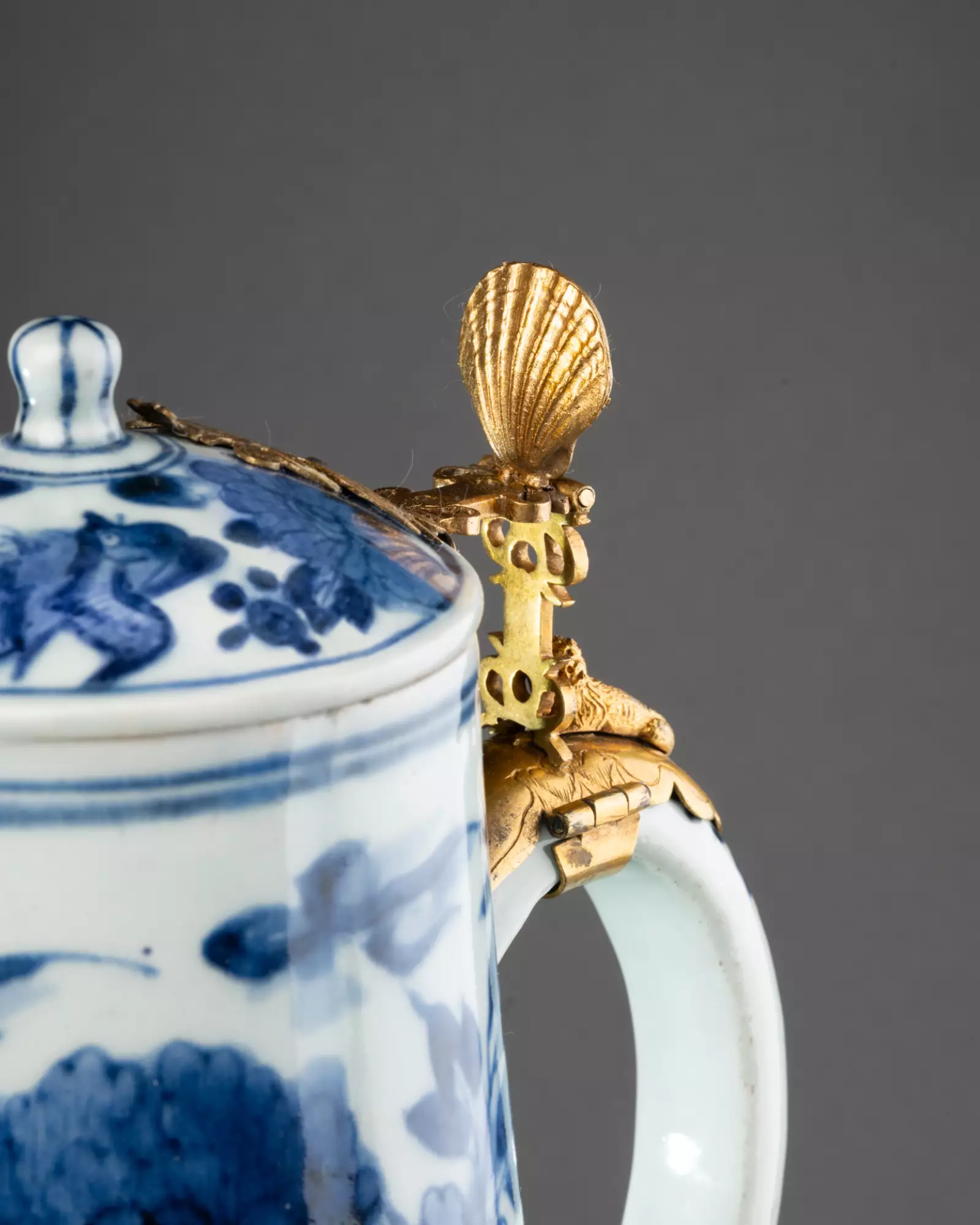
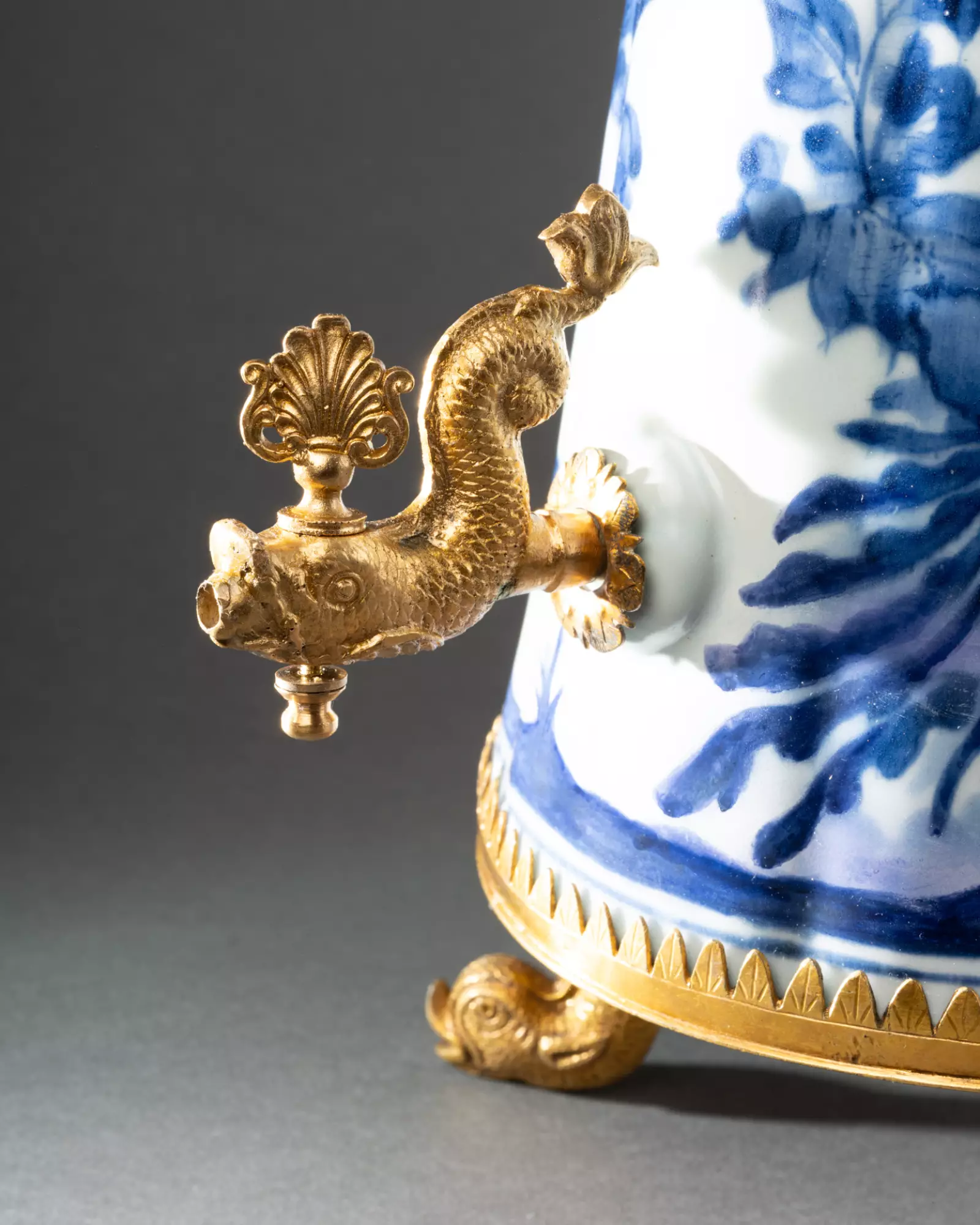
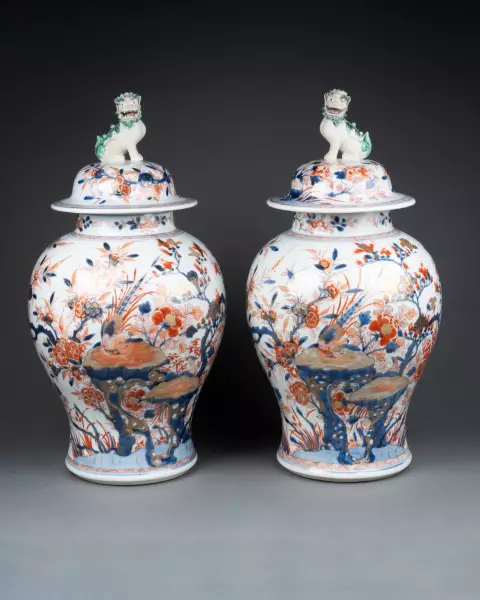
The fountain of cylindrical shape is capped with its lid, the whole presents a very beautiful blue decoration with cobalt under glaze and on a white background of phoenix in an environment of branches of peonies and rocky mounds. A rich finely chiseled and gilded bronze mount embellishes the porcelain, it includes a base supported by four dolphins, a tap in the shape of a sea monster and an opening cover with shell and rearing lion decorations.
Old restorations to the body of the fountain and the lid.
Porcelain: Japan, reign of Edo, Saga Province, Arita ovens around 1680-1690.
The mount: United provinces, workshops of Amsterdam or The Hague around 1700.
Similar models:
- Museum of the company of the Indes de Lorient. Exhibited on the poster of the exhibition "Coffee, pleasure with a taste of bitterness" which took place from April 130 to December 15, 2022.
- Metropolitan Museum of Art, New York (No. 79.2.176a)
- Ashmolean Museum Oxford (N°inv EA1978.1090)
- Christie’s Paris 1 May 2016, lot 529
- Christie’s London 7 July 2016, Lot 57
Our opinion:
The coffee fountain that we present is one of the very first delivered in Europe at the end of the 17th century, at a time when coffee was appearing on the tables of the princely courts. It allowed to keep the drink warm on a small stove and then everyone could serve themselves as they pleased.
The coffee trade, which was then the almost exclusive prerogative of the company of the Dutch Indies, met with considerable success, notably due to virtues considered aphrodisiac. The coffee ceremony becomes a ritual at the end of the meal but also begins to punctuate the awakenings or even the tastings where it competes with tea and chocolate. This moment of conviviality is also the one where it has spread its wealth and power by offering to an elite of society, not only a very expensive exotic drink but also rare porcelains or even oriental lacquers that are very little known in Europe.
Porcelain is then very sought after, for its ability to retain heat and for its easy cleaning but also and above all for its visual appearance and its preciousness. In the 17th century, it was a material considered magical because it originated from the expertise of oriental alchemists who made the European nobility fantasize. The East India Company will expand on this success by marketing this rare commodity that is coffee but also all the utensils attached, since it is the only company authorized to trade with Japan since the closure of the country and the exclusion of the Portuguese in the middle of the century. The land of the rising sun is at this time the only supplier of porcelain and lacquer, China barely emerging from the troubles resulting from the fall of the Ming dynasty in 1644.
The precious porcelains are transported from the port of Kyoto in the company’s ships to the warehouses of Amsterdam or The Hague where they are mounted on bronze by goldsmiths from the province of Augsburg, then directly marketed by the company through its stores or by specialized merchants located in major capitals. This control of the entire chain from production in Asia to marketing in Europe will allow the famous "VOOC" to become the largest company in the world, both in terms of wealth and number of boats or employees.
Few of these primitive fountains dating from the 17th century have survived, they are today mostly preserved in the largest international museums.