Galerie Franck Baptiste
7 quai Voltaire
75007 Paris
FRANCE
Tél. +33 (0)6 45 88 53 58
Monday to Saturday
10h - 13h & 14h - 18h30
- FR
- EN

Works of Art
19th century
1
Works of Art du 19th century
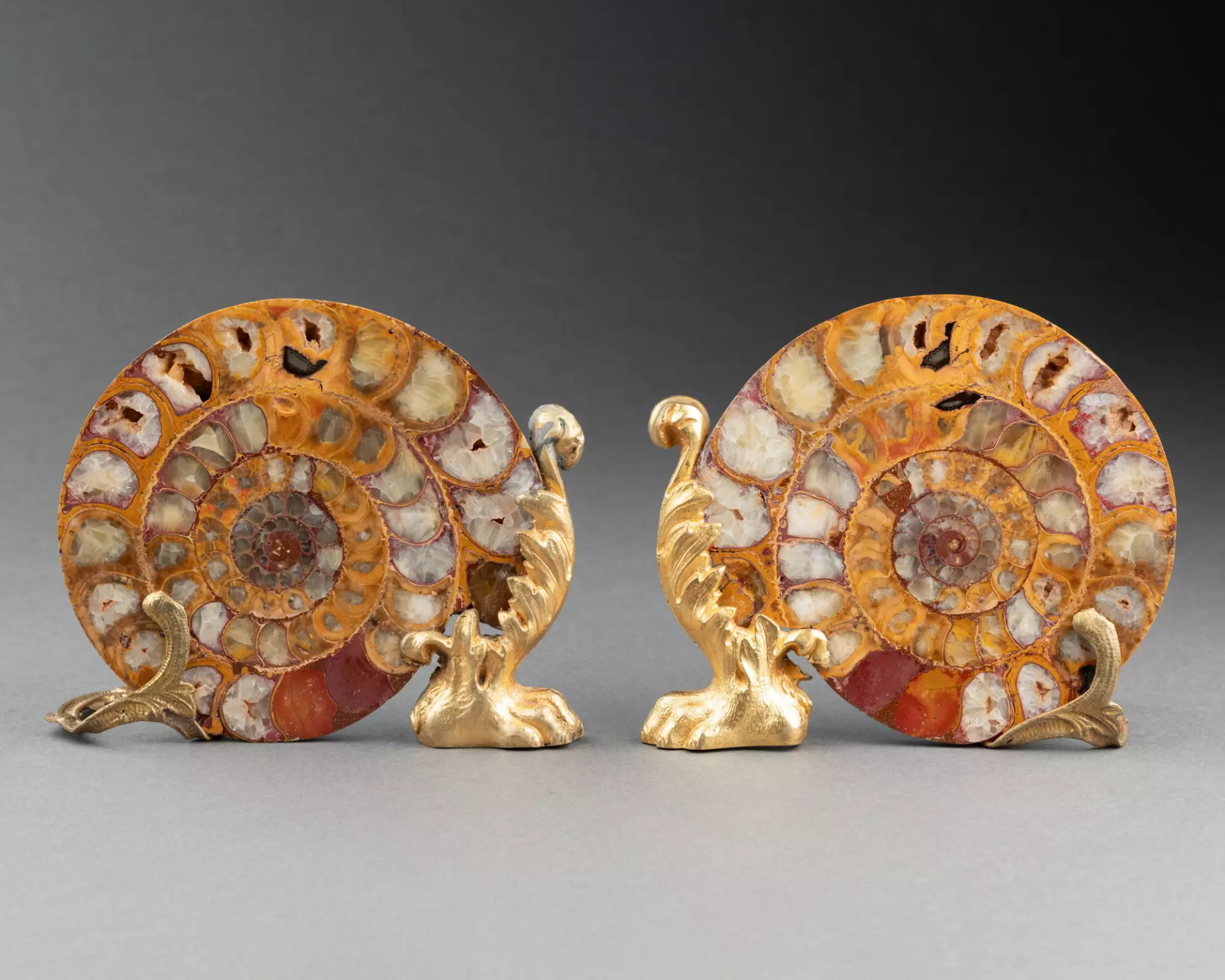
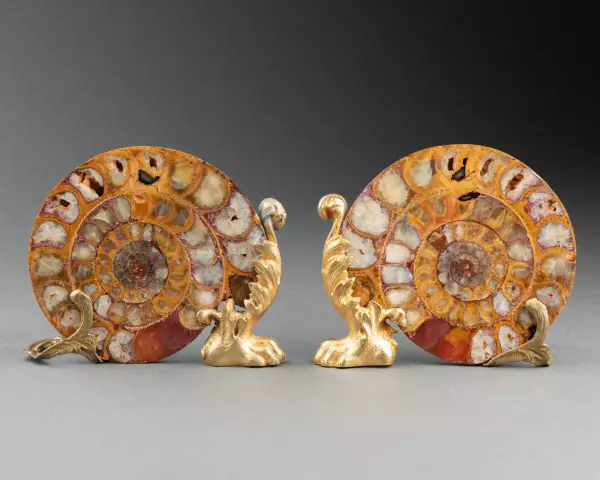
Pair of fossil ammonites mounted in bronze circa 1820-1840
DIMENSIONS : l. 5.91 .inH. 5.12 .inØ 5.31 .in
MATERIAUX : Ormolu, ammonit
PROVENANCE : France
PRICE : Contact us
REQUEST INFORMATION
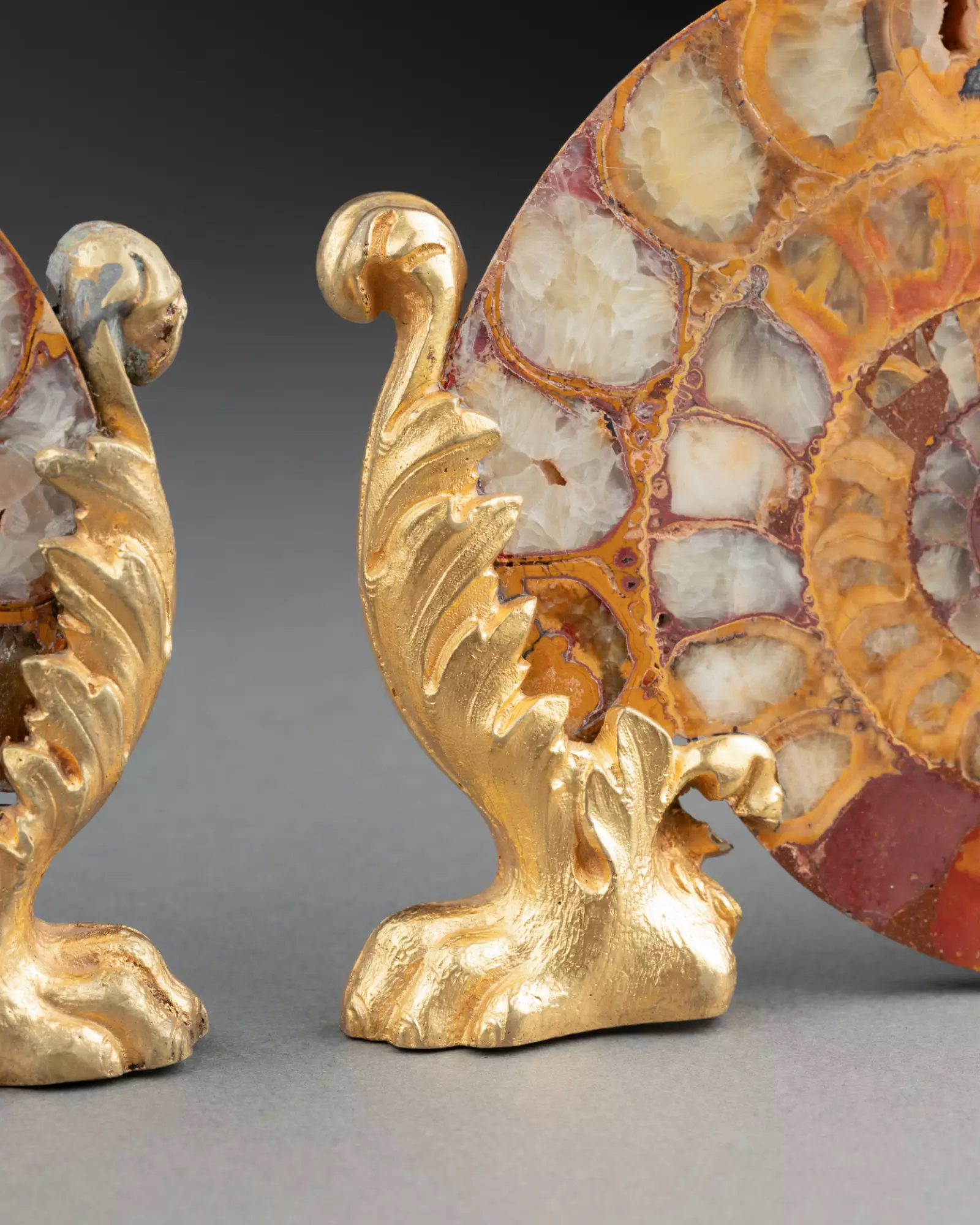
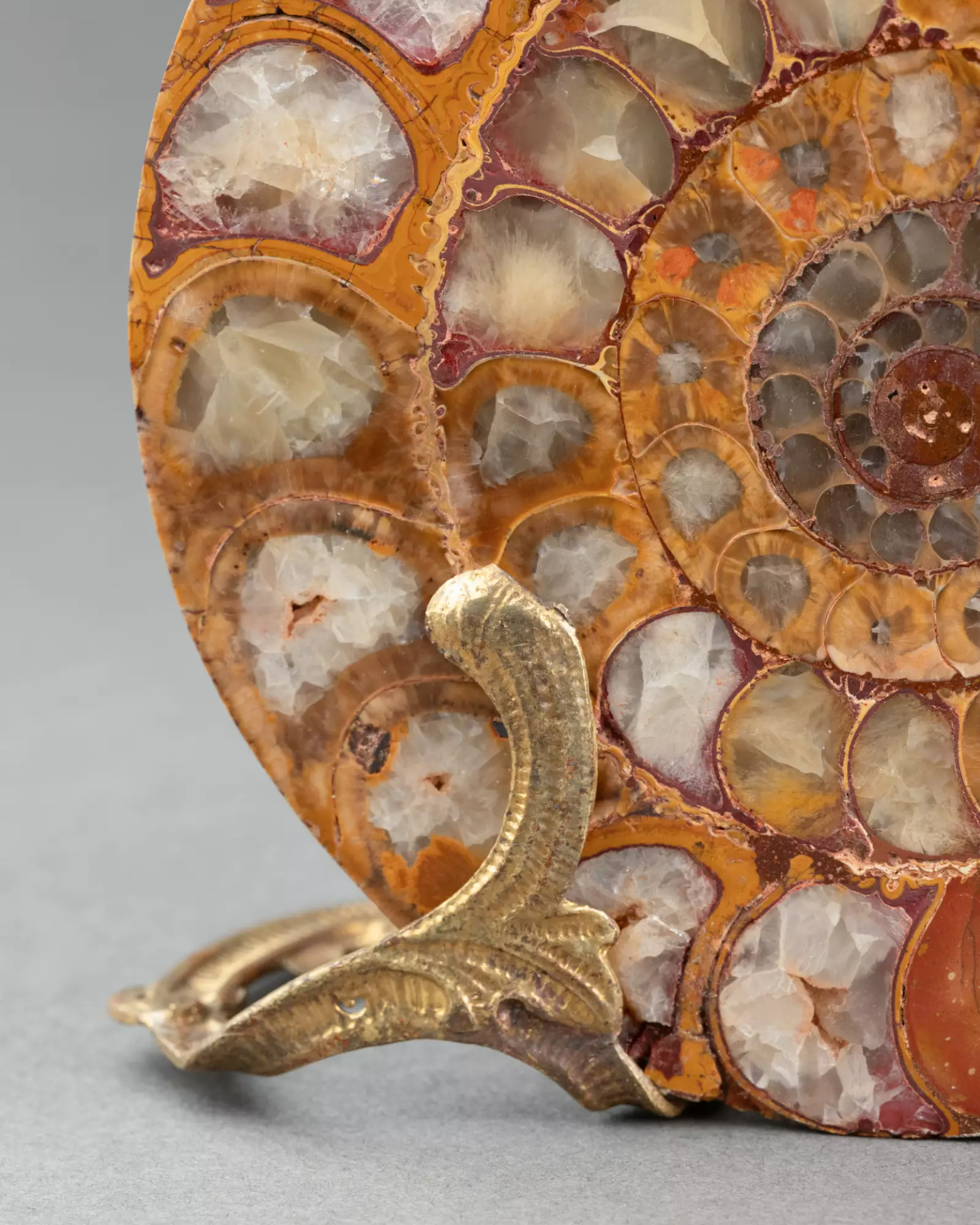
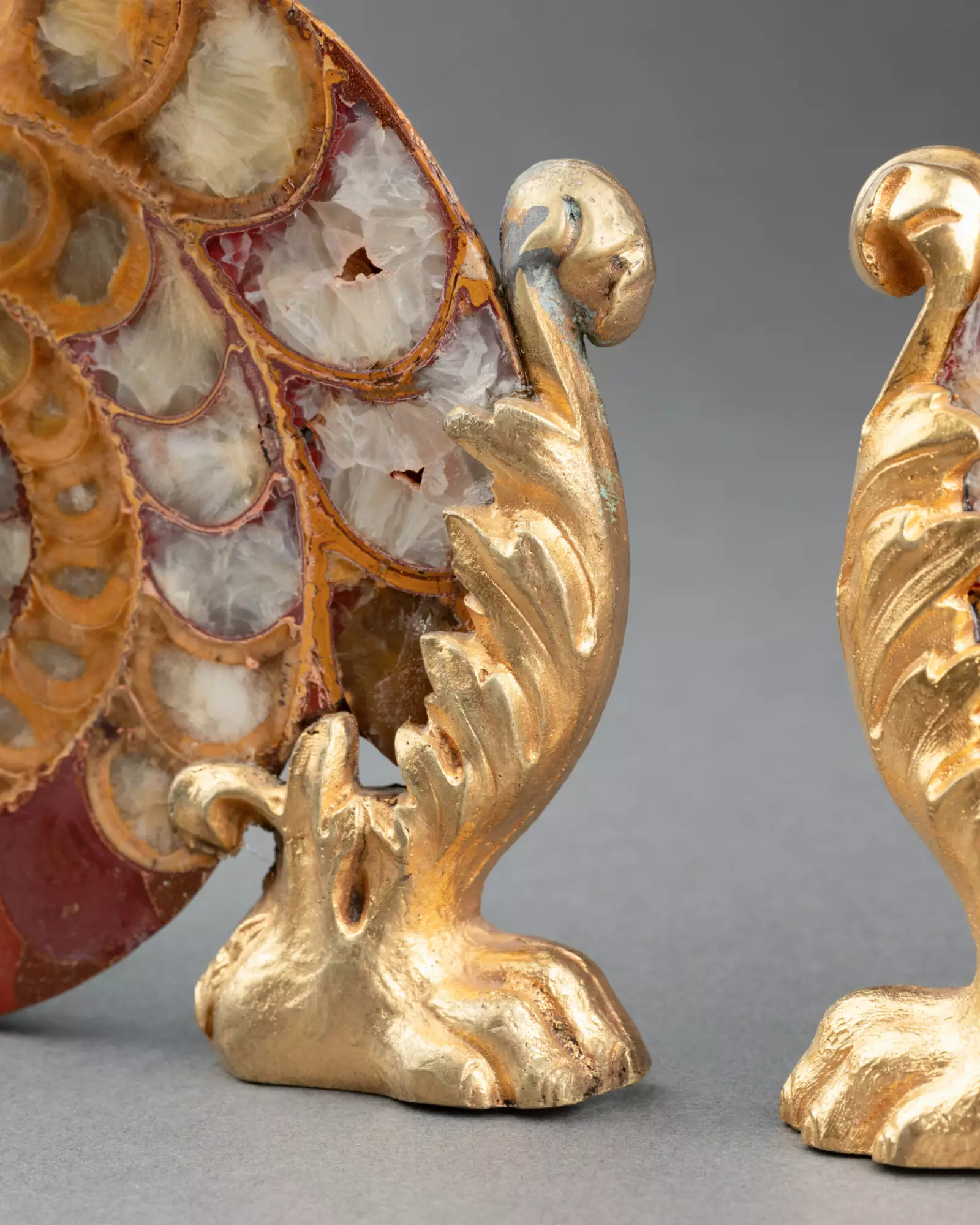
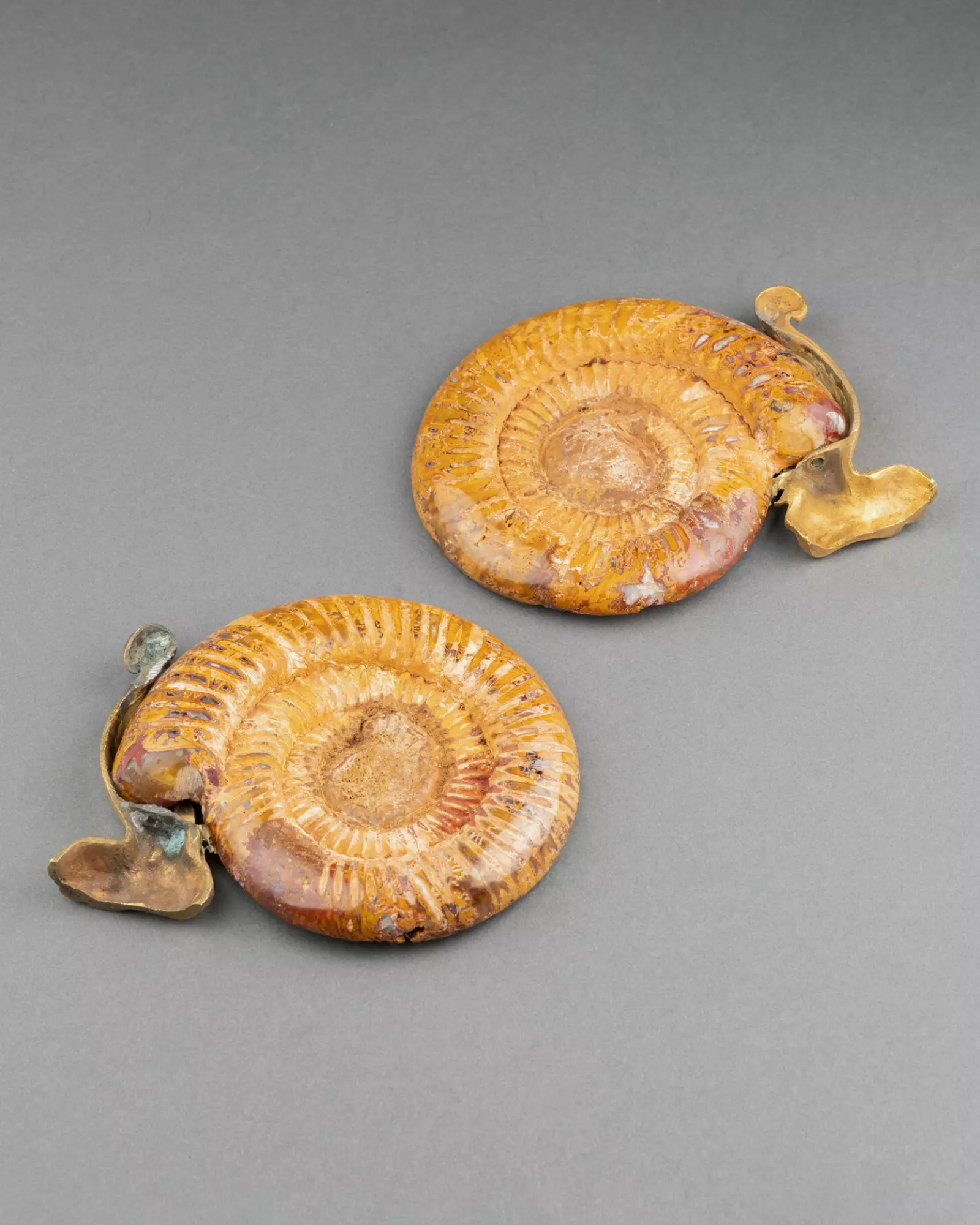
?A rare pair of Jurassic fossil ammonites, probably from the Perisphinctes group, presented in cast bronze mounts decorated with lion's paws.
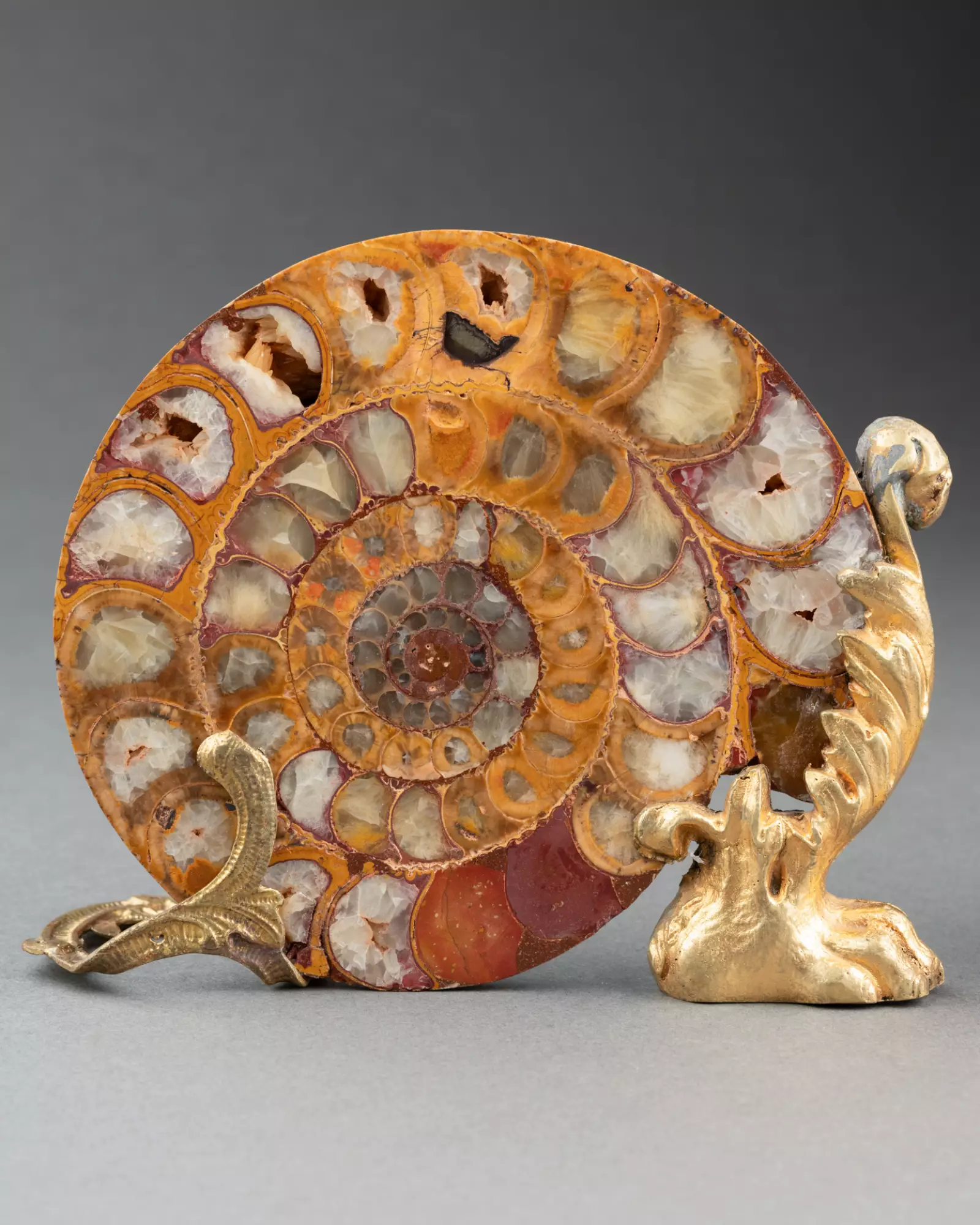
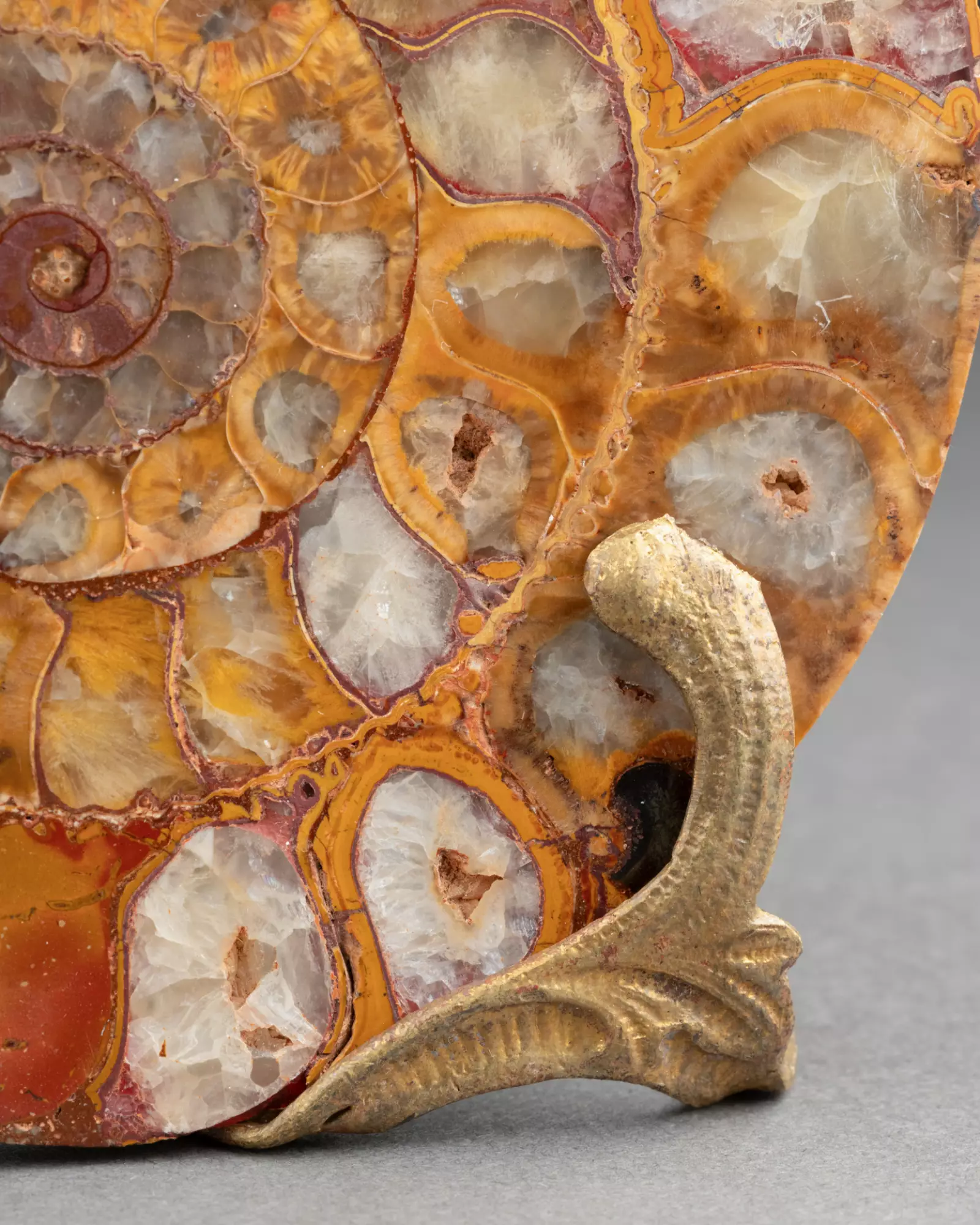
Made from a single ammonite sawn in two, the pair reveals the two complementary faces of the fossil. The polished sections expose the internal structure of the fully calcified chambers, whose natural polychromy creates a spectacular mineral decoration in shades of honey, ferruginous ochre, golden brown, translucent white, and violet hues. The internal cavities exhibit significant natural crystallization in places, giving the chambers an almost geodic and crystalline appearance, contrasting with the perfect geometric rigor of the fossil spiral, while the external parts retain the natural relief and ribs of the original shell.
Ammonites of the Perisphinctes group are found primarily in Upper Jurassic deposits, notably in Burgundy and the Yonne region of France, but also in certain limestone areas of Italy where they were highly sought after by naturalists in the 19th century.
The neoclassical bronze mounts evoke objects made for cabinets of curiosities and discerning collectors in the first third of the 18th century.
Very good condition.
Our opinion:
The pair of ammonites we are presenting perfectly illustrates the revival of cabinets of curiosities in early 19th-century Europe, where antiquarians, naturalists, and collectors brought together fossils, antiquities, and scientific objects in displays designed to celebrate both the wonders of nature and archaeological discoveries. The most remarkable quality of this pair lies in the extraordinary beauty of the calcified chambers visible within the polished sections. The natural crystallizations form a veritable abstract mineral landscape where translucent materials, geodic cavities, and polychrome hues ranging from amber tones to crystalline whites, enhanced by almost coppery ferruginous oxidations, alternate.
This internal architecture particularly fascinated 19th-century enthusiasts, who saw in these fossils a perfect demonstration of the mathematical order of nature. The contrast between the geometric precision of the spiral and the organic richness of the crystallizations gives this pair a strikingly modern, sculptural presence.
Beyond their scientific and decorative interest, these ammonites also possessed an almost philosophical dimension: they were perceived as testimonies to the origins of the living world, veritable petrified traces of the first forms of marine life. Their infinite spiral, a symbol of order, movement, and birth, profoundly fascinated the Romantic collectors of the 19th century. The sand-cast bronze mounts elegantly enhance the scholarly and decorative character of this ensemble, intended for a high-end cabinet of curiosities.
Such ancient fossils mounted in bronze were then particularly rare and expensive. They were reserved for a cultivated elite: Grand Tour enthusiasts, aristocrats, scholars, and major collectors, fascinated by the interplay between natural sciences, archaeology, and the decorative arts. This association between a spectacular fossil specimen and a custom-made bronze mount conferred upon these objects a status far superior to that of a simple natural curiosity, bringing them closer to the realm of works of art destined for the most prestigious European cabinets of curiosities.