Galerie Franck Baptiste
7 quai Voltaire
75007 Paris
FRANCE
Tél. +33 (0)6 45 88 53 58
Monday to Saturday
10h - 13h & 14h - 18h30
- FR
- EN

Furniture
18th century
1
Furniture du 18th century
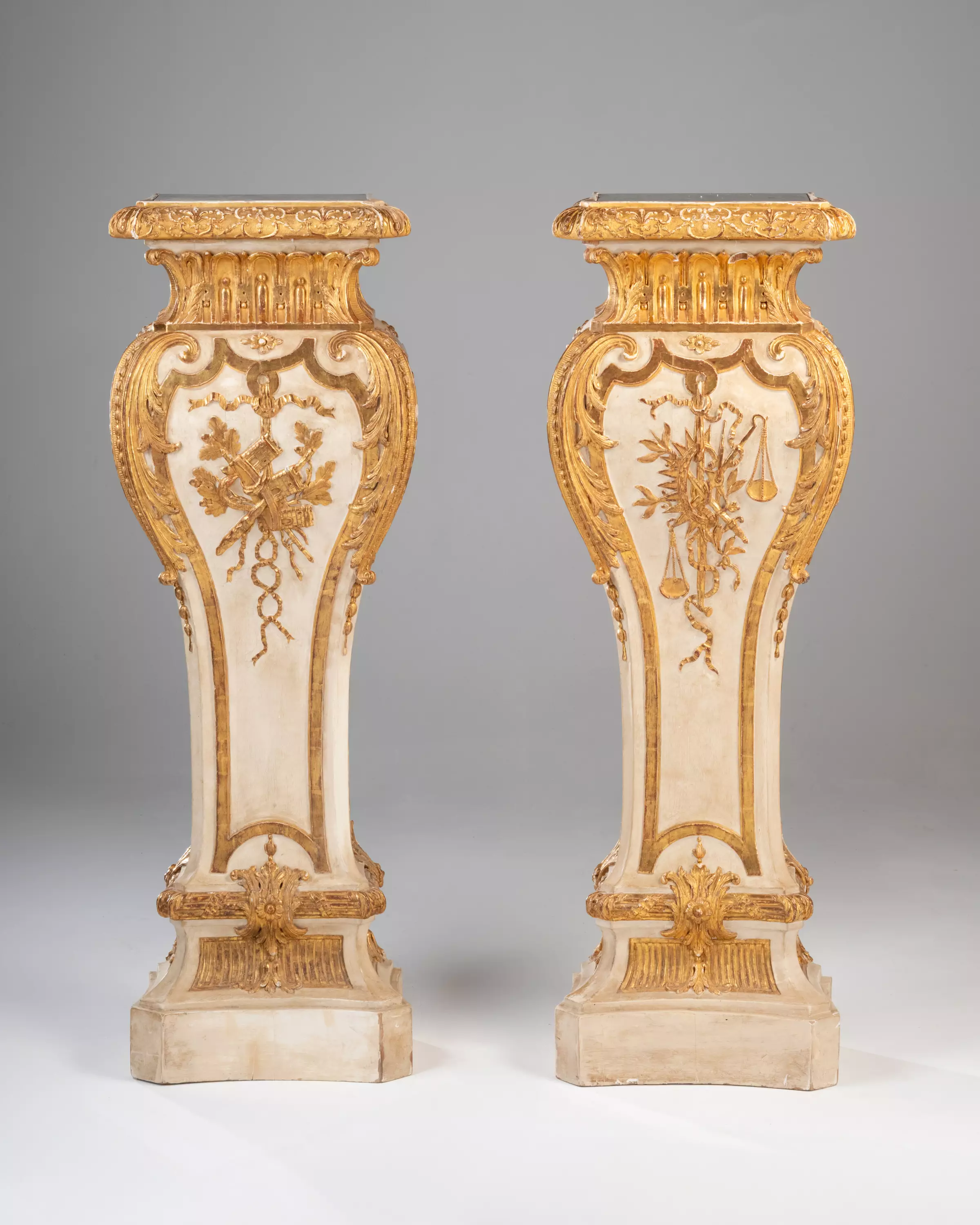
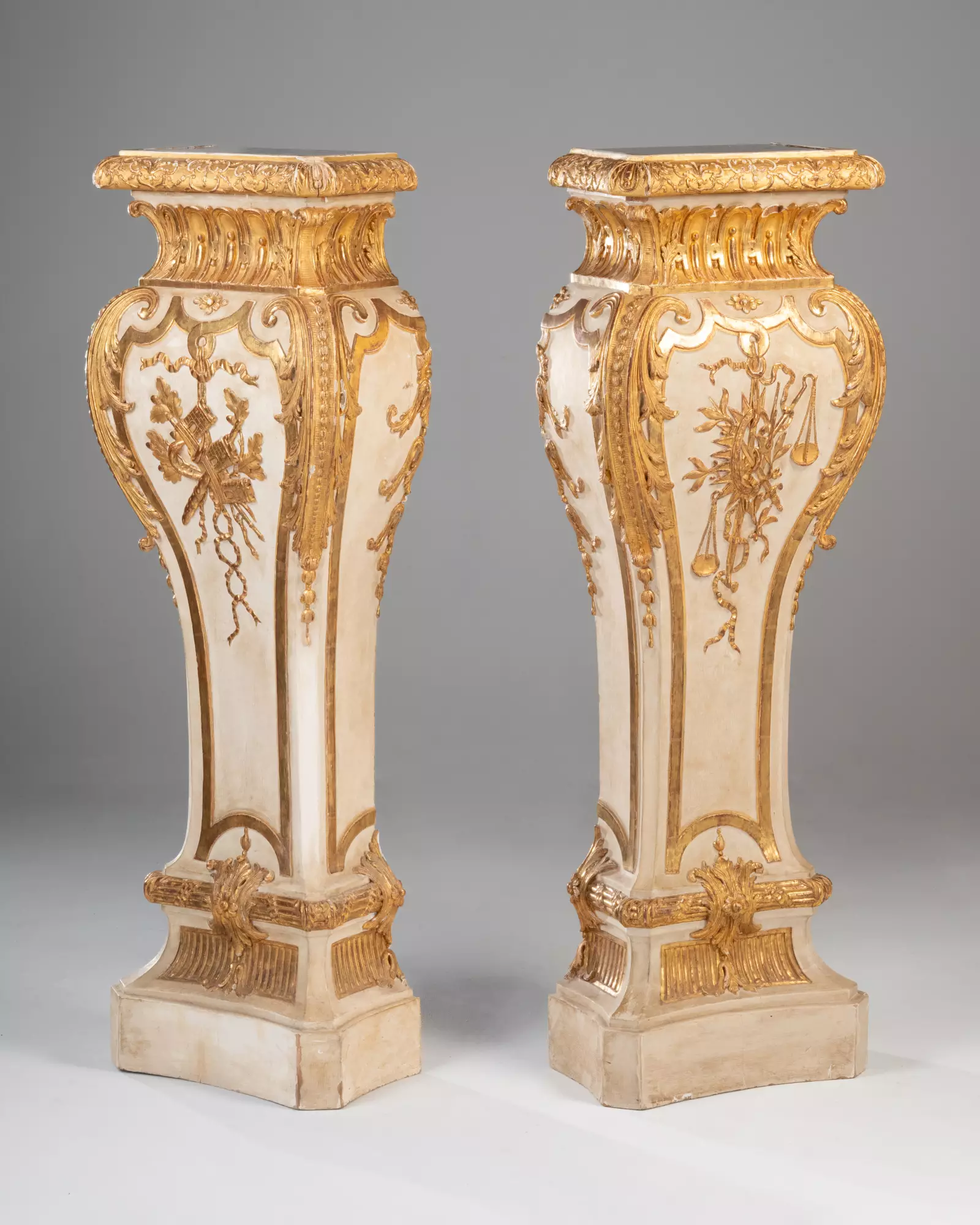
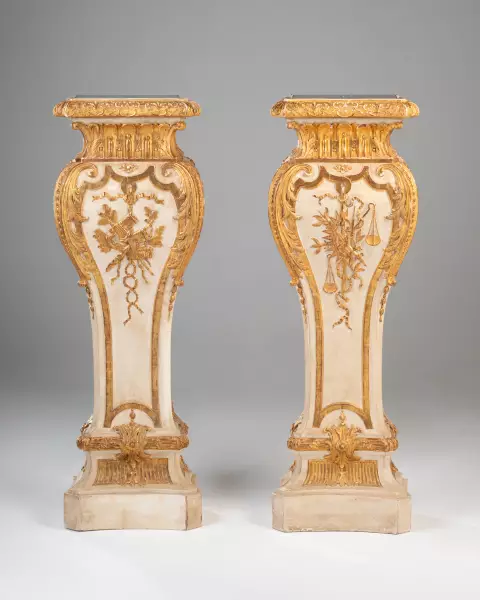
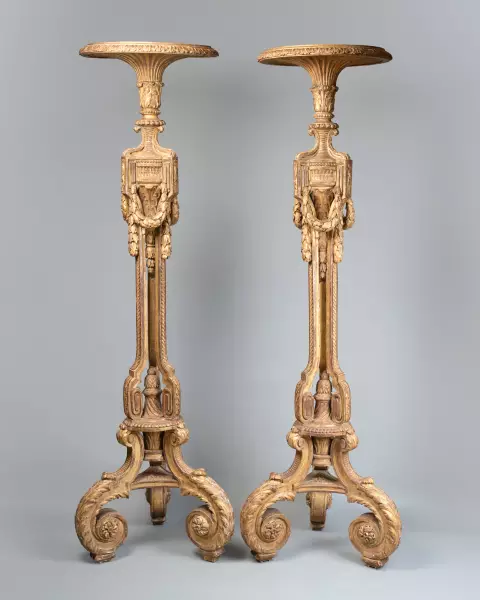
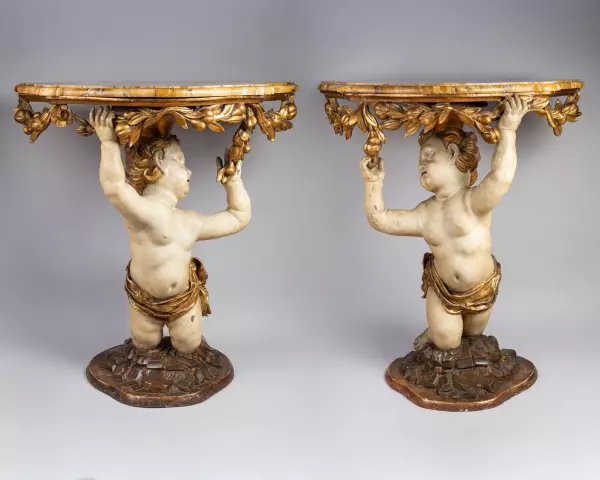
Pair of pedestals in lacquered and gilt wood, Paris, circa 1740
Exceptional Object
DIMENSIONS : l. 16.54 .inH. 51.18 .in
MATERIAUX : Gilded and lacquered oak wood
PROVENANCE : Paris
PRICE : Contact us
REQUEST INFORMATION
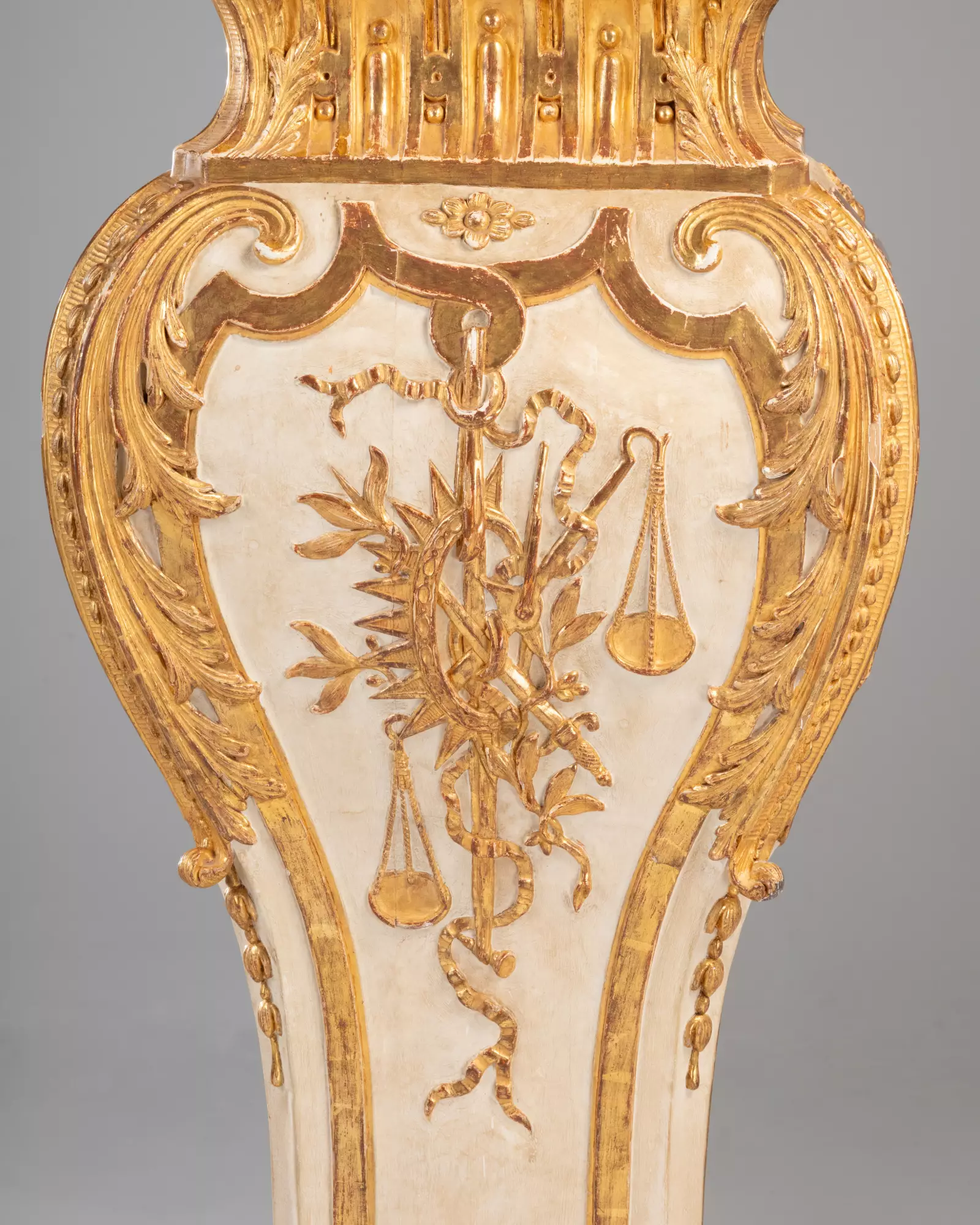
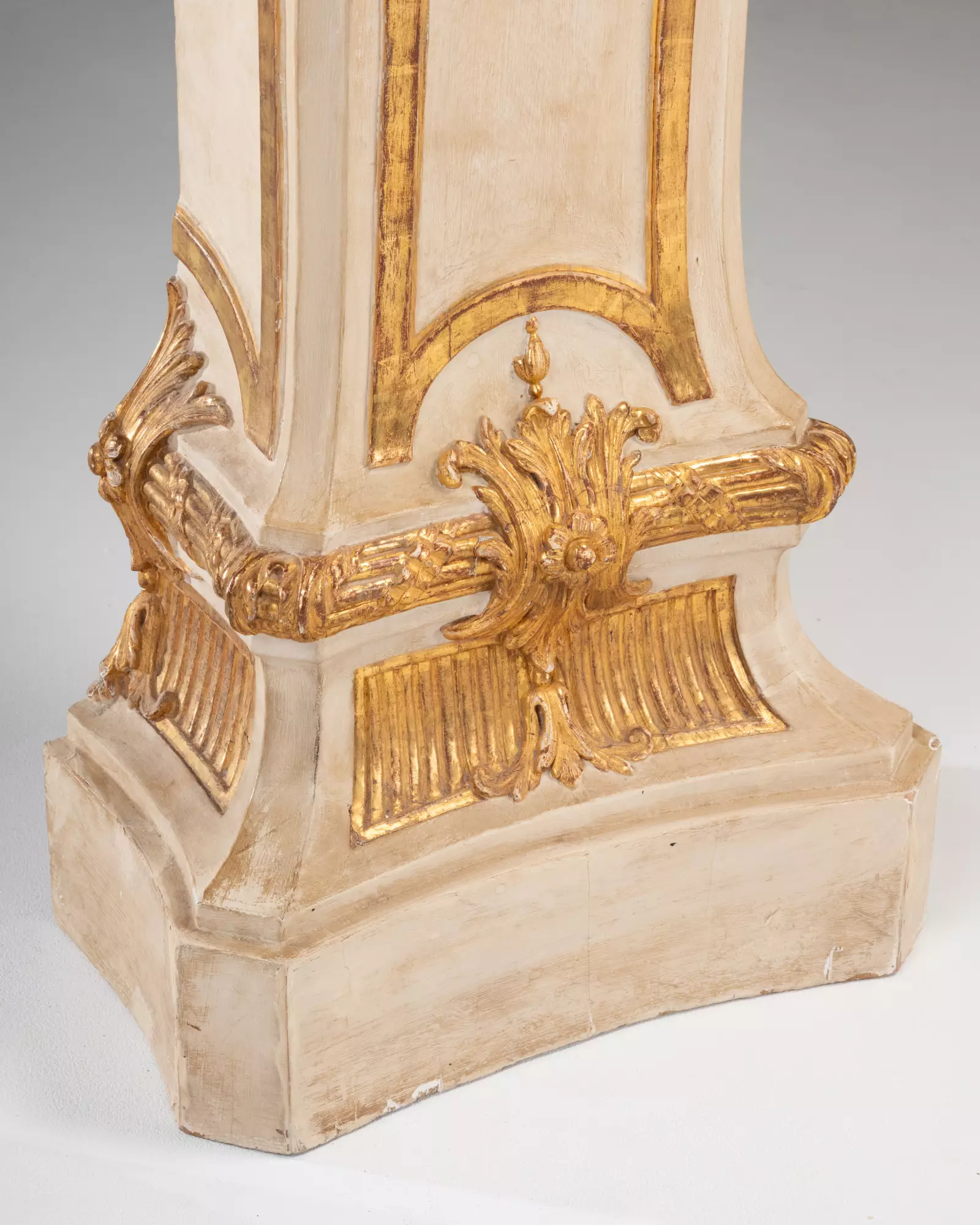
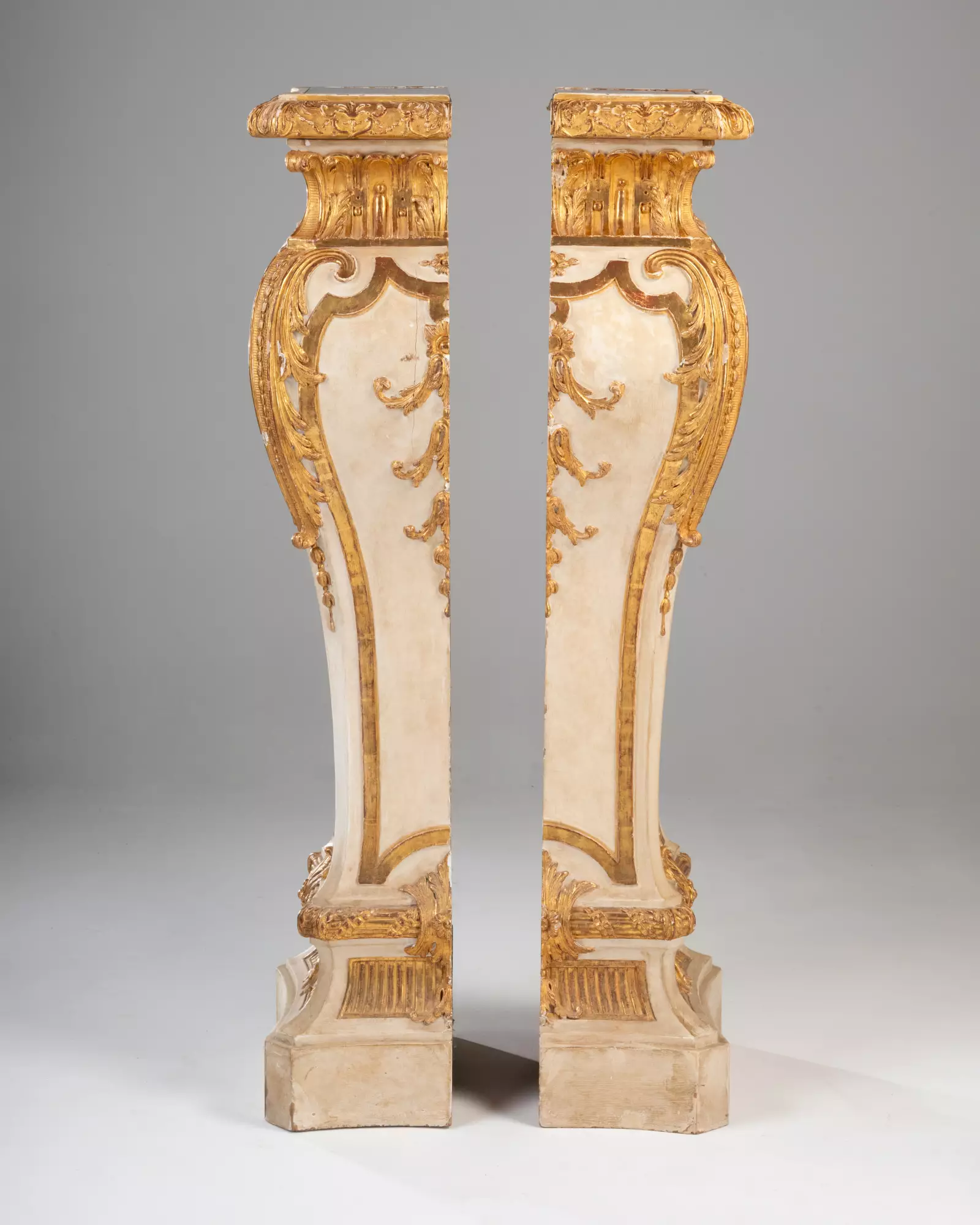
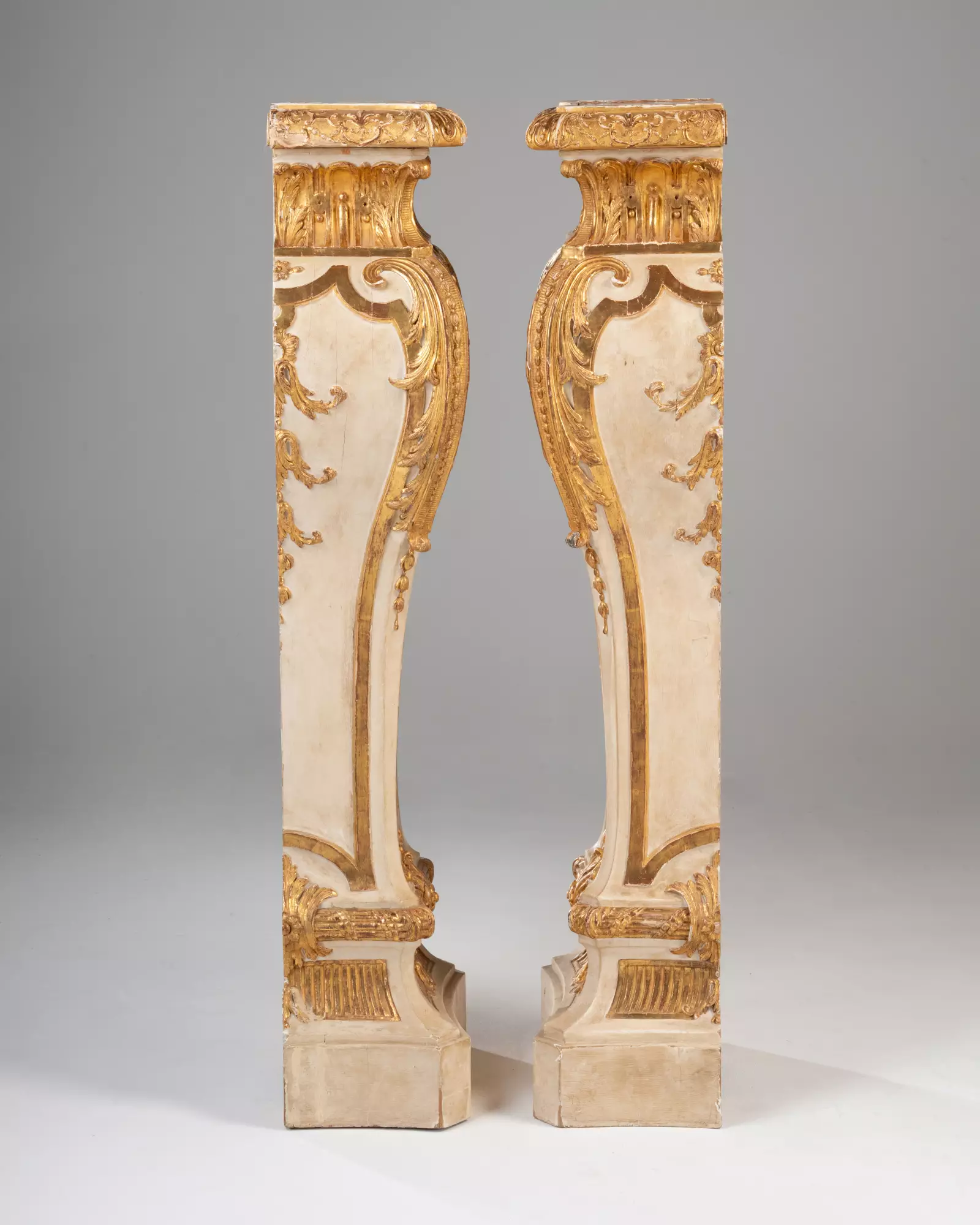
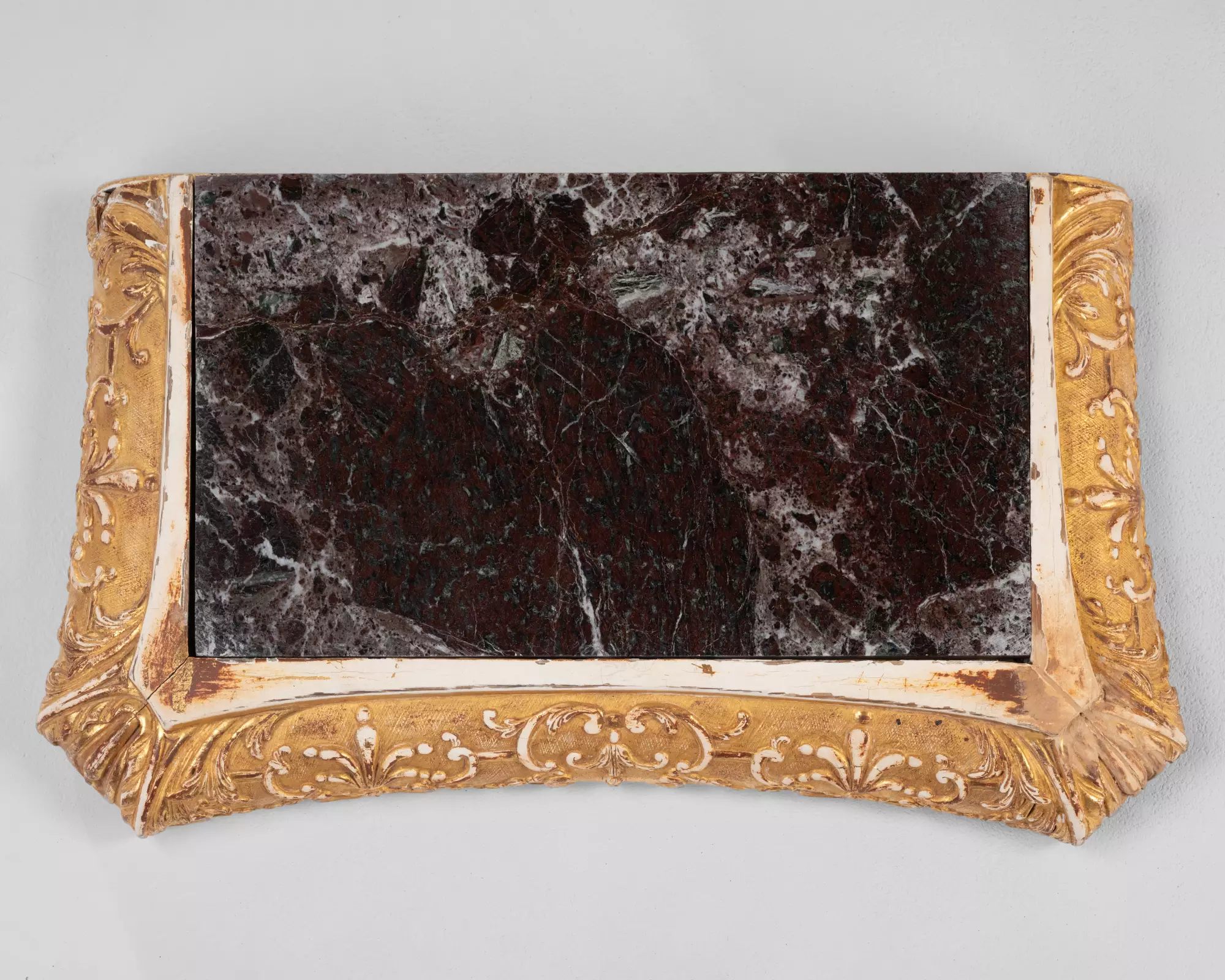
?A pair of pedestals in carved oak, lacquered cream and highlighted with gold leaf. Baluster-shaped, they feature a curved shaft resting on a molded base and topped by a chamfered-corner platform inset with a "Levanto" red marble slab.
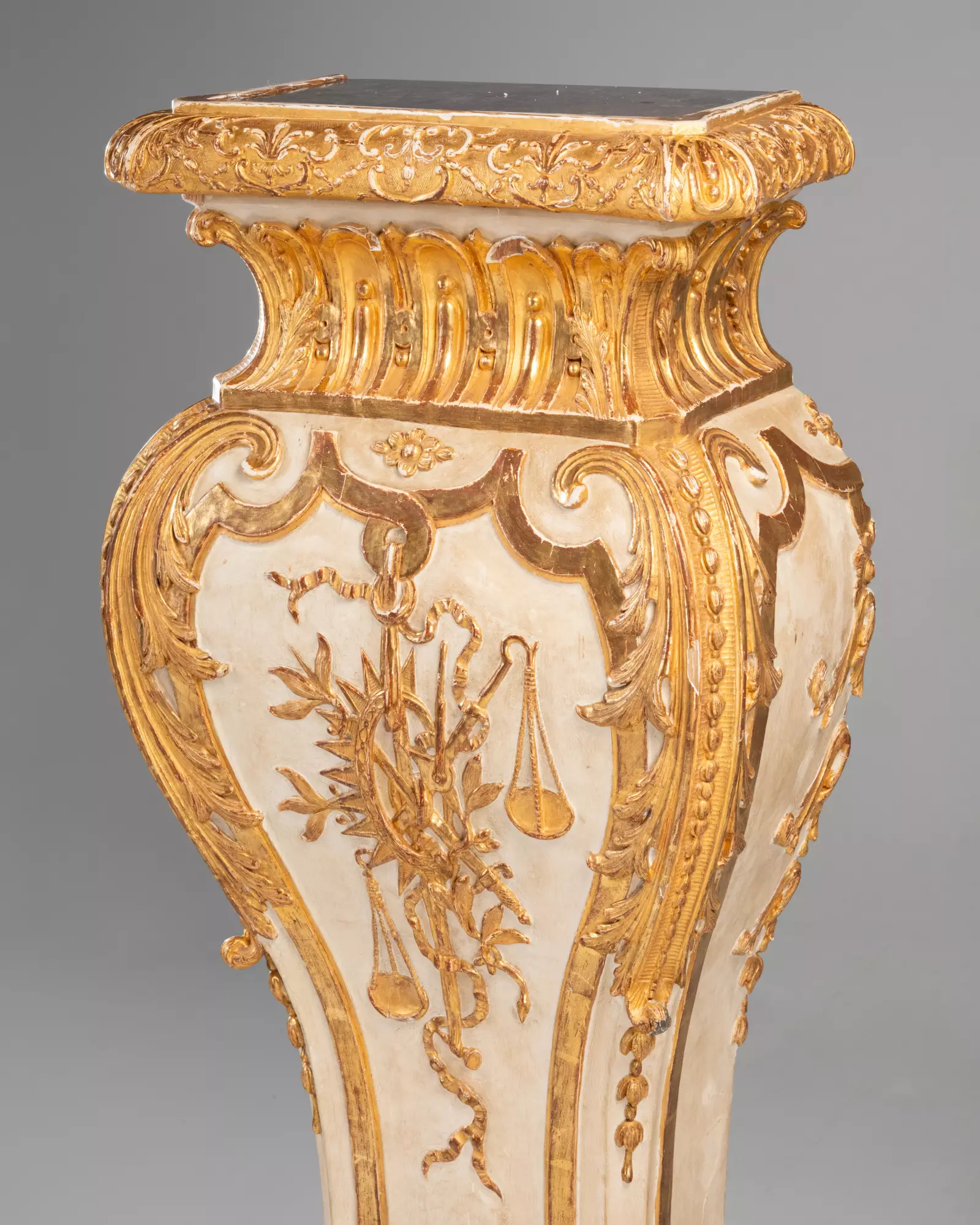
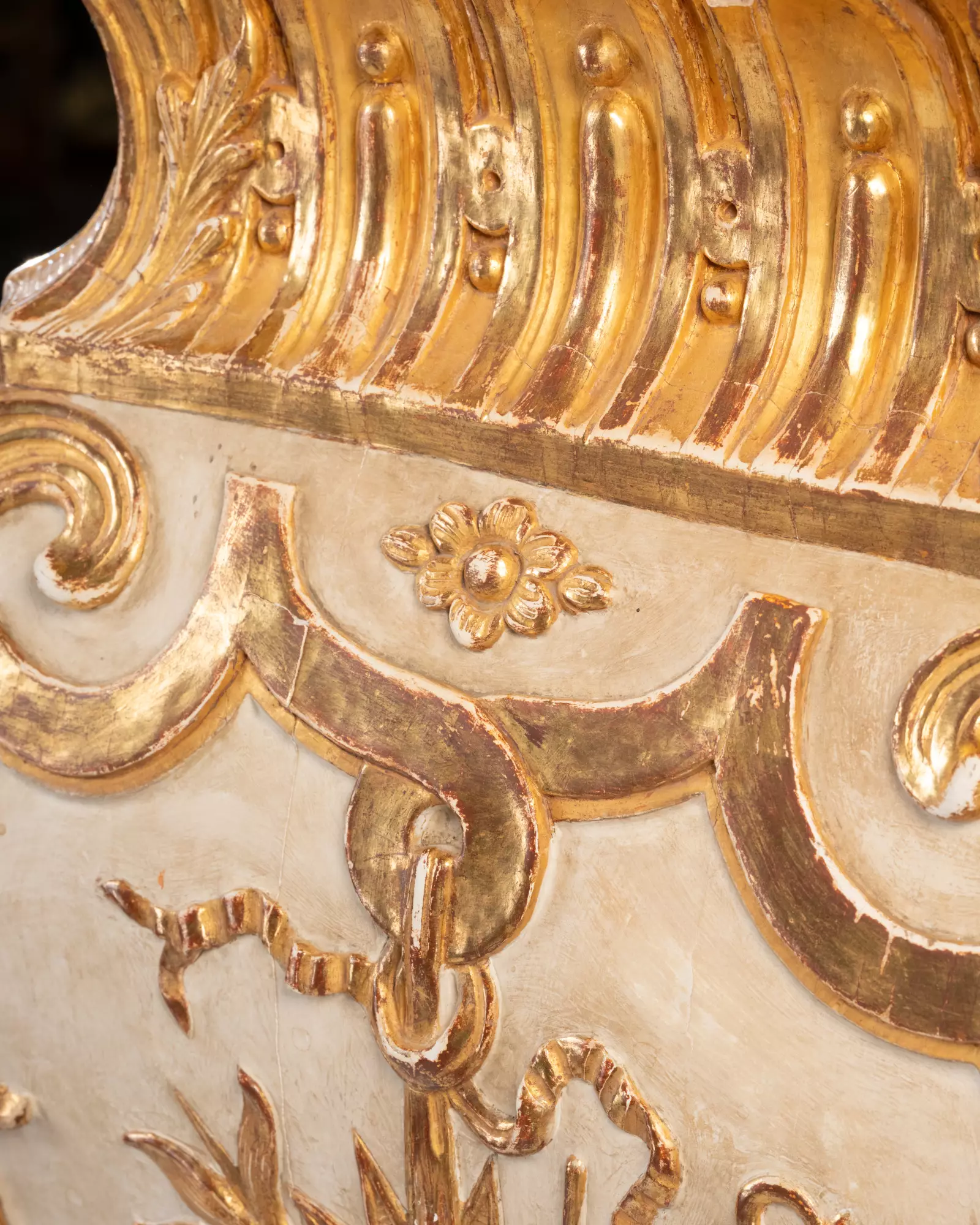
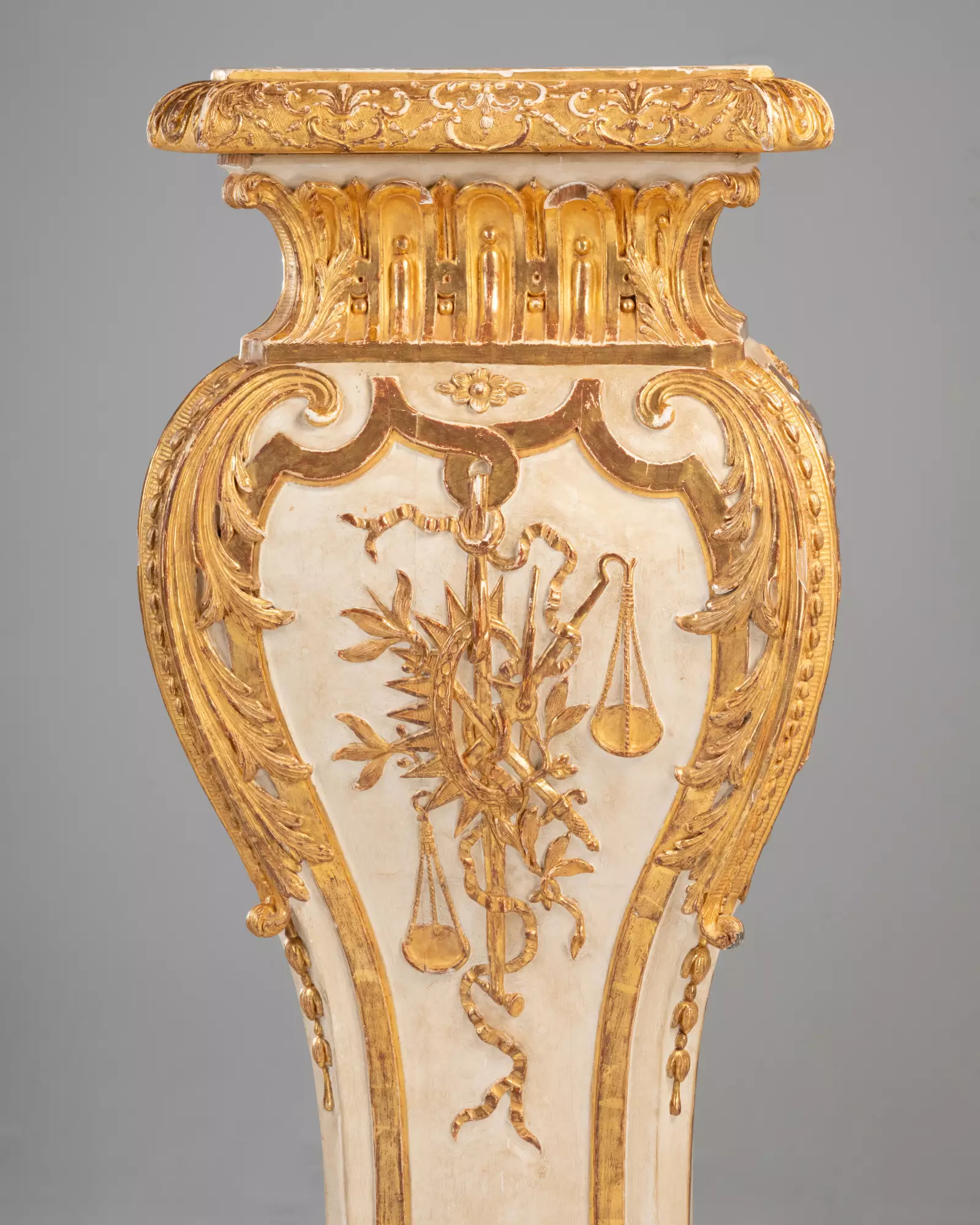
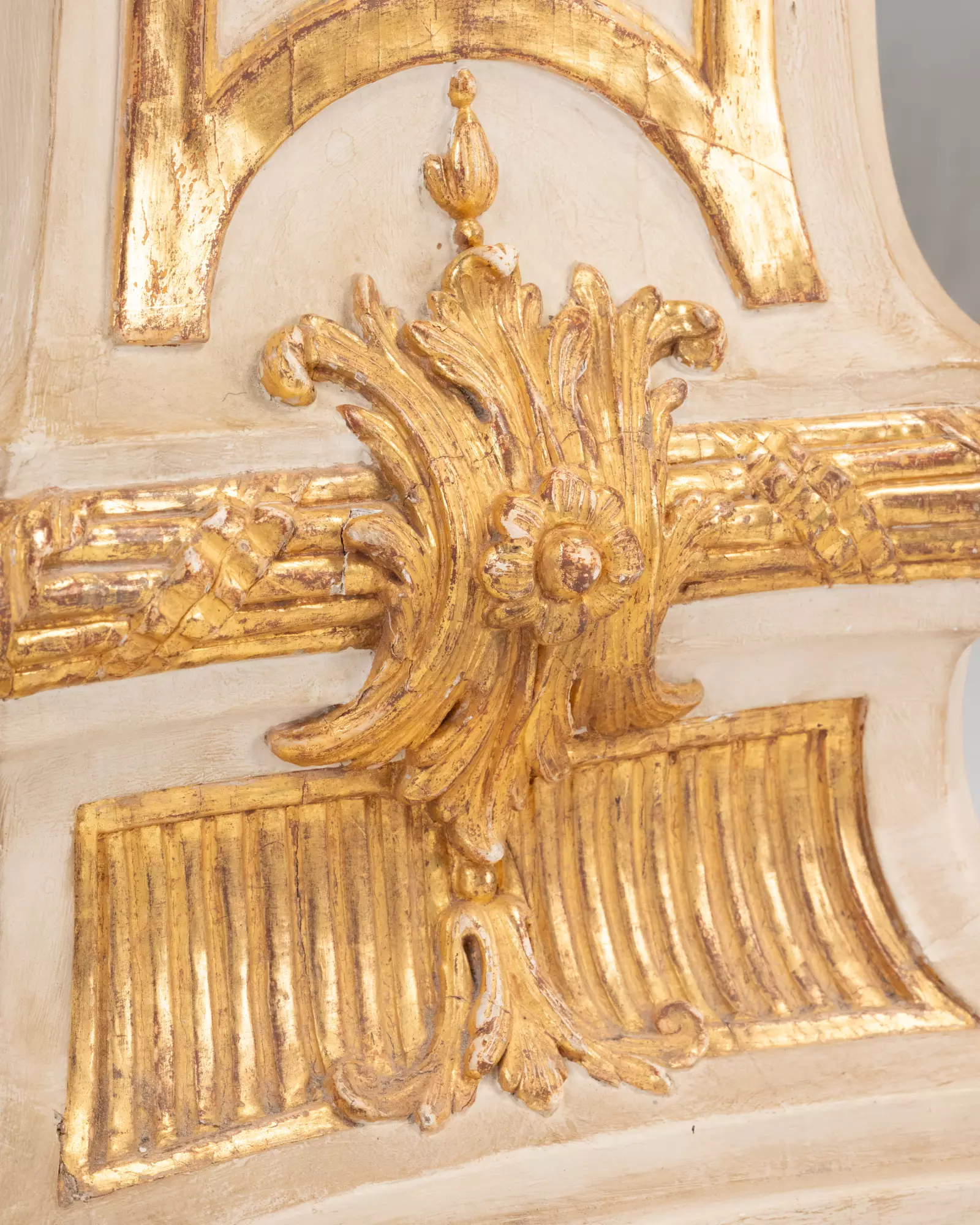
The entire surface of the pedestals is adorned with particularly refined ornamentation, finely carved with palmette friezes running along the edges of the tops, gadrooning, cascading acanthus leaves, shells, and fasces—motifs inherited from the ornamental designer Jean Bérain.
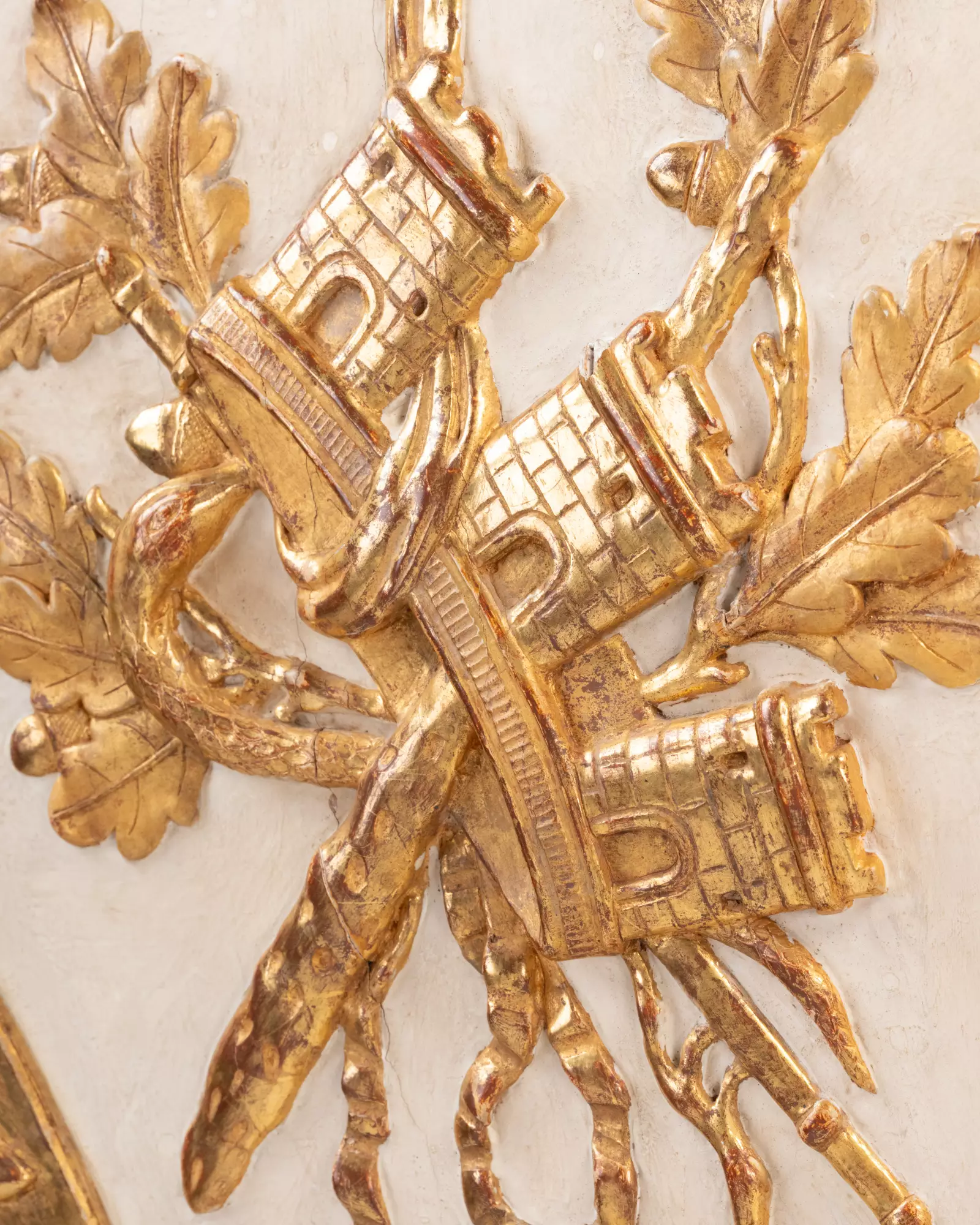
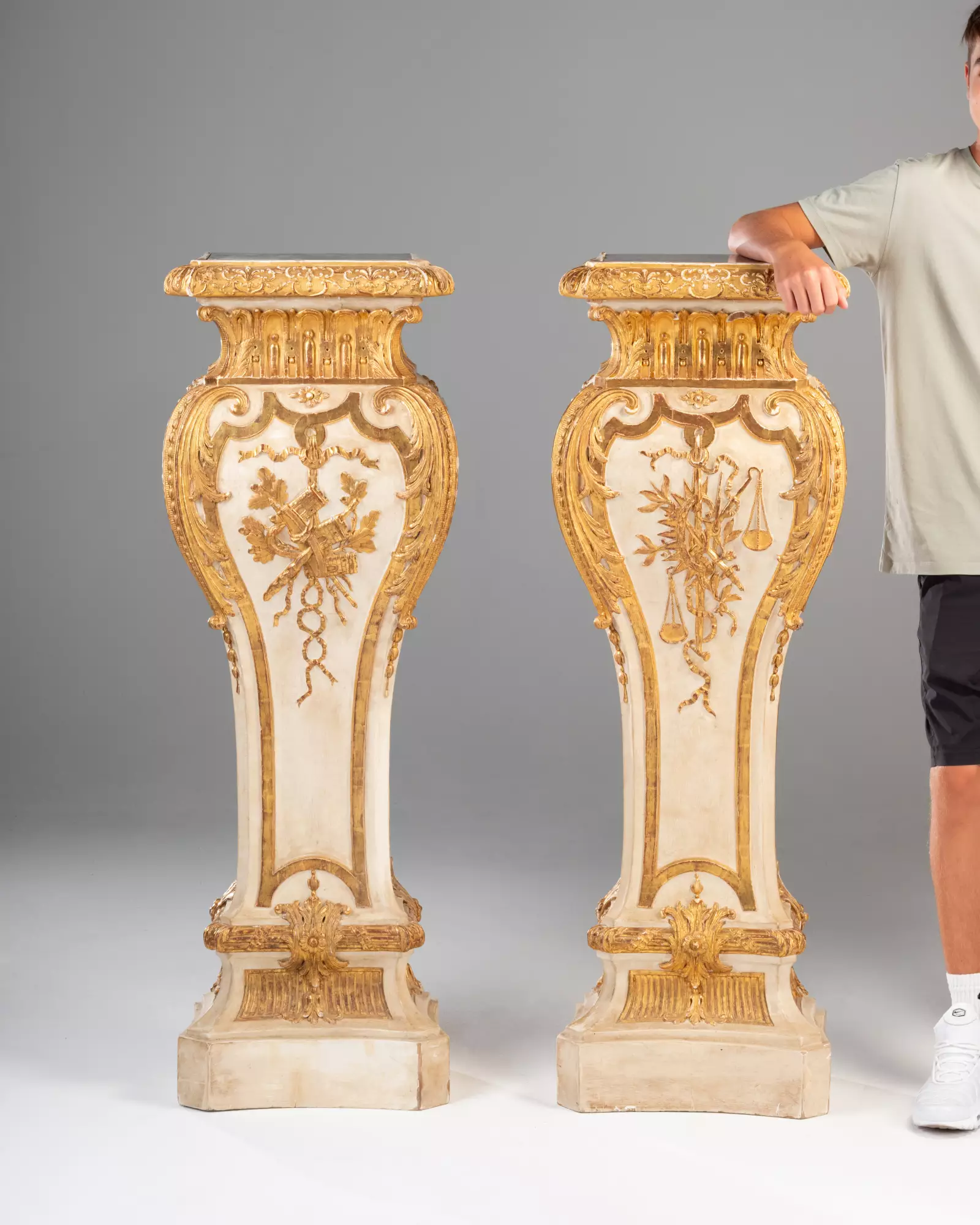
The central section of each pedestal features a trophy suspended from a ribbon bow. The first depicts an allegory of Strength, composed of a three-towered mural crown set against a background of oak branches—symbols of power and constancy. The second depicts an allegory of Justice, combining scales, a sword, and a royal crown against a background of olive branches—emblems of equity tempered by peace.
Excellent state of preservation; original gilding and lacquer. Minor restoration to the lacquer consistent with age and use.
Parisian work, Louis XV period, circa 1740–1750.
Dimensions:
Height: 130 cm; Width: 42 cm
Provenance: Sotheby's, Monaco, July 3, 1993, Lot 175
Our opinion:
The pair of pedestals presented here is distinguished by truly exceptional craftsmanship. Their elegantly curved silhouette—still bearing the spirit of the Régence style—is enriched by remarkably fine carved decoration inspired by the designs of Bérain. Every detail is executed with uncommon precision and vigor, revealing the hand of a master carver of the highest order. This virtuosity is further enhanced by the use of particularly dense oak, a hallmark of work produced in the capital's major workshops. In terms of both their design and execution, these pedestals undoubtedly rank among the finest Parisian creations of the first half of the 18th century.
Even more remarkable is their iconographic program. Far from mere ornamentation, each pedestal is enriched with an allegorical trophy suspended from a ribbon bow. One celebrates Justice, featuring scales and the attributes of judicial authority; the other exalts Strength, through a composition combining fortified towers and oak branches. The pairing of these two cardinal virtues extends well beyond the scope of domestic decoration. It belongs to the symbolic language of State institutions under the Ancien Régime, where Justice and Strength embodied the twin pillars of sovereign authority. Such a decorative scheme suggests a setting such as a courthouse, the residence of a high-ranking magistrate, or a royal administrative building.
The exceptional quality of the carving naturally invites a comparison with the workshops of the *Bâtiments du Roi* (King's Buildings Department), where the greatest ornamental sculptors of the 18th century worked. Among them, the Flemish-born Jacques Verberckt (1704–1771) holds a prominent place. Active in the service of the Crown for several decades, he contributed to the most prestigious wood-carved interiors in royal residences and established an ornamental style of remarkable virtuosity, characterized by deep relief, precise modeling, vigorous trophy designs, and elegant handling of ribbons, foliage, and symbolic attributes.
Notably, one of the trophies features a three-towered mural crown—an emblem closely associated with Madame de Pompadour, serving as a subtle yet evocative reference to her. This iconographic detail, associated with the allegory of Strength, reinforces the official and prestigious nature of the décor.
This reference is all the more significant given that Jacques Verberckt worked directly under the supervision of Madame de Pompadour’s brother, Abel-François Poisson de Vandières—then Director General of the King's Buildings—while Madame de Pompadour herself held the role of Superintendent.
The sculptor also worked privately for the Marquise, notably on the fitting-out of the Château de Bellevue and the Hôtel d’Évreux. The stylistic similarities observed here—precision of draftsmanship, powerful relief, balanced composition, and refined carving—place this work within the artistic context of the major royal projects of the 1740s and 1750s. Designed to integrate into an extensive scheme of ceremonial wood panelling, these pedestals likely supported two busts representing figures associated with royal authority, forming part of a decorative program in which architecture, sculpture, and symbolism combined to create a perfectly cohesive whole.